November 26, 2011
To Soar!
This story was originally written in Russian. This is an AI-generated English translation.
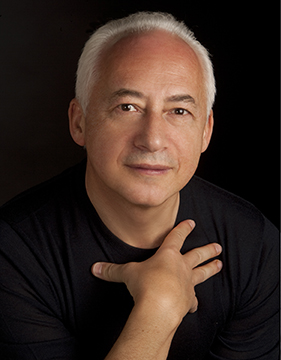 - Each outstanding orchestra has its own individuality, manner of performance, sound. What is the peculiarity of virtuoso, comparing with Other chamber orchestras?
- Of course, there have been and are orchestras that can be unmistakably recognized by sound – on record or on the radio. But comparing your orchestra to others is like comparing yourself to someone else. If we talk about chamber orchestras, then this collective was the orchestra of Rudolf Barshay. We consider ourselves his followers. Of course, it is very difficult to make an orchestra recognizable, and this depends on several components. Their coincidence determines the individuality of the orchestra.
- How is the recruitment to the Moscow Virtuosi orchestra? Are you running a contest?
- No contest.
- Then tell us what qualities orchestrators should have. Do you accept only “ready” virtuososos into the orchestra?
- The technique, the possession of the tool is certainly important. But beyond that, the ability to play in an ensemble is important. And then the music will show, because it mystically reflects the properties of the human character.
- Some conductors complain about the lack of training of young orchestrators. Are you facing this, too?
- Of course I do. But there is still some choice.
And then, the musician is also to some extent an instrument that needs to be tuned, to which you yourself need to adapt. Even an instrument as perfect as the Stradivarius violin must be beaten. It’s the same here – you see that a person is capable, serious, so there is hope that you can educate him.
- Rudolf Barshay once noted that in venerable orchestras there are many impudent people.
- Among the musicians I did not meet impudently, but among the directors of orchestras I had to watch.
– Almost every interview conducted with conductors deals directly or indirectly with the issue of “dictatorship.” Saulius Sondeckis, infinitely respected by me, believes that dictatorship must be diplomatic. The great Gennady Rozhdestvensky argues that the most dangerous dictator is affectionate. You once said, “In order for people to understand the inevitability of their will being subordinated to someone else’s, they must be made to believe that there is a man before them who knows what he is doing.” It seems that you have found the middle ground when unconditional submission to the will of the conductor is not accompanied by silent rejection or open “rebellion on the ship”, as happened in the GASO? What's the secret to this balance?
- First of all, I have this character...
-Non-conflict?
- I guess. Secondly, I understand that a person differs from each other in the degree of despair. Everyone knows that the end is one.
And realizing this, you cultivate tolerance, a desire to hear and understand those who are nearby. Besides, you have to be demanding on yourself. When musicians see a passionate person in front of them, loving what they do, understanding how to do it, striving for perfection, it infects and energizes. And if, for example, a conductor makes a few remarks, stopping the orchestrator, and after he plays as he was asked to, everyone sees that nothing improves from it, then, of course, the conductor will have a hard time. You have to have a concept. The score, like life, is a complicated thing.
- By analogy, I had this question: at one time, right after Chernobyl, you were not afraid to bring your musicians to the polluted zone. If I am not mistaken, your orchestra was the only one who came to the festival “Kyiv Spring”. But when last spring, Mark Gorenstein, not wanting to violate the contract, took GASO to Japan, a scandal erupted, by the way, willingly picked up by the press. People resigned from Orekstra, complaints were sent to the Ministry of Culture. Comparing similar situations and different reactions, what is the reason: in the leader, in the people, or maybe times have changed and it has become possible to challenge the decision of the leader?
- I cannot answer that question unequivocally. Times have changed and the situation is not quite the same. Ukraine was then the Soviet Union. What was important to me was that the people were in deep misfortune, that this was not an accident, as the Soviet newspapers wrote, but a colossal catastrophe, the results of which may still lie ahead. By the way, we played the Nagasaki and Hiroshima Hospital Foundation. In both cases, I was guided by a sense of belonging to human misery, because shared grief is half the grief.
- You often talk about living in your own world. This can be understood, given the huge amount of time spent on rehearsals, concerts, tours. But when you come to today’s reality, how do you see it?
- Mikhail Zhvanetsky: “The history of Russia is the struggle of ignorance against injustice.” I say that I live in my own world, because what I do not want to touch, I do not touch.
- It's not always and not everyone succeeds.
I agree, you can not abstract completely, but I try.
- You have been the chairman of the jury of many prestigious competitions, including the competition. P.I. Tchaikovsky, the laureate of which became in the distant 1970. What is more difficult, to be a participant in the contest or to decide the fate of others?
- I don't like either. This year he refused to sit in the jury of the Tchaikovsky Competition.
- Why?
- For many reasons. First, I was disappointed in my colleagues, because somehow, some “actions under water” are observed.
– That is, absolutely impartial judging a priori can not be?
–
Except with a few exceptions. Part of it I do at the Pablo Sarasate competition in Pamplona. I have been chairing the jury of this competition for many years and introduced the following rule: after the first and second rounds, participants who did not qualify for the finals have the opportunity to come with their teachers or relatives and hear from each jury member the reason why they were not allowed to the third round.
– Thus, the prospect of looking into the eyes of the contestants, explaining their decision, should remind the jury of responsibility throughout the competition, appeal, so to speak, to conscience? Did you offer the Russian Ministry of Culture to borrow the experience of the Spanish competition?
- I did. Unfortunately, the Ministry did not consider this proposal appropriate.
- Many venerable musicians, as well as venerable executives, justify the injustice of judging by the very nature of subjective perception of music.
- Nope. In addition to the bias explained by “underwater currents”, there is also the concept of the moment – joyful or sad. Sometimes a person will come off the ground and play not just successfully, but amazingly. In simple terms, he scored a goal. And sometimes a talented person gets nervous, or something will upset him before the performance, or he just feels bad - and will play below his abilities. Of course, you sympathize when you see the talent at that very moment, but you have to judge by today’s performance.
- Previously, famous orchestras were associated with big names. Now, and not only in Russia, for some reason, there is a tendency to change the main conductors every 4-5 years. What do you think this has to do with it?
- I can't be responsible for others. My principle is not to be a sole proprietor. I don’t like the word “master” and I don’t like it when they say “my orchestra.” On the contrary, I invite different conductors to play different music, to learn to understand different gestures, to think.
- Because gesture is a continuation of thought?
- Sometimes the gestures are the same and the music is different.
– Is the concept of evolution applicable to the performing and conducting arts?
- Absolutely. Nothing stands still. As long as someone wants something, they want something. A real musician understands that there are many others behind one peak. But while a man strives for perfection, the line of his horizon is removed.
- I think perfection is unattainable.
- But the pursuit of perfection is evolution.
- You have two orchestras. And to be honest, it’s hard to know how you have all this time. But here you come to rehearsal with the National Philharmonic Orchestra or the Virtuosos.
Is there a difference between the two and where are you more comfortable?
- I feel good there and there. Orchestras perform completely different repertoire. So when I get tired of one thing, I switch to the other. But the greatest creative joy is the children of my Foundation. I generally adore children for their purity, lack of distinction, spontaneity, kindness. Kindness is the main characteristic of children, so you want to do good to them.
- For more than 30 years, you have been on the stage as a conductor, and as a soloist since early childhood. Do you develop a certain habituation over the years when an artist stops worrying before a performance, and does the emotional mood depend on where you perform: for example, in Carnegie Hall or in a university hall somewhere in the “wild West”?
- Just in February, I'll be on the Carnegie Hall stage, but again, as Leo Tolstoy said, if I'm alive. Of course, each scene has its own energy, and not necessarily positive. But when you go on a great stage, you feel special excitement, because there are shadows of great performers. But before the performance at the Grand Hall of the Moscow Conservatory, I am also worried because it is connected with childhood memories, the first performances. But the excitement is always there because you never know how the concert will go.
- Are you interested in the opinions of critics?
- I stopped reading reviews a long time ago, and for the past four years I haven’t touched them at all – neither good nor bad.
– But in those years when you were still reading the reviews, did you notice any difference between Russian and Western criticism?
- Western criticism is more competent and less clan-like. In Russia, they destroy the same and support the same on the principle that this is ours, this is not.
In the past, the anniversary season, “Moscow Virtuosi” made a tour of US cities. The concert program was quite difficult for an unprepared listener – Shostakovich, Schnittke. It is clear that pleasing the public is a thankless affair. But it is not easy for people without a special musical education to understand and enjoy dodecaphone music, despite its stunning performance. Tell me, are you not embarrassed by the fact that after reading the names of composers of the 20th century on the poster, even your longtime admirers may decide not to buy tickets?
- You know, when a priest gives a sermon, he doesn't care about five people or five thousand people. I love Shostakovich’s music very much and am going to present his Third Quartet in a transcription by Rudolf Barshai. When we were in Zurich shortly before his death, he presented me with this transcription, saying that only we could bring this great work of the era to the audience. I would even say the great testimony of the age.
- But that era did not indulge in happy historical moments, and the music of the genius conveyed all its tragedy and horror. So those music lovers who were hoping to get distracted and entertained were somewhat disappointed. But I know that you still know how and love to surprise. I imagine how amazed the passengers arriving at the platform of the Kiev railway station trains, seeing greeting them “virtuoso” led by Vladimir Spivakov.
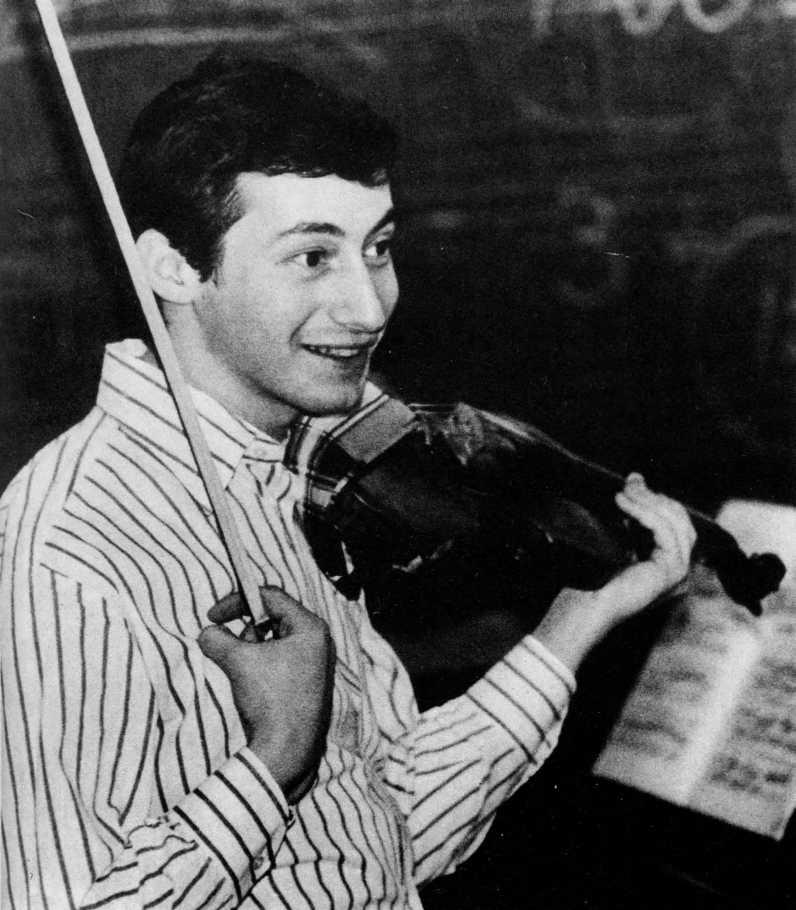 - Yes, it was an interesting concert held in the summer as part of the Cherry Forest festival. It was invented by Mikhail Kusnirovich, a man known for his irrepressible imagination.
- Did he do the Jean-Paul Gaultier fashion show at Kazan Station last year?
- Yeah. And this year, Mikhail Ernestovich took me to the Kiev railway station and asked if it was possible to arrange a concert there. To which I replied that listening to music is better than drinking beer and throwing cigarette butts. When music is played, it feels like everything is fine. The word station is shortened from “vocal hall”, and for one evening we returned the vocals to the station, because together with the orchestra there were wonderful young opera soloists performing Gounod, Bizet, Puccini, Verdi. Concerts at train stations have a long tradition. There was a lot of music. In the middle of the nineteenth century, Johann Strauss conducted summer concerts at Pavlovsk railway station. Our task was not really to meet trains. The idea of the concert was to present new stars of the opera scene, such a gala performance, where symphonic numbers would alternate with vocals. I think we succeeded.
- Do you believe in coincidence and coincidence?
- There are. Actually, life itself is an accident. But I like the chance to direct... Of course, many things in life are surprising, many things you look for an explanation and do not always find. But I am particularly struck by accidents predicted long before they happen. What I thought about, after many years remembered and surprised.
- For example,
- For example, the story associated with the Eighth Quartet of Shostakovich. It is dedicated to the victims of fascism and war. But 15 years ago, I said it was the composer's own requiem. And recently, after the publication of letters from Dmitry Dmitrievich to his friend Isaac Davydovich Glikman, it turned out that my guesses, or rather, my feeling was absolutely confirmed. It’s an utterly ingenious work, written in 1960 in just three days, not only about the loss of life, but also a memory of his own humiliation, fear, and tragedy.
–There have been many conflicts in your life, often provoked by detractors. As a result, relations with decent people were sometimes interrupted, with whom close, even friendly personal and creative relationships had been formed. How did you manage to cope with resentment, annoyance, while at the same time not descending to excuses and clarifications?
- It's really very difficult. And you surprised me with that question. It is difficult to change yourself, and there is nothing to say about others.
– If you are betrayed, what is the best way to react to betrayal – revenge, forget, forgive, erase from life?
- The gospel is about forgiving enemies, but it is not about forgiving friends. Still, I guess we should forgive.
Do you believe that in the end fate punishes for arrogance, malice, humiliation of dignity?
- I do. But only sometimes it is impossible to verify this by yourself.
- After the anniversary tour of 2010-2011, you promised to return to the United States in the new season, but with the National Philharmonic Orchestra of Russia. Does your promise stand?
- There'll be a solo tour first. I will come in February 2012 with the wonderful pianist Olga Kern. On February 18, as I said, she and I will perform at Carnegie Hall and then in Chicago, Seattle and San Francisco. In the autumn, I will return to America with the National Philharmonic Orchestra of Russia.
Zoe Master was talking.