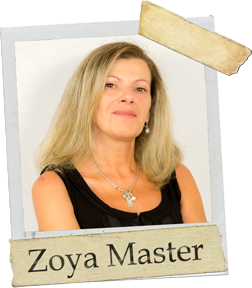
As it turns out, writing about oneself is the hardest thing of all. After all, what is unusual or unique about the life of someone born and raised under Soviet rule who, as an adult, emigrated from a country that soon ceased to exist? What can one child from the sandbox tell another who began a largely similar journey in that very same place?
Each of us had our own street in a small town or a large city, childhood friends and neighbors whose simple stories stayed with us for life and, in some mysterious way, helped shape the people we became.
Except for my student years in Moscow, I spent my entire life before emigrating in Chișinău. I always loved that city, and this is how it has remained in my memory: welcoming, green, warm and bright. Perhaps that is why I have never returned. I was afraid that in its place I might find a poor copy of the image cherished by memory and sustained through long years of separation.
Music has always been part of my life as well. I chose it as my profession. After I emigrated to America, it ceased to be my profession, but moved instead onto the pages of my prose—sometimes becoming the main character, sometimes the muse.
As a young child, I dreamed of becoming a librarian so that I could read books all day and even be paid for it. Although my view of that profession changed fairly soon, the desire to read and put my thoughts on paper stayed with me for life. Still, the principle “if you have nothing to write about, do not write” has always seemed right to me. There was also a standard below which writing felt like pointless scribbling. These two considerations apparently kept me from writing and publishing my own work for a long time. Interviews came first, and stories only afterward. Today my work appears in various publications, including Slovo, Vremya i Mesto, Poberezhye, Panorama, Russky Bazar, Lebed, Chaika, Podlinnik and Russkoye Pole. Over three years, the Boston publisher M-Graphics released three of my books: The Music Teacher, a collection of stories and novellas; Meetings in Time and Space, a collection of interviews with prominent Russian figures; and Two Cat Tales, a beautifully illustrated bilingual Russian-English book for children ages seven to eleven. Even so, I think of myself not as a writer, but as a person who writes and tries to share her vision of the world. If someone finds that vision meaningful and it touches a soul, I will be happy.
— Zoya Master