December 26, 2011
Passion for the Conductor and their Orchestra
This interview was originally conducted in Russian. This is an AI-generated English translation.
Interview with People’s Artist of Russia, former Artistic Director and Chief Conductor of the E.F. Svetlanov State Academic Symphony Orchestra Mark Gorenstein
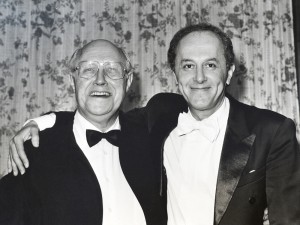
Among the high-profile theatrical and musical scandals of this fruitful year for dismissals and resignations, the removal from office and subsequent dismissal of the chief conductor of the State Academic Symphony Orchestra named after E.F. Svetlanov Mark Gorenstein became perhaps the most controversial. The scandal began during the Tchaikovsky Competition, after the rehearsal was recorded on the Internet. Working with the orchestra - contestant Narek Akhnazaryan did not participate in this rehearsal - Gorenstein uttered a phrase for which, in the end, he paid for the loss of his position. Is it possible to dismiss a man who gave nine years of his life to an orchestra and made this band one of the most successful in Russia, both professionally and economically? It turns out that this is quite easy in the presence of several components: the unspoken order of the superiors, the difficult nature of the conductor and the betrayal of colleagues.
- Mark Borisovich, in your interviews you say that you were completely unprepared for the current situation, that you did not expect anything like this from the Ministry of Culture or from musicians who refused to work with you. Does this mean that before the scandal at the Tchaikovsky contest, you did not feel negative attitude towards you and did not suspect how all this could end?
- I didn’t expect it, and that’s why it was so hard to watch. I have worked with many musicians for many years, and with most of them I have not only good relations, but friendships. It never occurred to me that these people could do what they did. I still can't understand that. Even acting under the dictates of the people of the Ministry of Culture, it was impossible to sink so low.
- But you must have read the unflattering comments about you at the Classic Forum, many of which appeared long before the Tchaikovsky Competition, albeit under pseudonyms. And Russian journalists were not favorable to you.
- You know, in fact, the history of bullying did not begin now or under the current minister. After all, back in 2000, when Svetlanov was expelled from his orchestra, I was offered his place, but I, like some other conductors, refused to come to the band, where meanness won, and even then the attacks began.
- Do you draw an analogy with today’s situation?
- The situation is indeed reminiscent of the current one, only that story was not provoked by the Ministry of Culture, although it was encouraged. In addition, the story with Evgeny Svetlanov lasted three years, not three months, as in my case. And even those musicians who ate the great Svetlanov did not reach the level of meanness to which the current ones have reached.
- That is, you define what happened to you as the persecution of a conductor – orchestrators.
- More precisely, I harass the conductor with the filing and permission of high authorities.
And this should not happen in a country that declares the priority of laws, which, incidentally, should work in relation to journalistic responsibility for published material. In 2002, when I was appointed to the Svetlanov orchestra, the journalists broke off the chain. They told me how bad a conductor I was, how I could not do anything, justifying my conclusions with anything: my unsound name, my non-Moscow education, but not with facts. To be honest, it annoyed me, but it didn’t really bother me, because the only criterion by which a performer’s success is determined is the attendance of concerts. And for eighteen and a half years of my work in Moscow, only one year there were no full halls. I am referring to my first year with the Russian Symphony Orchestra. But since the second season, we have been working in crowded rooms. Therefore, when you read the reviews of Russian and Western critics who visited our concerts, the picture looks different than in the reviews of biased journalists.
- Good. Let's go back to the reasons for the orchestra's discontent. Why do they call themselves “new serfs”?
- Let us proceed from what the conductor of any orchestra wants to achieve from musicians in order for the team to be successful, in demand, and play at the highest level. Of course, it is necessary to make people feel responsible for their work and be ready for it. Yeah, I made you prepare for the first rehearsal.
– Isn't that self-evident?
- Probably, it is really difficult for a Westerner to understand that Russian musicians, for the most part, allow themselves to come to work completely unprepared. I forced the parties to learn at home, and if they were not learned, I fined them. Because there was no other way. Perhaps that is why such musicians, looking at what is happening in some other orchestras, began to feel serfs.
- Are you saying that in the orchestras of Spivakov, Bashmet musicians do not teach the party and they get away with it?
- I want to say that my exactingness, pedantry and absolute dictatorship in the field of music, not everyone likes. And I believe that if a conductor, the same Spivakov or Bashmet, comes to work with an absolutely learned score, then why does he not have the right to demand a learned part from a musician? It is impossible to achieve the desired result from people who read from a sheet, no matter how well they do it.
- Have you taken musicians from other orchestras?
- No more than ten years, I think. Basically, I took either students or young musicians and put them in pretty tough conditions. But at the same time, I worked with them personally – I mean not one on one, but in groups. Two years later, they became very good performers. It takes time to develop a high-class musician. I never spared my time and therefore had the right to demand the best from others.
- Perhaps you abused your authority by exhausting the orchestrators with unreasonably long rehearsals?
- The number of hours spent in rehearsals did not exceed the norm determined by trade union law. The intensity of the rehearsals may have been higher than they wanted. Maybe that’s why, after working with me, some musicians went to other bands and, by the way, became soloists of orchestras everywhere. New serfs? What the hell is that? Yes, there were a lot of things that we couldn’t do: not teach games, be late, not play out before rehearsals, talk on a mobile phone, take text messages while working, drink. Maybe it’s serfdom for some, but professional ethics for me.
- You once said that conductors and orchestrators are by nature antagonists. What exactly is the stumbling block? The conductor’s job is to know what he wants, and the musician’s job is to play his part according to the conductor’s reading. What's the conflict?
- That's how the profession was invented. Imagine for a moment that I would be forced to come to your house and say for four hours in a row that you're doing a lot of things wrong, I think in three days you'd want to get rid of me.
- Well, in America, it's called comparing apples to oranges. You don't make comments to musicians in their kitchen, but at work. To be dissatisfied, to achieve results - your duty, you get money for it.
- And yet, all over the world, musicians by definition don't like their conductors.
I agree that in each, especially the creative team, there will be offended or dissatisfied. But here Sergey Girshenko is a wonderful violinist, concertmaster of the orchestra. He was so angry with you that he didn’t even notice how he insulted himself and the orchestra as a whole, saying, “We hope we can finally make real music, not amateur solfeggio.” It turns out that the State Symphony Orchestra under the leadership of Gorenstein for nine years played some kind of bile, and the professor of the Moscow Conservatory Sergey Girshenko forcibly participated in this outrage. Did you try to explain to yourself the reason for such hatred of the musician, who, by the way, after each performance, shook hands?
The figure of Girshenko is a mystery to me. As far as I know, this is not the first such story. I can't explain his behavior. I don’t think I saw him as the person he really is.
- So you had a normal relationship all these years?
- Absolutely. For nine years between us is not a cat, and her shadow did not run. By the way, in different years, both his sons worked in the orchestra, and I heard nothing but gratitude from this family. Why would he be dissatisfied if I met him in almost everything? Girshenko, with my consent, went to some of his concerts, to master classes, while receiving all the salary. And I must have broken the law by paying him a full grant.
- Maybe you didn't meet him in some way?
- He wanted to play with the orchestra more often, but he got one concert a year. More, unfortunately, I couldn't give him. But it's hard to believe that he behaved this way. Even if we were sworn enemies, some rules of ethics would have to work. Yuri Abramovich Bashmet, who recently gave an interview, was shocked by the behavior of Girshenko. Normal people believe that Girshenko committed moral and professional suicide.
Although after Sergei Georgievich compared the victory over me with the victory over fascism on May 9, 1945, I realized that in the sense of decency there is nothing to kill. He may have gone mad at his own “greatness.”
- Did he tell you anything he told the press?
- You know, on the channel "Culture" there is a program "Context". And so the editor of the program, in the midst of this scandal, wanted to invite Girshenko and me to openly say what he says behind my back. But Sergey Georgievich, of course, refused. I would like to repeat that everything stated in the letter, where Girshenko’s signature is the first one and which was circulated by some journalists, is an absolute lie. You know, there's a saying, "The bigger the lie, the sooner they'll believe it." It is attributed to Goebbels, and I would not quote it if the endless stringing of one false text on another did not remind me of this fascist method of moral destruction.
- In a short article written by Norman Lebrecht and posted on the Internet, it is said – however, according to an anonymous person – that you can fire a person just because he looked at you in the wrong way. It also says you threatened a journalist. However, there is no actual confirmation of this in the text.
- You know, Norman Lebrecht is very lucky that I am not a rich man and that I live in Russia, because if I lived in America, I would sue him for a couple of million dollars.
- Well, this note is written with other people's words, and all the names are replaced by incomprehensible initials, although it is already clear from the title which name is used.Russian conductor abuses his orchestra(Russian conductor mocks his orchestra)
- Who cares? He is still responsible for the publication. What if I told others he was a thief, a scumbag and a scumbag? However, Mr. Lebrecht published several books in which he did not hesitate to pour mud on the great conductors of the nineteenth and twentieth centuries. An adequate person who considers himself a professional critic would not call Karajan a bad conductor. As for threats, I couldn’t even think of it because I have different notions of decency with these people, and I will never sink to their level.
- But for the sake of fairness, I must say that some publications have given you the opportunity to express your point of view. Why did the Ministry of Culture ignore both your arguments and the letter written by famous musicians in your support? In general, has there been a fact-check about the band's letter refusing to work with you??
- You don't want to understand the main thing: the orchestra didn't make up the whole story.
The Ministry of Culture, and it would be strange if they checked themselves. Getting a fox to guard a chicken coop is a pretty stupid thing to do. Today it is clear to me that the story was pre-planned, wonderfully directed and brilliantly executed.
- The same version was recently voiced by Jan Smirnitsky in the article “Tiger jump in soft gloves”, dedicated to the anniversary concert of GASO. This is what he writes: ... his (Yurovsky) Z.M. The second person of the state was the first to notice at some concert, asking, why are you not working in Russia? (And then everyone caught on.) Mr. Smirnitsky goes on to say to himself: “These are all rumors. Unfounded, of course.”
- Apparently, he is referring to a conversation that took place in St. Petersburg after the concert, in June of this year. One very high-ranking boss expressed surprise that an unknown Russian conductor was working abroad. He replied that he did not yet have a decent place in Russia, to which the chief, I am sure he did not mean me, remarked that it would be good to find such a place. That's it. Those who wanted to be there were there. So they thought and came to the conclusion that the only comfortable person is Gorenstein, because at a high level there is no one to stand up for him. But on the other hand, there is nothing to show him, because, firstly, he is not a thief, and secondly, he keeps the orchestra at a high level. Here you are.onTake it from the outside and say the right thing – why don’t they check the allegations in the letter? And why check when the same letter was dictated by them?
- That is, you believe that an unspoken instruction was given, and the choice fell on you, and the officials and the orchestra enthusiastically picked up the signal sent from above.
- Exactly.
- Usually, in such cases, the first sign of impending trouble is a financial check. Have you been checked for theft?
- Sure. And they found that the iron was paid for in the wrong count. That's it.
- You knew that finance was clean, otherwise you wouldn’t be so desperate to prove yourself right.
- Of course, I knew there was nothing to complain about. Many times in recent years, we have heard about dismissals among heads of federal agencies. Why didn't they allow themselves to be outraged? Because with all the money they stole, one word of outrage would mean an immediate jail sentence. I don't take money, I don't bribe, I don't drink. So catching me on something is pretty hard.
- Then a counter-question - if everything was directed, why did you sue the Ministry of Culture? What do you hope to achieve?
- It's a matter of principle to me. In the process of the energetic mouse fuss, there was so much meanness, provoked abomination and violations that just swallowing it all would be wrong.
- You talked to Avdeev for more than an hour, tried to explain your position, to hear the specific reasons for his dismissal.
- Yes, and in an hour he didn’t say anything concrete, he couldn’t show a single fact, but despite this, he summed up: “And I’ll fire you anyway.”
- “I don’t care” means I want to, can I do it?
- Exactly. But to do this, you need to understand who Avdeev is. This is a man who worked in the Foreign Ministry, who has never been a federal head before his appointment and has the same attitude to culture as I do to space. Why is it even possible to take a person from the outside and appoint a government of a huge country? Look, recently removed Finance Minister Kudrin, one of the most successful people in this position in the history of the Soviet Union and Russia. But in his place appointed his deputy, not the director of the market, for example. But in culture since Soviet times, for some reason everything is possible.
- Perhaps for you, Mr. Avdeev is a man of amateur activity, and for others - a native father. After all, in life in general and in art in particular, much depends on a person’s subjective view of what is happening.
- To give you an idea of what I am talking about, let me give you just one example.
In May 2009, Yuri Sherling was appointed rector of GITIS. Less than an hour and a half later, all the professors of this institute went out to protest. Two hours later, Minister Avdeev canceled his own order and came to GITIS to apologize. I think it's a record worthy of Guinness's book as the shortest assignment in the world, which I think will be hard to beat in the next 100 years.
- What else did Mr. Avdeev tell you?
- He said, “All the pots are broken, nothing can be returned.” ?
- I mean, he would like to change the course of events, but in this case it went too far?
- He wasn't going to change anything. I said, "Who broke these pots if not you?"
- He said, “Your musicians are probably yours,” and then there was a completely meaningless dialogue. I reproached Mr. Avdeev that it was the officials of his Ministry who provoked the musicians.
" Who, Shalashov? So I suspended him. was the minister's response.
I knew it was a lie and I was indignant: Note, you yourself voiced the name Shalashov. And who are you telling me he was suspended? ?
- Maybe he was gonna do it?
- Of course not. The fact is that the Minister, not shy, so, incidentally, makes a false statement, because one lie less, one more - this does not change things.
- Have you been asked to leave in a “good way” and settle things peacefully?
- Yes, Mr. Avdeev tried to persuade me either to leave on my own accord or by mutual consent to terminate a contract signed before March 2013. I did not consider it right to agree to this, at least because no claim was made against my work.
- You were dismissed under Article 278 Part 2 (due to the decision of the authorized body to terminate the employment contract). As far as I understand, according to this article, the head (but not the average employee) of a federal organization can be fired even without explanation?
- Indeed, this is a unique article that has no analogues anywhere in the world. The head of the department has the right to dismiss at his own request and is not obliged to report to the higher management. Simply put, his decision may depend on which foot he stood. If only the State Duma thought Before you pass a law that allows you to fire anyone just because someone wanted to, there would be no precedent for that.
- In fact, the main “accusation” was the humiliation of human dignity. There are 100 people in the orchestra, 62 have signed.
- Yes, the rest, despite intimidation and threats, decided not to participate. You know, I had a number of colleagues whose integrity I was absolutely certain of. I was wrong. On August 17, the musicians signed a letter, and the next day I called one of them – a person who came to my house, celebrated the New Year with us, was considered a friend. I asked him, did you sign? He said yes. I said congratulations and hung up the phone.
- Did he explain his choice?
- I did not ask about the reasons for such an act.
- What would you do in such a situation?
- I know I wouldn't do that, because a clear conscience is more precious than anything else. The story of this letter is quite strange. On June 27, the orchestra in its entirety wrote a letter to the Minister that the relationship in the team is normal, and there have never been problems with the national issue. And on August 17, that is, after a month and a half, the same people are demanding my dismissal. If we recall that from June 30 to August 5, the orchestra was on vacation, and I did not meet with musicians all this time until the funeral service of N.A. Petrov, and then was on sick leave, then the question arises: What changed the attitude of these people to me so coolly? And when you start looking for a logical explanation, you involuntarily link the second letter with Sergey Girshenko’s visit to the Ministry of Culture. It was August 15, and apparently, after receiving "valuable" instructions there, on the 17th, a complaint from 62 orchestrators appears. I know how these signatures were collected. On the fifth of September, another, third letter appears from musicians who have been fired by me and who have not worked in the orchestra for a long time. And then it turns out that some of the signatories didn't even know the letter existed. Two people even wrote a retraction – it’s online.
- And the rest of those thirty-five you fired for?
- In 9 years of my work, I have not fired anyone, except three people for absenteeism. The rest of the band left voluntarily. But the fact is that among the signatories of letter No. 3, 15-17 of those who were the main instigators of the persecution of Svetlanov in 2000. They allowed themselves to mock the great conductor, and now they write letters and feel great at the same time.
- In all this, are you blaming yourself for something? Perhaps you made a mistake in something?
– You know what I feel guilty about? I felt like I was doing the right thing when I was demanding hard work at the remote and we were friends outside the stage. I thought that what was happening on stage, my rehearsal emotions, had nothing to do with ordinary life. And in the end it turned out that I was a very “bad” person, because for all these years I dealt with the personal problems of musicians: I arranged their children in kindergarten, negotiated with doctors, sponsored them for teaching work, represented them for titles, lent money, not always getting them back. I’m a bad person, of course, but our orchestra, the only one in Moscow, had health insurance.
As soon as we got the grant, I set up a fund where everybody gave money to the band's pensioners. In other words, pensioners receive a second pension.
- Quite by chance, while working on another interview, I heard a story that you helped a child in a difficult situation. What is this story?
- Yes, I did not betray and did not intend to publicize this case: one day, sitting at home, I saw a story on TV about a boy who had his spine broken. I called the program, offered money, and never “promoted” this story. And this is not the only case, I always helped those who needed help. You know, a good friend of mine, a sound engineer with whom we have recorded many CDs, a wonderful professional and a very decent person, said a simple thing – they did not forgive you for forgiving them.
- Tell me about what happened at the last rehearsal.
On September 28, I went to rehearsal. But there was no one to rehearse with, because 96 percent of the musicians didn't go on stage, they watched from the audience how it all ended. You see, the people who yesterday convinced me of their friendship, thanked and flattered me, betrayed me. This is much worse than what the Ministry of Culture has done. For example, there was no one on the stage who was long overdue for retirement, but I always felt sorry for him. I feared that as a 72-year-old pensioner, he would simply die of loneliness. By the way, he has already managed to “thank” for the solidarity shown with the band by the fact that he was fired immediately after I left the orchestra. There I saw another musician, whom I had just taken from another orchestra for friendship – once, in that first Svetlanov orchestra, we worked at the same remote control. Before the rehearsal, as I walked onto the stage that had become a scaffold that day, this man came up, we hugged and he stayed in the hall. There were four on stage.
- How do you explain that to yourself?
- Fear. People were intimidated.
- But it's not 37 years old.
- Never mind. Nothing has changed or could change. A similar story happened to Yuri Temirkanov’s orchestra in the early 2000s, when his orchestra was also very “excited”. But the difference is that the then Minister of Culture, immediately came to the St. Petersburg Philharmonic, went to the orchestra and said that the Ministry considers the actions of the musicians illegal, and Temirkanov was and remains the chief conductor of the orchestra. Those who do not like it can resign, and in extreme cases, Yuri Khatuyevich will be able to assemble a new orchestra. And after five minutes, everyone calmed down and there was silence, like in a cemetery.
- And you also expected such support.
- Well, to be honest, I did not expect that the head of one of the most visited orchestras, to which for 18 years of work in Moscow not a single claim was made, the conductor, who received over the years the title of Honored Artist, People’s Artist of Russia, the award of the Government of Russia, the Order of the IV degree for services to the Fatherland, will be dismissed, virtually having no grounds for this. Now, in connection with my 65th birthday, I was introduced to the Order for services to the Fatherland of the III degree, but Mr. Avdeev blocked it.
- Perhaps he did this in connection with the scandal at the Tchaikovsky contest? I should note that immediately after you were suspended from conducting the competition, the media covered the conflict in different ways. The infamous phrase, “Don’t care what this talent plays, this aul, you have to play with me,” was said in the presence of the contestant. Later, from your interviews, it became clear that Akhnazaryan was not on the stage at that time, and for some time he did not even suspect about the scandal that broke out. Please explain how it all went again.
- On that day, June 25, we met with Akhnazaryan and spent an hour together in the morning – this is a condition of the new rules introduced at this year’s competition.
- That is, the conductor works with the contestant before the orchestral rehearsal.
- Yeah, and since I never look at time, when it comes to work, we did a little more. And that unfortunate place in the concert Dvorak, we discussed at the same time. I told him exactly what to do, and he seemed to understand. Then we went out to play the rehearsal with the orchestra, and when we got to that place, he played inaccurately again. When I said after five replays that I couldn't join, he said, "It's weird, everybody can and you can't." It was said very quietly, but on the record it is easy to listen. If someone does not understand, then conductors understand that such a remark can only be qualified as outright rudeness.
- And then you...
- I also quietly noticed that if he allowed himself to say something like that again, I would put down the wand and leave. After that, I didn’t make any more remarks, we finished the game and he left. We then worked with two other performers and the rehearsal ended at seven. It started at two.
Under Russian law, an orchestra must not play more than three hours and forty-five minutes. But the organizers of the competition made a schedule that could not be resisted, and in the end the orchestra played five hours with short pauses. Of course, everyone's tired. I started working that day at 10 a.m., first rehearsing with the soloists and then with the orchestra, for a total of 9 hours, without lunch, on one coffee. But, nevertheless, I decided to leave the orchestra after seven to study Dvorak and only for the good of Akhnazaryan.
- Did any of the other contestants perform this concert?
- No, Dvorak’s concert was played only by Akhnazaryan, so after a long rehearsal day we stayed to study this work.
- I mean, they wanted the best, but it turned out what happened.
- Yes, but I repeat, Akhnazaryan has not been on stage for three hours, so, as you say, the infamous words were not addressed to him. One phrase was remembered as "aul", in the second I said that the orchestra played loudly. So the conversation was only about the joint music and lack of manners of this contestant.
- But if at seven o'clock in the evening the rehearsals with the contestants ended, why did you keep recording after that? After all, usually only rehearsals with soloists are recorded at competitions.
- As a child, I was taught that peeping through a keyhole is indecent. I mean, to covertly record the conductor's work with the orchestra is as indecent as, for example, watching people in the bath.
- You may be told that a leader should always be able to control himself.
- If you come to rehearsal tomorrow in any theater or orchestra, and the director or conductor does not know that they are being recorded, you will hear something that will make you uncomfortable. But this is a natural, normal process. The boss doesn’t insult anyone personally, which I didn’t. It's a conversation within the collective, and it's not taken out into the street or broadcast to the world. But they wrote down what had nothing to do with Akhnazaryan. What I meant was that he was not a very well-mannered young man, that he had not been taught to respect his elders, that he misread the conductor’s remarks, and that was all I meant.
I played this concert with Mstislav Rostropovich, Natalia Gutman, other outstanding cellists of the world, and believe me, I know how it was supposed to be played. But the most interesting thing is that Mr. Akhnazaryan himself said in his interview that there was no conflict, that I did not say anything offensive on stage.
– And Valery Gergiev immediately suspended you on the eve of the third round.
- According to my information, Valery Abisalovich, who was the chairman of the organizing committee of the Tchaikovsky Competition, learned about this story after I was suspended by Mr. Avdeev. Gergiev did not want the contest to be remembered for scandal. As far as I heard, he said that if he had been informed of what had happened in time, he would have settled everything in a minute, because there was no reason to fan the global scandal. Again, I’m talking about it from someone else’s words. But I know for certain that Messrs. Shalashov and Avdeev decided to cling to the aul and make a problem out of it in order to remove me from work, which they succeeded in. Why? I explained this at the beginning of our conversation.
- Do you think Narek Akhnazaryan won the first prize because of the scandal?
- First of all, I'm not a judge. Secondly, I did not conduct the third round and did not listen to the competition. Mr. Akhnazaryan is a very talented musician. I think the scandal helped him a little. But personally to Akhnazaryan, to this young man, I have nothing: I understand the contest, the nerves. It's not his story at all.
- Is it true that during the performance of the GASO in the third round, part of the audience was hostile?
- Well, not against GASO, but against me. When Akhnazaryan played with the orchestra – two days in a row – and the State Academic Orchestra of Russia was announced, chief conductor Mark Gorenstein, whistled in unison with my name. So it was not the general public that was attuned, but the friends and relatives of Akhnazaryan’s mother. On the evening of June 26, a letter appeared online calling me a Russian foshist. Yes, it was through the "O" and the Russians, which I especially liked. She threatened to raise the Armenian diaspora of Moscow against me, which she did. Then there was a message from three women at the Classic Forum, written in broken English, in which they called for retribution (Akhnazaryan’s relatives live in America), because in their opinion, if this happened there, the conductor was already looking for a job. And the next day, Mrs. Bederova, my “favorite” journalist, and I, her “adorable” musician, broke out in an article titled “It’s Uneasy in the Aul” in Moscow News. A normal person understands that there are no auls in Armenia, so my expression had nothing to do with racism, nationalism and Akhnazaryan personally. But she “translated the arrow” and hinted that I actually meant Gergiev, because he is from North Ossetia, and there are villages there. Well, the rest of us played this story as if it were on notes, and you know the result.
– Well, it happened, Gorenstein was fired. What were the first steps of the “new serfs” from slavery to freedom?
- First, they immediately canceled the oven tuning I had introduced when I first joined the orchestra. It started 25 minutes before rehearsal. The rest had to play out in other rooms. Orchestras arrive 10-15 minutes before the rehearsal. Second, they canceled the general rehearsals. Why go twice a day when the rehearsal can go smoothly into the concert? Everything is done to work less.
- Sorry about the personal question. Your mother recently died. Did the Ministry of Culture offer you condolences?
- What ministry, what do you mean? They didn't feel it necessary to do that.
- Hurt?
- These people do not deserve to be offended. Avdeev said that the time of the Gorensteins has passed. Fortunately, his time passes forever, and his wonderful name will be pronounced with mockery and horror, because no minister before him has done more nasty things than he. Here he, signing a contract with Vladimir Yurovsky, complains to him that the orchestra is in poor condition and at the same time allows him to spend with the orchestra six (!!) days a season, that is, two concerts. Even the journalist Jan Smirnitsky, who is clearly not sympathetic to me, said about Yurovsky. chief invitingThe orchestra is a leader who will invite conductors rather than work with the orchestra personally. Then what kind of “disorder” is the orchestra in if it is ready to play with Dutoit, Temirkanov, Elder, without a chief conductor? And if that wasn't the case, why was Gorenstein filmed? For someone saying Gorenstein hurt him?
Over the years of my work in Moscow, I created two orchestras from scratch without stealing any musicians. One is now led by Yuri Abramovich Bashmet, the other is Svetlanovsky. Of course, it is a shame that those who live their own business and achieve success are shamelessly dismissed, and those who destroy are put on a pedestal and promoted. After all, almost all conductors who worked with the State Orchestra were forced to leave this team against their will: Rakhlin, Ivanov, Svetlanov.
You know, in 1985, I left the country and worked abroad because a high-ranking official openly told me that conductors in the Soviet Union do not work with such a name. Seven years later, I came back believing that something had changed in Russia. After 20 years, I realized that nothing had changed. Especially with regard to people who are inconvenient to power, like me, who tell a scoundrel that he is a scoundrel and do not give hands to a scoundrel.
But as you know, time puts everything in its place.
- They say the less you try to think about the bad, the harder it is to do it. If I ask you to remember the good things, what comes to mind first?
- Fortunately, fate gave me the opportunity to cooperate and make friends with wonderful people, great performers, including Mstislav Rostropovich, Natalia Gutman, Viktor Tretyakov, Yuri Bashmet, Vladimir Minin, Nikolai Petrov. I'm proud to have played in the best halls in the world.
For 18 years, my orchestras had crowded concert halls. You know, someone said the truth always has witnesses. My witnesses are wonderful orchestra recordings and the memories of so many people who came to our concerts.
Interviewed by Zoe Master