February 24, 2012
“Every Drawback is the Opposite Side of Accomplishment“ – an Interview with the Writer and Playwright Nina Voronel
This interview was originally conducted in Russian. This is an AI-generated English translation.
“Russian Bazaar” – February 24, 2012
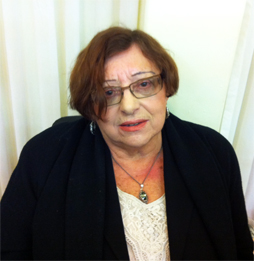 Nina Voronel:
“Every fault is the other side of dignity.”
- Nina, you write that the C-Club is a community of mediocre people “who speak and act like a crowd.” This brotherhood includes people for whom the opinion of the majority is the determining factor. Do you personally, meeting with such people, enter into an argument, try to convince them?
- First, I must clarify: I do not consider them all mediocre, because among the C-lists there are often people in their field quite talented and extraordinary. But in the field of public opinion, there are two options: some simply do not have the intelligence to think and analyze – and therefore perceive what someone has said without delving into the essence. I suspect others of self-interest. They know from which side the bread is buttered. Let me give you an example. Last week, two Israeli documentaries won prestigious international festival awards. One is about the occupation of Arab territories, the other is about the fight over the fence with which our country is trying to protect itself from terrorists. Both films are clearly pro-Palestinian. It would be the opposite, not only would they not be awarded prizes, but even nominated to participate in these festivals.
- That is, today in Israel, patriotic sentiments are not respected.
- Nope. Even some Israeli historians carefully write about the fact that the Israeli people as such does not exist, and if we assume that it was, then some are not real.
- Unlike the “real” Palestinian? But why cut the bitch you're sitting on? After all, these historians themselves are representatives of that “not real” people.
- But they are accepted in Oxford because their ideas are in tune with what is now fashionable there. What is the point of arguing with people who, like us, know the truth but prefer lies because they want to succeed, to live better?
- And these people you call C-lists because...
- Because excellent students know how to think and this stands out from the crowd. And the Cs prefer to merge with her.
- Of course, you have read that Patriarch Kirill presented Mahmoud Abbas with the prize “For outstanding work to strengthen the unity of the Orthodox peoples”, or rather, for the preservation of holy places?
- And that sounds like a mockery, because they survived almost all of the Christians. And it turns out that Abbas was awarded $30,000 for not allowing Christian shrines to be destroyed. Although everyone knows that Christians are fleeing from Arab countries, there are almost no Christians left. But C-listers willingly believe the official version.
- In fact, Abbas was rewarded for having previously handed over several land plots to Russia. By the way, he promised to give the money to Palestinian students studying in Russian universities.
- Quite a politically correct promise.
- We are all watching the cancer cells of political correctness permeate every stratum of society. Why do you think that the tendency to bypass inconvenient topics, to omit facts, not to call things by their proper names is so dangerous?
- I think, to a large extent, the demise of civilization is predetermined when things cease to be called by their proper names. Nature or G-d has arranged that when white is called black and black is called white, at some point everything collapses because some very important law of nature is violated. Confucius taught that words must be true and actions must be decisive. Words must be consistent with their meaning. And when the substitution of meaning begins, everything goes away.
- A few years ago, I interviewed a young, highly educated American rabbi. He spoke five languages and taught at the university. When I asked him if he would like to live in Israel, he replied, “No, because there is too much rejection of Arabs – Jews.”
- That is, the Arabs openly declare that they want to wipe Israel off the face of the earth, blow up buses, brutally kill civilians, and the Jews allow themselves to be hostile to those who do not even consider it necessary to hide their hatred. Did he believe what he said?
- I had no reason to doubt that. But I can.
Lyudmila Ulitskaya, a Jewish by birth, Christian by faith and one of Russia’s most widely read writers, said that “both sides are aggressive” in the Israeli-Palestinian conflict. That is, it equated the guilt of Israel trying to survive with the guilt of the Palestinians, who regard this very tolerance as a weakness and an invitation to new aggression. Is the fact that educated, intelligent people do not want or can not see the obvious, in your opinion, explained only by self-interest?
- I guess so. You know, I'm not a big fan of Ulitskaya as a writer. But she's a smart person. In any case, she is smart enough to come to Israel for treatment. But during the book fair, she was brought together with one of the most left-wing Israeli writers, Meir Shalev, and during a joint conference they talked together about how bad things were for the Arabs and blamed Israel for this.
- As far as I know, Shalev is the most famous writer who writes in Hebrew. In one of his interviews, he said the following: “Since the Jews invented monotheism and built Jerusalem, now they are capable of high thoughts, are able to say that this city is first of all an idea, and not just a piece of land to be seized and held.” The Temple Mount must be a spiritual concept.”
- I don't even know what he's talking about. It is difficult to imagine that Shalev really wants to give Jerusalem. And if he does, why is that thought so high? I would like to believe that this is just a bad translation of the interview from Hebrew. I tried to read Shalev. One of his most famous books, The Russian Novel, describes the birth of the Jewish community, which is surrounded on all sides by Arabs. But interestingly, the Arabs are not there. The parents of the hero were killed by a grenade, but it is completely unclear who abandoned her. Or one of the characters is a strange, crazy person. He says he has to fight, but he doesn’t say who. He is depicted as stupid, disgusting, rolling in mud and dung, because that is where he belongs - because he called for struggle. However, all this is done in the novel exceptionally elegant and talented.
- And yet, I cannot agree with your opinion about Lyudmila Ulitskaya. It is difficult to suspect her of self-interest, especially given her civil attitude towards Khodorkovsky.
- Do you mean their correspondence published in the Banner?
- That too.
- Are you saying it was a heroic act? And who is more famous for this publication – her or Khodorkovsky?
- It was an act of decency and courage. Isn't it?
- So, did Ulitskaya get jailed or stopped printing? You know, for five years, while Julius Daniel was in prison, I corresponded with him. Then, when he was released, my husband and I followed him to Vladimir prison, and we were in big trouble. Sasha was practically kicked out of work. And I didn't try to publish my correspondence with Yulik because he was our friend. And here she writes, oh, who are you, Mikhail Khodorkovsky? You know, he wouldn't have been forgotten without Ulitskaya. By the way, with all due respect to this man, it's hard to believe what he said. It is impossible that such an intelligent, astute man, the son of a sixtiesman, should be so naive in his views. Most likely, he just for the time being had a career. But I repeat, I have great respect for his steadfastness, for his decent behavior, and I sincerely feel sorry for his family.
- Since you mentioned Julia Daniel, let’s talk about your memoirs. You and your husband (Alexander Voronel, professor of physics at Tel Aviv University, editor-in-chief of the magazine “22” – Z.M.) actively participated in the dissident movement. Andrei Sinyavsky and Yuli Daniel were not just like-minded people, but also friends. You took an active part in their fate during the 1966 trial. And after almost 40 years, unexpectedly released two books of memoirs “Unadorned” and “Sodom of those years”, which told about the people close to you many unsightly things. For example, you wrote that Sinyavsky was an informant or a KGB employee. And in general, it turned out that many idols of those years, the rulers of minds are unsympathetic personalities. Naturally, the book caused a scandal, you were reproached for inauthenticity. A lot of people were upset and broke up with you. And you wrote, "I didn't think about the consequences, the resentment and the resentment." What I wrote seemed too important to me. distraction trifles».
Are you still convinced that it’s nothing to offend a person who for many years considered you a friend, and that the truth should be told about everything, always and everything?
- First, I wrote about things that were not known. I didn’t care how the public would treat them. It seemed to me that it was important for history to preserve living people, not marble statues. Second, working on my memoirs was an absolute happiness for me.
- But was it worth sacrificing friendship in order to enjoy it?
- Yeah, I was offended by a lot of people. Well, Maria Sinyavskaya's reaction didn't bother me, because I had already stopped counting her among my friends. But besides her, many true friends were offended, and not only about the memoirs. And yet, to answer your question, I should have. Especially since I haven't betrayed any of them or put them in jail. Moreover, they all know perfectly well that I did not invent anything, wrote it as it was. Then why did they have to end the relationship? Probably because it wasn’t originally a friendship.
- And Vladimir Voinovich was on the other side, too?
- I guess. After the publication of his book on Solzhenitsyn, we did not meet or talk. But since our mutual friend Ben Sarnov had a quarrel with me, I think his reaction was partly due to what I wrote about Voinovich, or rather about his book on Solzhenitsyn. I do not worship Alexander Isayevich at all. But I think whatever it is, it's a shame to write badly about it. I was especially offended by Voinovich’s phrase about the Gulag Archipelago: “You think I knew this for a long time.” Maybe he did, but he didn't. And Solzhenitsyn wrote. And this “small” difference puts a fence between them, which Voinovich will never climb. But again, I don’t want to offend anyone.
- Did you meet Solzhenitsyn?
- Yes, we met once, in 2002, under special circumstances. Natalia Dmitrievna drove behind us and brought us to a rather strange place: a dacha, a fence, where a soldier stood. In general, it turned out to be a house that Alexander Isaevich built himself.
- Apparently, you are talking about the house in Strogino, which was built on the site of the dacha of Marshal Tukhachevsky. In 1994, the Moscow City Hall – for services to Russia – transferred Solzhenitsyn to life ownership of this site, and he built a house to live and store the archive.
- The attitude towards Solzhenitsyn was already ambiguous then. Society was divided into two camps: for Solzhenitsyn and against. And I saw no reason to disavow a man who had given me such respect and admiration. So I stood up for him, just like Ulitskaya stood up for Khodorkovsky.
- Did your book “200 Years Together” surprise you?
- Of course, there are a lot of unpleasant moments, but what he did before, did not cancel?
– In your poem "Obsessed," you write: "We think we're still going to make it." Loving loved ones and paying debts”.
Today’s generation knows little about people who risked their freedom to reprint or simply read a banned book. Are you aware of the risks you were putting yourself and your family at?
- Sure.
- A few years ago, I asked a similar question to Sophia Bogatyreva, whose ex-husband, a well-known translator and dissident Konstantin Bogatyreva, was brutally murdered. She said that participation in the dissident movement was due to "the Russian tradition of coming to the aid of those in need, as well as loyalty to their ideas about morality."
- Yeah, we knew Bones and Sonya. The answer is beautiful, but implausible. You know, it wasn't all of a sudden.
We were friends with Yulik Daniel and Andrei Sinyavsky for many years, and only three years before they began to persecute them, they told us about what they were printing abroad, let us read these texts. And we got carried away by the situation because we didn't like the Soviet government either. We entered a very anti-Soviet house where young people gathered. By the way, there came Ulitskaya, who was then a quiet, modest girl. The husband of the owner of the house was a participant in the famous “knitting business”. Not only was this house disliked,
They hated the Soviet Union from the very beginning. The parents of the owners of the house, the Nepmans, were tortured, beaten, sought gold. So we got together, we talked about existing life, all these processes, literary problems. When Pasternak was expelled from the Writers' Union, Sinyavsky managed to take Daniel with him, and we waited all night for them to see how it would end. We didn't suddenly join this movement, we were originally involved. Our biography brought us there. When my husband was 14 years old, he in Chelyabinsk, immediately after the war, created a circle where he printed and pasted leaflets with the same boys. Then he spent six months in a camp for children, which is worse than an adult prison. At that time there was no word dissident, but there were people who disagreed with what was happening around them.
- So maybe some people are really born with the virus of opposing any power? I came across a review of Valery Serdyuchenko, dedicated to your memoirs, where he writes: In any intelligent generation, a certain percentage of individuals are born, which do not feed bread ... but let us reorganize humanity. A dissident, even if he were in paradise, would immediately protest. You immigrated to Israel in 1974. Have you ever wanted to try and change or improve something?
- When we got here, we knew almost nothing. I will even give you an example of my stupidity. I complained that compared to the Soviet Union, Israel had no problems and therefore nothing to write about. It took ten years to see the real problems of this country, and another ten years to learn who is who. And then a funny thing turned out: if in Russia I was with the intelligentsia against the people, because the people loved power and obeyed it, and the intelligentsia read, wrote and resisted this power, then here I am with the people against the intelligentsia. Because the intelligentsia here is made up of those three-men. Simply put, a traitor.
- I mean, the left...
- Yeah. Others are not allowed to enter the club. To get there, you need to show proof that you share their views.
- In your essay, you wrote about how your husband’s staff, professors at Tel Aviv University, were surprised to see that he had bought the “right-wing” newspaper Vesti.
- Of course, the leftist newspaper Haaretz is more popular among Israeli intellectuals.
- It is strange that Leonid Nevzlin, the former co-owner of Yukos, acquired part of the shares, which means he became a co-owner of the left-wing newspaper. But I want to ask you something. In your memoirs, you admitted that you were not very comfortable in Israel in the 70s. What did that manifest in?
- Israel then was very different from today. It was a pretty poor, miserable country. Tel Aviv was a big dung heap. You know, directors loved to show the main character running down the street, and around him dumps, followed by paper bags and garbage.
- That is, your ideas about how it should be, did not correspond to what you saw.
- Yeah. For example, I went to the Film Institute to give the script. I'm looking for a building with this sign, and it turns out that the entire Institute is located in a tiny two-bedroom apartment, and there are two old women sitting there, who then, in a cafe, also ask to pay for their coffee. I also didn’t know the language, which is a crucial factor for adaptation. It took me a while to find myself. And that was the main reason for feeling uncomfortable.
- Was this feeling similar to the one you experienced in the 60s when you came to Kharkiv in Moscow? I ask because in your memoirs you often describe yourself as a provincial.
- Then, in my youth, having come to the capital and met Muscovites, I constantly felt their superiority.
- Why? Did you wear shoes with white socks, ask insensitive questions, reveal the soul to the first person you meet? What was your provincial character?
- In the Kharkiv way of thinking. Ben Sarnoff used to say that we provincials are paratroopers who destroy everything. And he was right about something: a person who lives in a province where time moves more slowly, has time to read, to think about every problem, and therefore his opinion is worked out by himself. And the opinion of a Muscovite is, as a rule, the opinion of a group or some outstanding, brilliant people: this is what Sakharov said, this is Sarnov. And we, paratroopers, came with our opinions and ideas that contradict the generally accepted ones.
- In 1974, you were forced to emigrate to Israel and came to Russia only 28 years later. How did she look to you?
- For the first time, in 2002, Sasha was invited to a conference in Sverdlovsk, and before that we decided to spend two weeks in Moscow with friends. This trip left a strange impression: it seems the same, but different. But by and large, it was tolerable, unlike the second trip in December 2004. The occasion was an invitation to the Congress in memory of Dostoevsky, where Sasha and I were to make reports. From Moscow remained a sense of lead gravity. Moving around the city was difficult. You leave the subway in a semi-fainted state - because of stuffiness. It is impossible to drive a car due to traffic jams. One day we went to the editorial office of the magazine "Banner" - from Mayakovsky Square along the Garden Ring. The day before it was lucky, and in the morning it was cold, and it was so cold that we, holding hands, constantly fell.
- You are clearly weaned from the Moscow winter.
- I guess so. But the main impression was not from the weather, but from people. When you see how old your friends are, you realize that you have changed too. It's hard. In addition, you notice that we perceive and relate to certain events or problems in different ways, that we are not interested in issues that they think are extremely important. And vice versa.
- For example.
- Well, here is the attitude I have already mentioned towards Solzhenitsyn, which has literally divided society into two warring camps. In my opinion, this struggle was like insanity.
- And why, specifically, did people get so excited?
- Solzhenitsyn traveled by train, in a personal car in Russia, and at each station preached and taught how to equip it.
He was received with honors and thrown flowers. And what made my friends angry was that he enjoyed it all.
- Change of status: the victim of the regime became a national hero. Who do you consider a heroic person?
- I would say not a heroic person, but the heroes of my novels. There are three people who have become my heroes. The first is Dostoevsky, about whom I wrote a play and script for Air Force television. Many people have asked me why I should write about an anti-Semite. And I replied that if I stopped writing about anti-Semites, there would be no one to write about, because everyone, in one way or another, is anti-Semitic. Even the Jews. What to do, the Jews are a special people, it causes a special attitude. The second character is Richard Wagner.
I wrote a story about him, which is included in the novel The Flight of a Butterfly. And now I've finished playing "Little tightrope walker."
- I understand why the little one in Wagner was fifty meters tall plus two centimeters his velvet beret. But why a tightrope walker?
- He said he had walked a tightrope all his life and was afraid to break. I studied 2,000 pages of text, including Wagner's diaries, letters to and about him, and found that biographers ignored the fact that in 1849, in Dresden, where Wagner served as chief conductor of the Dresden opera, Mikhail Bakunin, wanted by police around the world, came to Dresden and that Wagner fell in love with him.
– ?
- No, he wasn't exactly "blue", but, how to put it more precisely...
- Bluish?
- Yeah. And then a revolution began in Germany, in which Wagner took an active part. One wonders why the famous musician, the man who had everything, was carried to the barricades?
- He then fled and lived in exile for many years.
- That's right. And the answer is simple: he fell so in love that he was ready to follow Bakunin anywhere, and he saw one goal in his life - the barricades, which Wagner climbed after him.
- So, what about the third person?
- This is the hero of my Gothic Novel trilogy, a German terrorist. He's our enemy, so I was interested in describing him. And most importantly, by his opposition, he created a plot.
- No offense, but it looks like some masochistic love for anti-Semites and terrorists.
- That's a coincidence. I chose heroes not because of anti-Semitism, but because they were people of great creative ability. The space around them was so swirling that it was interesting to write about it.
- Are there any of your friends who have such vortices of space?
- Yes, for example, Andrei Sinyavsky. He was a very multi-layered, game-prone person.
- And Andrei Sakharov?
- In him, apart from holiness, I could find nothing dramatic. But I did not fully understand the meaning of holiness - it is vice or virtue.
- Let's talk about your "22" magazine, which is edited by your husband. This magazine can safely be called a long-lived. What kind of reader is he targeting?
- An intelligent reader with good taste. We publish philosophical and journalistic articles, we try to print prose, which may not be accessible to everyone, but has high literary merits.
- I think literature is perceived differently today than it was even 10 years ago. Today, reading is more entertainment than searching for truth.
- That's partly true. People read “The Girl with the Dragon Tattoo.” Have you heard of such a bestseller?
- I'm really ashamed, but no, I haven't heard.
- So you're far from the people. But that was clear from the beginning. People read detective stories and romance novels. We do not publish such literature, and accordingly, this affects the circulation. But while we need a circle of readers who prefer high-quality, refined literature, the magazine will come out. You know, at the end of the day, people go back to old furniture, classical music, true art and real literature.
- I think it is quite difficult not to change your professional principles and remain a kind of “white crow” among the sea of publications that are more accessible to the mass reader. Do you manage to live in harmony with yourself?
- Pretty much, yes. I accepted my shortcomings and recognized that many of my failures were due to these shortcomings. For example, my tongue is sharp. I talk first, I think later, and I've been punished for it more than once. You know what I mean?
- You have no idea how I understand you.
- But on the other hand, every flaw is the other side of dignity. My sharp tongue hurt me, but it did a lot of good. So I found some kind of balance, which is harmony. As for creativity, sometimes I think I write wonderfully, sometimes I write terribly. In principle, I am happy with the reaction of the reader, although sometimes I feel that I was not given enough. It seems to everyone, even the prophet Mohammed. He doesn't want a billion and a half Muslims, he wants us to love him.
- Yes, you were right about the sharp tongue. Do you think a human being is a friend?
- I would say an individual to an individual can be a friend. Basically, if people do not interfere with each other, they are rather indifferent. But, unfortunately, they are hindered by a lot. For example, someone has a more successful life, a nobler nose shape, more beautiful hair. You have something more or, conversely, less. Although it doesn’t matter, you may not be loved for both. Especially if your interests clash. But I've often seen hostility from people I don't have anything to do with, people I haven't even seen.
– They say that the more talented a person is, the less he is predisposed to envy. Do you agree with that?
- I am not sure that envy is necessarily inflamed by comparing oneself to others. I think she's living on her own and feeding herself. There is a joke in the writer’s circle that is very similar to the truth: I read your novel and found with pleasure that I did not like it.
- What attracts you to people?
- Talent, identity and charm.
- These three qualities cannot be acquired. They're born with them.
- Yes, and as for charm, it can neither be explained nor put into words. It’s like radiation from chemicals that disappear with the passing of the person.
Zoe Master was talking.