March 20, 2012
Tamara Sinyavskaya: “This is Pure Intonation”
This interview was originally conducted in Russian. This is an AI-generated English translation.
Tamara Sinyavskaya:
The main thing is pure intonation.
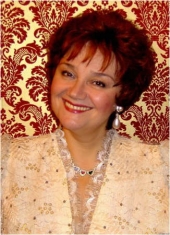 Tamara Sinyavskaya did not like to discuss her private life with journalists before. And after her husband, legendary singer Muslim Magomayev, with whom she lived for 34 years, died in 2008, Tamara Ilyinichna broke her silence only once, giving an interview to the Russia-1 channel. Then she answered questions about Magomayev. In the interview offered to the reader, Tamara Ilyinichna talks not only about him, but also about herself.
Tamara Sinyavskaya is the youngest of the pleiad of great soloists of the Bolshoi Theatre of the second half of the 20th century. In general, the epithet “the most” accompanied her throughout her artistic career since she was admitted to the group of interns of the Bolshoi Theater at the age of 17, and then became the youngest vocalist to receive the first prize at the Tchaikovsky Competition.. Being an exception to the rule, she was accepted into the Bolshoi Theatre troupe, having no conservatory education, but possessing a talent that, at times, is more important than an academic diploma. (Tamara Sinyavskaya graduated from music school at the Conservatory and then entered the third year of GITIS, where today she teaches and heads the vocal department.) The voice of Tamara Sinyavskaya, her deep, rare beauty and richness of timbre colors, cannot be confused with anyone else. On the stage of the Bolshoi Theatre, where Tamara Ilyinichna worked for 40 years, she sang almost all the main parts for the mezzo-soprano. Ten years ago, on March 30, 2002, Tamara Sinyavskaya completed her career as an opera singer.
That evening she sang in the play “The Tsar’s Bride”, dedicated to the centenary of the birth of Maria Maksakova, who, at one time, took a diploma exam from Sinyavskaya. Tamara Sinyavskaya, one of the most beloved and recognizable opera singers, People's Artist of the Soviet Union, knight of the Order "For Merit to the Fatherland" is well aware of what success, recognition, glory is. It was with the question of fame that we began our conversation.
- Tamara Ilinichna, when did you first feel that you became famous?
- I came to the Big One when I was very young. I didn’t think about fame because there were so many celebrities in the theater that I just couldn’t imagine ever being one of them. My task was to live up to the status of soloist of the Bolshoi Theatre and to learn from these great singers. Already to perform on the same stage with them was a joy, so I did not dream of my own glory at the time. And fame came after the Tchaikovsky Competition, which was broadcast on radio and television.
- Then, in 1970, you shared the gold with Elena Obraztsova.
- Yeah. It was a very powerful contest. In addition to Soviet celebrities: Irina Arkhipova, Maria Maksakova, Ivan Petrov, Mark Reisen, foreign vocalists were invited to the jury, including Maria Callas and Tito Gobby.
- The foreign guests unanimously cast their votes.
- It is. And just the competition gave rise to fame. But I never felt famous. On the contrary, even now, I am a singer and an artist - only on stage. In my life, I always behave quite modestly.
– It seems to me that the desire for fame is often caused not so much by the desire to realize your talent and leave a mark on the memory of society, as by the desire to convert your fame into money, connections, goods. In your opinion., Is fame able to change both the person himself and his worldview in this or that way? side?
- I think so. For some, success is more difficult than it is to achieve. Therefore, in order for the crown not to press hard, it is necessary to assess yourself adequately. That's the first condition. And second, we need to be selective about those we want to see around us. If you are told every day how brilliant and unique you are, God forbid, you can believe it. People who really want you well will behave differently.
– There is a saying: “Be afraid of laurel wreaths.” They grow into the head.”
- Really well said.
– Elena Obraztsova once admitted to you:If I had your voice, the world would be at my feet.. However, her name is more familiar to a foreign listener. Elena Vasilievna toured with concerts much more actively than you and performed on the stages of foreign opera houses as a guest soloist. What prevented your career from becoming more intense?
- Yeah, that was a conversation. But then I retorted, "Why do you want my voice when the world is at your feet?" Her name is widely known abroad, and she wanted it. I guess I have a different purpose in life. I loved my theater very much. I do not want to say that Elena Vasilyevna was less expensive. But still, in my opinion, there was a certain imbalance in her artistic destiny due to the fact that she spent the first half of her powerful career abroad.
- I guess you've had just as many opportunities to perform on the best stages in the world. Maybe you were less ambitious.
- There were certainly invitations and opportunities. But, apparently, that was not the main thing for me.
- What was the main thing then?
- To work in a theater that I still consider the best in the world. I went to almost every country I wanted to play. It was very successful, but it didn’t excite me enough to spend most of my life abroad. My career as a Soviet, Russian singer was quite successful. Perhaps, painted with foreign colors, it could be more complete, but so it happened.
- Many years ago, I listened to you in the Big One, in the Royal Bride. I must confess that your performance of the role of Lyubasha changed my attitude to Russian opera music, in particular to the operas of Rimsky-Korsakov.
- Well, that was probably my job. I really like Russian opera. It is clear that this affection does not preclude a love of Italian or French music. But my heart belongs to Russian music. I am comfortable with it and I live in it because it is my family.
- Recently, the reconstruction of the Bolshoi Theatre was completed. The opening ceremony took place in October. They say that the price of tickets on the black market reached 50 thousand euros. Your colleagues' reaction to what they saw that evening was mixed. For example, Zurab Sotkilava said that the great theater was at the bottom, that the performance itself was gray, boring. What are your impressions of the opening ceremony of the Bolshoi Theatre?
- I wouldn't. so Talk about your home. But everyone has the right to a personal opinion. Especially since he is right at some point. But fish, as you know, rot from the head. The Bolshoi Theatre is a mirror image of everything that is happening in our country and in the world. Therefore, to accuse the Big One of all sins is at least unfair. Moreover, if you love your theater, it should be sympathetic, not opposed and humiliated. I think so.
- Have you seen “Ruslan and Lyudmila” in the production of Dmitry Chernyakov?
- Yeah, I did. I came on purpose because my former student, my first graduate, was invited to sing the part of Ratmir.
- Did you do anything?
- Nope. He was invited. absolutely without me.
- But the part of Ratmir is written for contralto and usually performed by owners of deep mezzo-soprano. You yourself sang this part in the production of Pokrovsky.
- Yes, but Chernyakov decided to give this batch to the conratenor. And one of the two invited contratenors was my student Vladimir Magomadov.
- Magomadov?
- Exactly.
- I watched some scenes from the opera on YouTube., and after Farlaf showed male striptease and doused himself with beer, came to the conclusion that Dmitry Chernyakov hates actors, the audience, as well as Pushkin and Glinka. After the show, public opinion was divided. Someone shouted “Shame”, someone – “Bravo”. “Shame!” was then removed. Makvala Kasrashvili said that shouting shame in the temple of art is impolite and ignorant. How did you feel during the show?
- Honestly, many times during the viewing I tried to leave. But knowing that I would attract attention to myself, which is indecent, and wanting to listen to Ratmir's party, I sat safely to the end. But everything in me resisted this spectacle. All! The only thing that saved - the music of Glinka, which perfectly presented the orchestra under the direction of Vladimir Yurovsky, whom I, incidentally, remember a very young, aspiring musician. I had the chance to perform a lot with his father, conductor Mikhail Yurovsky, and now it was very nice to see his son, who became a mature musician. As for Volodi Magomadov, he deserved a five for his debut, although much still needs to be refined. And the sad thing is that for me there was no Pushkin in the play, no time in which he lived, no thought. But this is a separate serious conversation, and just to answer the question, like it or not, it seems to me inappropriate. I know I have to be patient and wait for my opinion to be asked. Since no one asks me, I don’t ask him. Anyway, I try not to go to the Bolshoi often, because I disagree with many things, and I get nervous about it.
- There. And they say Chernyakov is a genius, an innovator.
– Who said that?
- He is a winner of the Golden Mask Award, very popular in the West, he is quoted, imitated, his innovative talent admired.
- I prefer Pokrovsky. There is thought, respect for the material and real drama theater. By the way, the director’s task is to reveal the composer’s genius, and not to engage in his own PR by turning the author’s idea upside down. You know, the “innovative finds” that I saw at the premiere of “Ruslan and Lyudmila” can be afforded on a cabbage.
- If you compare today’s audience with those who came to your performances 20 or 30 years ago, what is striking?
- If the current audience is shown a real, deep, really professional performance, it turns out that it is still the same in composition, condition and perception. People are not as stupid as they want to be. Just recently, they gave Boris Godunov in an old production, with the same scenery, with the coronation of Boris, with a stage at the fountain, and it was a stunning success - without any ... perversion.
- I will not say, but probably a great singer – someone whose timbre of voice can not be confused with anyone else.
- Yes, timbre is the main thing. There are many vocalists who perfectly master the culture of vocal phrase, intonation, technique, acting skills, but only a few have a unique, recognizable timbre.
– In 50-80 years in the Soviet Union there was a galaxy of completely unique opera singers: Sergey Lemeshev, Maria Maksakova, Irina Arkhipova, Ivan Petrov, Galina Vishnevskaya, Vladimir Atlantov, Tamara Sinyavskaya, Elena Obraztsova, Maria Bieshu – all difficult to list.
- And the voice of each was recognizable. And do not forget that before the early 70s, not everyone had TVs. But listeners recognized the performers by the timbre. And today, among the mass of tenor recordings, I always recognize the voice of Sergei Lemeshev or Mario Lanz.
- And if we talk about modern Russian and foreign soloists, who of them has a unique timbre?
– You know, in a way, our generation is more fortunate. I'm talking about government concerts broadcast on radio and television. Then the first part was given to classical music, and this allowed the artists to become recognizable. Today, concerts dedicated to different dates or holidays have become different. There's no place for classical music. Opera voices can only be heard on the Culture Channel. But, returning to your question about young performers, I will answer: I can’t catch on to any timbre that has a unique sound now.
– You teach at GITIS (now RATI), head of the vocal department. Do you like what you do?
– I have to say, I never expected that from myself. I’ve always been a singer who has a lot to learn. And when, due to the circumstances, I got into GITIS as a teacher, I was not at all sure that teaching would become my new profession. Here my friends played an even greater role, convincing me to try on the role of a teacher so that I did not leave singing. Well, that's what happened. The first lessons can be called experiments on students who trusted me, but over time I became so involved in this business that now I can hardly imagine my present life without it.
- In parallel, I will ask about Muslim Magometovich. Why didn’t he leave the stage and start teaching? Here are his colleagues on stage - Leshchenko, Kobzon - teaching, preparing a new generation of pop stars.
- Muslim was not born or adapted for teaching. A teacher is a special profession that requires special talent. Being a good musician does not mean being a good teacher. Of course, I have no doubt that Muslim could teach well, because I had the opportunity to see that. One day he agreed to prepare a student who was expelled from the conservatory. They studied for a month and the student was reinstated. Yes, Muslim succeeded, but nothing more. The teacher needs infinite patience, and Muslim did not have it.
Muslim Magometovich admitted that he could tolerate Soviet classics. Do you share his attitude towards the Soviet opera repertoire?
– To some extent. I participated in many Soviet productions, but I was attracted to them not so much music as the director.
- Are you talking about Boris Alexandrovich Pokrovsky?
- Exactly. And working with him was a pleasure. These were my universities, my conservatory.
- In one of his long-standing interviews, Muslim Magomayev called the theater a viper. You have corrected it – not a viper, but a serpentary of like-minded people. What qualities of character do you need to have a diva in order not to bend and at the same time not to be “eaten”?
- Perhaps it is better to ask what qualities of character a person should possess. If he is smart, and most importantly, talented, then there is no need to bend. Talent will only do its job. And if a person is not particularly talented, if he came to the theater from the back door, and his patrons keep him on a short leash, then, most likely, he will have to bend.
- Are you saying that talented, decent people are not eaten? After all, there have probably been situations when someone was offended, treated unfairly. Did you pull back or try to help?
- I interfered and said what I thought. For some reason, I wasn't afraid to do it.
And I can honestly say that I never "destroyed" anyone, never signed any letters. I've never been approached about this.
- What partners did you enjoy working with, and what were the burdens?
- I am a peaceful person and have always found contact with partners. I do not allow myself any whims, because I understand that whims loosen nerves, and in order to sing well, you need to feel comfortable. So in my entire career, I can only remember two partners who were really hard to work with, let alone play love scenes. These two were boorish in life. They allowed themselves to be rude to me and others, and I was worried at first.
Because I couldn’t get along with them.
– You used to work with Evgeny Svetlanov. How was this conductor different from the others?
- Unfortunately, I didn't have much time to work with this great conductor. In the theater, he and I worked on a very small role, but I remember that for a lifetime, because he showed, properly Do it. Then we lost sight of each other and met while I was preparing a program with Gosorkester. That's when I really understood what Svetlanov was. I don’t want to offend other great conductors, but Svetlanov is one. He had hands that were impossible not to follow.
– Can an artist live outside of politics?
- Sure. That's how Muslim and I lived. We had our sympathies, our dislikes.
- It is no secret that Brezhnev loved Muslim Magomayev, but how did he treat you?
He only saw me as the wife of Magomayev.
- You say that you tried to distance yourself from politics, but in the late 80s you were a deputy of the Supreme Soviet of the USSR.
- Muslim was a member of the Supreme Soviet of Azerbaijan. In those same years.
- But as far as I know, Muslim Magomayev was not a member of the party.
- I didn't join either.
- A family of non-partisan MPs is unusual. What were your duties as a member and, most importantly, how did you manage to sit through the endless sessions of that time?
– That really wasn't easy. Especially since the Moscow meetings were shown on television, the central newspapers wrote about them. And Muslim had to fly to Baku for the session twice a year. He himself admitted that he sat out meetings only when Heydar Aliyev spoke. As for the duties, Muslim and I saw them in helping people. They did. Muslim was approached during his tenure, and after, and throughout his life. And he always helped.
- However, in an interview you noticed that Muslim Magometovich treated people with an open heart, but as life has shown, unilaterally. How to understand this, knowing about the truly national love for Magomayev.
- You know, when everyone is loved, it's like nobody. Of course, to feel the energy of adoration of the crowd is very pleasant. In general, the love of the people is one of the criteria for the success of an artist. But to love in a crowd is one thing. To love and be a true friend is something else. You see, Muslim was a very private person and only occasionally opened up, admitted to himself. But at some point, I got the wrong reaction, the wrong actions I expected, and I suffered a lot from it. Finding out that you trusted the wrong people is always unpleasant and painful.
– Where do you live more comfortably – in Soviet times or today? Do you have any regrets that have remained in the Soviet era?
- What's gone is gone. The page is lived - it's turned. I have no regrets. Maybe I just miss a few things. For example, at the time when it was possible to go to any republic on vacation or tour without thinking about anything and not feel like a foreigner or a foreigner. And now, to fly to Azerbaijan, where Muslim is buried, I need a foreign passport. That's hard to get used to. I don't like it when people talk very badly about the Soviet era, because I lived It may not be the perfect time. And the one who indiscriminately crosses out everything that happened then, crosses out the good that was in my life. We worked honestly and were proud of what we did.
– Two outstanding artists in the same house. Now I would say two stars. You helped each other somehow. Creatively?
- (laughs) How could I help a musician like Muslim? I never interfered with his work. I learned my parts in the theater. At home, we only rehearsed together before we performed together. Then he He was my teacher. Muslim was such a great musician, pianist, performer that I never felt like a star.
Muslim Magometovich was often asked about the reason for the relatively early termination of his singing activity. In his memoirs, he replied that he was tired of singing, that he no longer enjoyed it.
Why did you leave the stage?
- I'll answer him with my own words. The Muslim said, “It is better for people to approach the artist with the this I wonder why he hasn’t left yet. It is better to leave while people know you and are saddened by your absence from the stage.” I totally agree with him.
- Who was Magomayev’s opera idol?
Mario Lanza, about whom he made broadcasts on radio and television, and then wrote a book.
– And the Soviet singers?
- Georg Oates. By the way, it was he, the only one of the men, who Muslim brought a bouquet of flowers to the stage.
- Recently, the First channel showed the program “Property of the Republic”, dedicated to Muslim Magomayev. Did you take part in the selection of artists and songs that were played there?
– Partly. In fact, I was put before the fact, but that time, I corrected and even put forward some candidates.
- I thought this program was not easy for you.
- Yes, it was hard for me to sit on the set of the show. I don't even watch Muslim on TV.
- On the same program, Irina Agalarova told a story that seemed strange to me. She said that in 1985, at one of the performances in the concert hall “Russia”, Magomayev did not like how the musicians entered, so he resigned the orchestra and accompanied himself for two hours. Could Magomayev allow himself to humiliate the musicians?
- Honestly, that's hard to imagine. Maybe Irina got to a concert I don't know about, or maybe she got it wrong. Yes, Muslim often accompanied himself, and he did it beautifully, but if there was a concert with an orchestra or an ensemble on the poster, I can’t imagine it at the piano for two sections.
- Magomayev wrote: “When I am called a great singer, I wrinkle both externally and internally. Why shake the air? Rarely have I been happy with what I did.” Listening to the speeches of the guests of the program "Property of the Republic",
I had a feeling of excessive sweetness, even the sweetness of their speeches.
- This is your perception and you have the right to feel or think so. In my opinion, the transfer was generally successful.
- In the course of our conversation, I got the impression that you are a very reserved person, accustomed to controlling every word or reaction. And Muslim Magometovich, judging by what he wrote about himself in the book of memoirs, was quick-tempered, emotional, sometimes too straightforward, which he often regretted. And yet, you were very happy with each other. The secret is one love?
- In love, as well as in general interests and tastes. And then, in life, as on stage, intonation is important. Just keep it clean. That's what matters.
- It is known that Muslim Magomayev perfectly drew, sculpted, wrote books, and although he considered these occupations a hobby, he did everything professionally. Do you have a hobby? What do you like to do in your free time?
- (long silent) You know, in order to want to do something, you have to have joy in your heart, and she doesn't live in my house right now.
- How often have you been involved in your creative and personal life?
- Chance? No, most likely, everything that happens was exactly planned, planned. I see my life as a script written and directed by someone. Probably by God.
- Are you planning to write your memoir?
– Not yet.
Interviewed by Zoe Master