May 10, 2012
I Have No Reason to Pretend to Act
This interview was originally conducted in Russian. This is an AI-generated English translation.
I don't need to play artist.
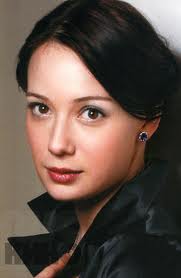
Interview with Chulpan Khamatova
Chulpan Khamatova is a theater and film actress, leading actress of the Sovremennik Theater, People's Artist of Russia, laureate of the State Prize in the field of theatrical art, as well as winner of the Nika, Crystal Turandot, Golden Mask, Seagull award. Khamatova is one of the founders of the charity fund “Give life”.
 Introduction
– Chulpan, recently Novaya Gazeta made a proposal to nominate you for Nobelcpeace prize. Where did this news catch you?
- Kitchen. I cooked soup, cleaned chicken. A bird was found with the remains of feathers. I tried to set them on fire, and the chicken was wet and the feathers weren't set on fire. And when the water was already boiling, and I was plucking all these residual feathers with tweezers, Dima Muratov called (editor-in-chief of Novaya Gazeta – TASS) ZM.) and said he didn't care how I reacted, but they decided to nominate me for the Nobel Prize.
- And you laughed out loud.
- How did you know?
- How else would you respond to a call like this by doing something as important as vaxing chicken?
Theatre
- You will be touring the United States in June. Theatres of New York and Boston will see the Theatre of Nations play Poor Lisa, which is classified as a choreographic novel. Please tell us more about this production.
– This is a performance staged by Alla Sigalova to the music of Leonid Desyatnikov. It has several layers: the first is the story of a girl in love, the second is Desyatnikov’s chamber opera with very strange music, which he wrote in his student years, the third is choreography.
- And the action of the play is tied to the historical time of the play by Nikolai Karamzin?
- It is not tied to time or even to the story.
- Although the love of Lisa and her death remain...
- Yeah. A play is a hymn or manifesto of love without limits. This is such love in the absolute, when the heroine does not even suspect that she may be betrayed. And when that happens, her world collapses because she loses the ability to believe in love.
Love in her own image.
- Exactly.
- As far as I know, this show is pure choreography?
- I don’t say a word, but I can’t call what I’m doing a dance. The soloist of the Bolshoi Theatre Andrey Merkuriev dances. I am a dramatic actress who expresses her emotions in gestures.
- How did you decide to do such an experiment?
- I fell in love with the choreography of Alla Sigalova, watching her play “The Handmaids”.
- What was the biggest challenge for you as a dramatic actress?
- The transmission of one’s emotions – from whispering to screaming – not with words, but with precisely expressed plastic movements.
– What do you like about touring and what do you get tired of?
– In each city, the audience is different and I like its “dissimilarity”, originality, and new impressions are just what you expect from touring. But at the same time, constant moving is so tedious that barely enough strength to recover before the next performance.
- It seems that you do not have time to absorb the colors, smells, atmosphere of new places?
– Only if you have the strength to get to know them.
- In an interview with Snob magazine, you told how Yuri Norstein taught you to go to museums with binoculars and a magnifying glass. And everything that happens in life, do you also dissect?
- Absolutely. This is a habit conditioned and developed by the profession. The actor must be the lawyer and judge of every role. If I don’t understand her myself, if I can’t explain the actions and words of my heroine, I’m unlikely to be believed by those in the audience.
- Speaking of the audience. It is believed that the actor must love his audience. But Oleg Menshikov admitted that he loves the auditorium only at bow. He specifically asks to put a bright light so as not to see the auditorium and not to be distracted or irritated, noticing a person who turned away or yawned. Do you prefer to speak in black, or do you want to see the faces of the audience?
- For me, the room is specific people. But I certainly will never believe that there can be two hundred, five hundred, or a thousand people in a room who think and perceive things in the same way. Therefore, I will not lie and swear in love for the whole room as a whole. But those who come to the theater do notherI want to work with my heart and mind, of course. I have to convince myself that they love me too. In general, it is for these few people who want to understand and love me that I come on stage.
- It is believed that each of us comes to this world with a specific mission. What, in your opinion, is the mission of the actor?
– Try to give the audience the opportunity to understand this life, in some of its situations, which can not be treated unequivocally.
- Do you believe so much in the magical power of art, in the fact that a person who came to the performance, after its completion, will reconsider his attitude to life values?
- I'm sure of that. It happened to me more than once when, after watching the play, I drew some conclusions and changed my life. And if it happened to me, why can't it happen to others? As an artist, I know this is not real.
- As a spectator, it always seemed to me that the most difficult thing in the acting profession is to learn a role so that when you go on stage, you do not fear to forget words. How do you teach roles?
- In Russian, the role is very easy to learn, because it is initially provoked by an internal message and action, and words are born later. Mechanical memory in this case is practically not involved. And if I want to play in an unfamiliar language, then I use my own method, which has been tested for years: I start learning each phrase with the last word, and then string the penultimate one on it and so go in the opposite direction.
- When asked if he had failed in his career, he replied that he could play better or worse. There can be no failures among professionals.. Do you agree with him?
– Not yet. (laughs) But I believe that potholes and pits of real failures are a necessary experience for an artist. It must be passed to learn how to walk around these pits.
– Is there a character in your repertoire that does not require (or requires minimal) reincarnation, that is, the one closest to your own character?
- No, it is in any case a synthesis of personal character and character. I am not interested in playing myself.
– Do you read reviews from critics? Are you interested in the opinion of others about your work?
- Overall, absolutely. There is no such thing as professional criticism in our country. I have not read a single review or article that would help me as a spectator to understand the play. Usually, this is a retelling of the plot and your own, absolutely subjective position on the level of likes and dislikes. A professional critic should not like art, he should understand it. I was in Japan with a painting, and a journalist critic approached me. He felt compelled to apologize for not being able to interview me because he had only seen the movie he was supposed to talk to me about eight times. And in order to talk substantively and write a review, he had to do it at least ten. This is the Japanese concept of professionalism. And really, is it possible to understand a picture or a performance, coming at best to the premiere, and at worst to the run, when the performance is not that not yet born, but still head down? And that's exactly what happens here. And in this case, the review is replaced by the first emotional reaction on the level of personal perception, which is wrong, unfair and unprofessional. Therefore, I say that we do not have criticism in the correct understanding of this word.
About the Fund
– Let’s talk about your “Give Life” charity. What part of the work associated with it is the most difficult?
- The hardest thing for me is being in public.
- Is that what the actress says?
- But you asked about the foundation, not the theater. I don't like to give speeches at all, and here we have to shout about our problems. It is also difficult for me because it is impossible to thank all those who work with me in every speech or interview. It turns out that I am on top of this iceberg called the Gift of Life Foundation, in the light of the spotlights, cameras are pointed at me, and this is unpleasant, because behind me there are a huge number of “invisible soldiers” – people who have done so much that they have a right to be seen. I want to write their names on the newspaper.
- A huge number of Russian-speaking Americans watch Russian television, including Channel One. And here Elena Malysheva talks about unique doctors, the latest technologies developed in Russia - and all this is beyond doubt. But then why, when serious health problems arise, do financially wealthy Russians go abroad for treatment? Why do people spend years raising money to get surgery in Germany or Israel? Why do the same Plushenko, Kobzon, trust their health to German and not Russian professors?
- Because in Germany the level of medicine is much more serious than in our country. And what is happening with Russian medicine is only echoes of the existence in which we are all, echoes of what is happening in the country, because medicine is corrupt, just like any area of our lives. In addition, the head doctor is not always in charge because he is the best professional. But we do have unique doctors; I've seen them, I know them. But, unlike their Western counterparts, they do not always have opportunities worthy of their skill and talent.
- There's no possibility of what?
- Opportunities for effective rehabilitation. In order to cure the injured leg or back of the same Plushenko, a recovery process is necessary. Rehabilitation centers are needed, where operated patients are helped to adapt to return to normal life.
- That is, the lack of the necessary level of postoperative care and appropriate rehabilitation negates the result of a successful operation.
- Yeah. And in terms of pediatric oncology, all this can just destroy a child.
– Charity is certainly a good thing.. But do you think it’s normal that instead of using public or private health insurance, parents are forced to walk around with an outstretched hand in the hope of pulling out a lucky ticket to, for example, get on the show of Andrei Malakhov, who is able to attract public attention to the problems of a particular child and find a sponsor or a doctor?
- How long have you lived in America?
- Over 20 years.
- Therefore, when you talk about insurance, you focus on the health care system that you have there. And we have not insurance, but quotas - one of the monstrous inventions of recent years. These quotas are issued for a certain number of people and those who need them – much more than the quotas themselves. Therefore, in order to pass all officials and get it, you can have time to be born, graduate from the institute, get married, die, wait for the burial board. - but not the queue for surgery. And if a child needs urgent surgery tomorrow or yesterday, it is clear that parents are willing to ask, demand, shout, beg or go to Malakhov to help raise money. Otherwise, in anticipation of a miracle, the parents of their child will lose. The situation is not just terrible, but monstrous. So you are very mistaken, referring to medical insurance in Russia. You can get free iodine on insurance. And in general, providing serious medical care is a lottery.
- Meaning?
- For example, someone will be lucky and get an appointment with an official who still remembers that he is sitting in his office for people and trying to help them as much as possible.
- It seemed to me that the task of an official is simply to do his job competently and professionally, and not to provide assistance selectively in mood.
- It's perfect.
- Let's be specific. Here the artist of the theater “Contemporary” fell ill – kidneys, heart. Will his treatment or surgery be paid if he has an insurance policy?
- If I get sick, the theater will stand up for me and everything possible will be done to get me this quota. The treatment will be free for me or my children.
- What if it is a seriously ill child of unknown parents?
- The foundation writes letters of guarantee for children to be admitted to hospitals without quotas. This letter confirms that there is an organization that is committed to raising money for a child who has not received a quota and giving it to a hospital to pay for a bed.
- A bed?
- Yeah. So the Fund, in addition to raising money, has to do paperwork: defend the right of the child to receive quotas, write letters, ring bells, call ministers and governors. Otherwise, the parents of these sick children have nowhere to wait for help.
– How many specialized oncology centers are there in Russia today?
- Almost every big city has a children's oncology department. But they can not always make an accurate diagnosis, because there is a lack of equipment and specialists. At the expense of the Foundation, we invite doctors from the hinterland to specialize in Moscow, and also send Moscow specialists to the periphery to provide timely assistance to local children.
- Have you met with Minister of Health Tatiana Golikova in person?
- Yeah.
- And you didn't ask her why, with all the problems, the health budget is shrinking?
- Meeting does not mean an opportunity to ask questions of a certain nature. Otherwise, I would ask why this budget is so strangely redistributed. For example, to put a child in the hospital, you need to get a quota for one disease, but if something else is diagnosed along the way, then this problem will not be treated until the child leaves the hospital and waits for a quota for a new disease. That's the theater of the absurd.
Personal.
– Your older daughters are 9 and 10 years old. Do you somehow connect them to what you do yourself, the theatre and the Foundation? How do they respond to seriously ill, sometimes terminally ill children?
– They're responding normally. They like to go to the hospital and help me. They do not shy away at the sight of a child in a mask, do not point a finger, because they understand that these are the same children who, due to illness, are temporarily forced to look like this. They are compassionate, generous – they always give away their belongings, gifts, toys, and there was no situation where they would be upset to learn that I took something belonging to them to the hospital without even asking them. And they are passionate about my profession, because they spend many evenings in the theater.
– Are they going to be actresses?
- Unfortunately, yes.
- Why, unfortunately?
- Because it's a very difficult path. I wish they had an easier life.
- Do you bring home or leave work-related worries, frustrations, resentments behind?
– You know, I try not to take offense at anyone. It doesn’t always work, but I keep reminding myself of that. Disappointment is a normal process. Of course, as a normal person, I get frustrated when things don’t work out, but not to the point where I can spill it on my loved ones or burden them with my problems.
– What brings you more fatigue and what more joy is the theater, the Foundation or the family?
– Everything is too intertwined to answer definitively. Of course, family is happiness, but it is diluted with grief, when, for example, you can not find a common language with a child, realizing that it is your fault. And with regard to the Fund, everything is also ambiguous. We treat seriously ill children and some die. You have to live and communicate with your parents. We have people who see pain and death every day. They need to be repaired, they need to be protected before they burn out, break down. But there are moments of absolute joy when children with already grown hair, already formed young girls and guys come, and you do not recognize them, because now they look so beautiful. Or when New Year’s cards come, and in them – congratulations and stories that someone passed the session or fell in love. These are moments of incredible happiness.
- Can you rest?
- Yeah. I've learned to do it no less.
- Many famous celebrities in Russia complain about how difficult it is for them to move around the city because of the unceremonious admirers of their talent. However, Catherine Deneuve said that she is quite calm walking the streets of Paris. Can you afford to just walk through the streets of Moscow, run to the store, sit in a cafe?
- Yes, I have to use the subway, I calmly go to shops and even more so, in cafes. Well, sometimes someone will come up with some incorrect question, but this happens very rarely. In general, I am what I am and I do not need to play an artist.
- Despite the fact that you have three children and the youngest daughter is only two years old, you are in great physical shape. Is it nature or fitness?
– There is not enough time for fitness, although I love it very much. But every free moment I try to spend with the children, realizing how they lack communication with me. And the little kids keep you in good shape. Besides, it’s the stage, the roles you pass through yourself, just everything you need to do in a day.
- Where do you see yourself in 15-20 years? What would you like to do?
– What's this gonna be, 56? I would really like to take care of my grandchildren, go to theaters, movies, museums, do all the things that I am now deprived of.
- You can identify the characteristics of your generation.?
– I've thought about it before. I think it is selfishness and indifference. But it's not our fault. Our generation was born in a short but highly destructive era of timelessness and loss of value. What was considered good turned out to be bad and unworthy, good and evil changed places. The overthrow of ideals became fashionable and progressive, and disbelief led to cynicism.
- This happened at the end of the 19th century. Remember, Turgenev, nihilism, revolutionaries-popularists, the devaluation of higher values...? Everything spirals.
- And I am very glad that the circle has not closed and now there are signs that that terrible time is behind us.
- Twelve years ago, Ildar Zhandarev, then the host of “No Protocol”, asked if you feel like a star. You said no. And today, being the People's Artist of Russia, the winner of the most prestigious awards, a recognizable and beloved actress, a famous public figure, Have you changed your mind?
- Absolutely not. In general, the feeling of your own “star”, in my opinion, a sign of vulgarity. Don't let God let this happen to me.
For donations, please contact the Gift of Life charity fund: Ph. 7(499)245-5826
Zoe Master was talking.