September 27, 2012
We Are All Human
This interview was originally conducted in Russian. This is an AI-generated English translation.
Dmitry Beloselsky:
We're all human...
Dmitri, you are often in New York. Do you like this city?
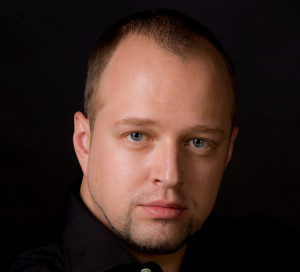 - Yes, I like it, but I won't hide it, I prefer a place conservative and calm. For example, I am happy to return to Zurich, where, unlike the constant Brownian movement inherent in restless New York, nothing has changed for decades.
- But there have been many changes in your life. Even before graduating from the Gnesin Russian Academy of Music, you became a soloist of the Moscow Chamber Choir under the direction of V. Minin, and then, since 2005, a soloist of the choir of the Moscow Sretensky Monastery. At that time, you probably didn’t want to pursue a career in opera. What was the turning point in the decision to try out opera?
- The first such moment was the Tchaikovsky Competition in 2007. Then, figuratively speaking, the first warning bell rang: an understanding came that it was necessary to develop creatively and professionally, for which it was necessary to take the next step - to sing in the theater.
- That is, to develop at the expense of the scale of works?
- Yeah, which means singing opera, big uniforms, concerts.
- I would like to return to the 2007 competition. Then you became a laureate. II prizes. Was that your first contest?
- Yeah.
- How do you remember the atmosphere of this competition?
- For each participant, an indispensable condition that gives hope for success is the ability to abstract from the situation and engage in yourself.
- The old truth is that he who has stronger nerves wins. I asked you this question because the problem of judging music competitions remains a painful issue. You also had your own story at the end. I will not go into some of the oddities of choosing winners. But here at the same competition, the diploma of the best concertmaster, for the second time, received Elena Gaudasinskaya. And everything would be fine if you did not know that she is the daughter of Irina Bogacheva, the chairman of the jury. In general, it is no secret that the distribution of prizes largely depends on who sits on the jury, for example, the teachers of some participants. In this regard, I would like to ask you, as a contestant, did you feel any behind-the-scenes intrigue, prejudice towards yourself or, conversely, someone’s significant support?
- I didn't feel either. I think I was the only prize-winner in the history of the Tchaikovsky Competition who performed without any eminent teacher, theater, or even impressive experience – I’m not talking about any other things. As for the atmosphere and in particular the scandals discussed during or after each competition, I think this has been present throughout the history of the competition, but in our technologically advanced time, information is disseminated and processed much faster. It seems that scandals are more frequent and larger. But I don't think so; it's as it was, as it is.
– One of the members of the jury at the time, Angelo Gabrielli, remarked that “a good singer doesn’t need a competition...” Do you agree with his words?
- Well, that's just a phrase and I don't know what he meant. In principle, we can agree with this, because a talented professional in any field can realize himself without any competitions. There are many examples when winners of competitions and even winners of the first prizes did not become particularly noticeable, despite the competitive successes. They have not made a noticeable career and do not shine in concert activities either.
- In your interviews, you never forget to say a few kind words about your vocal teacher, Svetlana Yurasova. How often do you invite her to your concerts?
Svetlana Olegovna is not just a teacher, she is mine. single The teacher, of course, comes to my concerts and performances. From time to time, I try to “push” it abroad, but due to various circumstances, this does not always work. But in Russia, she happens to be at every performance. In general, vocalists who want to be in shape, try not to break away from their teachers.
- Today you are a soloist of the Bolshoi Theatre, and also perform on the stages of the most prestigious opera venues in the world, including the Metropolitan Opera. How do you feel about the modernized productions of classical operas, for example, “Ruslan and Lyudmila” by Dmitry Chernyakov?
- Your question deserves a long conversation, not in an interview. So the answer is this: I haven't taken part in this kind of experiment yet, and I've still sung in productions that I like. As for Ruslan and Lyudmila, unfortunately or fortunately, at that time I was involved in the Metropolitan and did not have the opportunity to personally see this performance.
– I read that Elena Obraztsova turned down the role of Naina just a few days before the premiere due to disagreements with the director.
– So I can judge this production only by some fragments seen on the Internet and comments of colleagues. Proceeding from the fact that there were much more negative reviews than positive ones, I can say that this performance did not cause enthusiasm among most soloists of GABT.
- You have performed with Zubin Meta, Ricardo Muti, Thomas Zangerling, Mikhail Pletnev, Vladimir Spivakov, Vladimir Fedoseyev – the list goes on. What quality, or qualities, from the point of view of the vocalist, make these maestros the stars of the first row?
- Each of the star conductors has qualities that distinguish them from the mass of just good and very good maestros. There are conductors who give the soloist complete freedom. With such, of course, it is easier to work, but not so interesting. Why do I love working with Ricardo Muti? Because he is so prepared that, despite his apparent despotism, working with him is a joy. Preparing a game with him, you make it for life. And other outstanding conductors have their own secrets of craftsmanship, but what unites them is that they all not only perfectly know each note of the score, but also understand its meaning.
- Today in the world of classical music there are many wonderful vocalists with excellent data. But what, in addition to this data, do you need to have to be in demand?
- Demand arises as a result of the tastes of those sitting in the room. Throughout the musical ages, tastes have changed and continue to change. Therefore, if the manner of singing, the behavior of the singer on stage, his appearance, charisma coincide with what is valued today, then this soloist can be in demand today. If not, it could have been in demand 20 years ago, but its time has passed or has not yet come.
- Are you saying that it is the audience that dictates fashion, and not the performers that nurture tastes?
- I would say that the audience dictates fashion, and performers, as much as they can, try to resist taste.
Last season you sang the part of Zakaria in Nabucco, at the MET. Did you sing with Maria Gulegina?
- No, we sang in different compositions.
- Did you happen to sing with Anna Neterebko in the same show?
- No, we haven't crossed paths yet. In principle, it is difficult for us to cross paths, because I am from Bolshoi, and she is from Mariinsky.
- So what?
- Well, somehow it is so unobtrusive that the soloists of these two theaters quite rarely "partner". True, I was invited to co-record an opera, but because of the busyness I did not get to the session.
- Do you like listening to your own records?
- Nope. In general, as with any vocalist, because a person is more demanding than others. Another thing, it is useful to listen to your own records to keep track of some details in the curriculum.
- Your takeoff is absolutely incredible. A year after the premiere in Bolshoi, you are invited to auditions abroad, and you immediately become in demand by the best companies and theaters in the world, including the Roman Opera, MET, Salzburg Festival. The tour program is so busy that it remains to ask – how often are you home with your family?
- In fact, this takeoff, as you say, did not happen a year later, but just a few weeks after the debut in the Bolshoi. And I don't go home as often as I'd like, but that's the other side of the takeoff medal. For example, last season was held in the schedule for a month and a half abroad - 2-3 weeks at home. If we talk about the beginning of the season, it promises to be like a marathon: right now I’m busy staging Troubadour in Toronto. From Canada, I fly on a tour of America, with the choir of the Sretensky Monastery, then to Rome and Milan, from there to Washington, then to Florence, and then for half the summer I settle down in Vienna.
- And vacation?
- I hope to rest a month in August.
- You are 37 years old and have four children. Is that so?
- That's right.
- Do you notice vocal data in children?
- Yes, all with nice baby voices and a good musical ear.
- Is your wife also a musician?
- She graduated from art school, but could not continue her studies.
- You interrupted?
- For objective reasons.
- In the course of your creative activity, you communicate with many celebrities both in Russia and abroad. Have any of them become more than a co-worker or co-star?
- Well, yes. These are people with whom I find it easier to communicate and find common ground. If we talk specifically about the Bolshoi Theatre, first of all, I would like to mention Georgy Khachikyan, the concertmaster in whose class I study. He is an exceptionally erudite, educated person, and communication with him, despite the age difference, brings true joy. Also, among my friends are the soloists of the Bolshoi Theatre Elena Manistina and Elchin Azizov.
- How do you feel about your relationship with GABT veterans?
- That's great, but I don't really talk to them because we rarely see each other. So I can say: the relationship is great, but it is not enough.
- Let us return to your American tour as part of the Sretensky Monastery Choir. In theory, the main task of the monastery choir is to participate in divine services. Is that so?
- Exactly. Another task is missionary activity.
- What exactly is it?
- Missionary activity implies education. In this sense, the Choir of the Sretensky Monastery primarily performs sacred music. So, as part of the mission of the Russian Orthodox Church, the choir made two trips around the world.
- You were also involved, weren't you?
- Yeah, sure.
- The choir has 30 members. What qualities should they possess?
- Their vocal data and musical preparation must correspond to the high bar held by the choir.
- Do the participants of the choir necessarily have to be Orthodox believers?
- Well, if the choir member is an Orthodox Christian, that's great. But there are only a few people on this planet.
- It's a joke, right?
- Not at all. We are all people with our own weaknesses and, as you know, nothing human is alien to us. Therefore, true believers are practically saints, and such are only a few.
– You manage to successfully combine opera, concerts and touring trips as part of the choir of the Sretensky monastery. In principle, the combination of opera classics and sacred music in the repertoire is not so rare. Placido Domingo recently released an album of songs by John Paul IIPope of Rome. But still, if you have to choose between opera and choir, what do you choose?
- That's basically my choice. After all, for a long time, even after the Tchaikovsky Competition, I stayed in the choir for another three years. But I have already said that before a musician who wants to develop, sooner or later the question arises: what next? And then he chooses what is more promising, which means that the tasks are more complex, larger. And in the choir, even the best, these tasks are finite.
- Your MET colleague, Maria Gulegina, says that she always comes up with a super-task for the future. What's your top priority?
- I do not specifically address such concepts, often initially a small desire somehow transforms into a super-task. The ancient sages said that you can achieve anything, but you need to know why.
- What do you want to achieve over the next ten years?
Like any singer, I want to perform more of the leading parts on the main opera venues of the world. By the way, many wishes are starting to come true now. But for me, the main thing is that the achievements are the result, the continuation of work on yourself. Then they can exceed any expectations.