November 1, 2012
Most Importantly – To Not Write Non-Fiction Prose
This interview was originally conducted in Russian. This is an AI-generated English translation.
Zoya Master: “The main thing is not to write non-fiction prose”
Probably, many of the readers of the Russian Bazaar are familiar with Zoya Master and read her interviews with prominent figures of culture and politics. I had a conversation with the master of the genre and even with a name that documented this fact. Taking on such a difficult task, one of the first questions I asked Zoe Master was whether it was difficult for her to live with such a name. “Russian publishers are inconsolable,” she admitted, “and ask again.” They think my name is a claim to a special level of skill. They have to be reassured about this.” I can’t believe she actually said the last sentence. If so, it is a brilliant example of self-irony, if not a rather careless passage on my part, or an example of my brilliant irony. Oops.
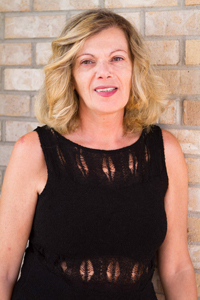
So, returning to the topic, the reason for our conversation was the release this year in the publishing house M-Graphics Publishing of the collection of prose Zoe Master “Music Teacher”.
Personally, it was a pleasant surprise for me to discover another bright voice in emigrant literature, and a conversation with Zoe Master found in her an outstanding personality and a difficult interlocutor. But you have to judge, dear reader. So...
- KWhen and why did you start writing fiction?
- When doesn't matter. The main thing is not to write non-fiction prose. Why? Probably because at a certain stage of life the need to express oneself overcame natural laziness, and in prose I do it better than in drawing, mathematics or pole jumping. But seriously, it begs a comparison: writing for me is like a gambling table for a gambler. Sometimes you don’t understand why, always dissatisfied with yourself, you sit for hours at the computer, endlessly searching, rearranging words, then deleting more of what you have already written, knowing that you will never be completely satisfied. Writing also gives you a sense of freedom and power. I emphasize: not freedom and power, but only feeling. In fact, even creating fates, characters, plots on paper, it is very difficult (and should we?) to get rid of self-censorship. So Spinoza was right in saying that men are mistaken in thinking themselves free; the attainment of absolute freedom is unattainable. But there are times when re-reading some sentences you’ve written, or if you’re lucky, pages, makes you absolutely happy. That's what you're writing for..
- Can you tell me which of the masters of the short story genre admires you the most? Who are your idols?
- Babel, Bulgakov, Paustovsky.
- Why did you name your book “Music Teacher”? Do you think it was the best story or for another reason?
- Music is present in almost all my stories as an accompaniment, an emotional background, and sometimes it affects the development of the plot. I don’t know how it works, because I don’t plan ahead: I’m going to write about music right now; it happens by itself, like improvisation. That's how you play. That's how you think you write. I would like the readers of the collection to be people who are not indifferent to music. I am also a teacher by profession and vocation. That's how it came together.
- Do you set yourself an artistic super-task? What is it in? Are you satisfied with the result?
- I am never completely satisfied with the result, because I know that perfection is impossible to achieve. I want each subsequent text to be more successful than the previous one, so I try to keep the bar, the height of which I determine myself, but I am not sure that this can be called a super task.
- Ironically, my stories are, in fact, the last and only citadel of realism. Everything that goes beyond a document is no longer realism, but a lie, a myth, a phantom, a dummy. And in the document, in every document, the living blood of time flows. – Varlam Shalamov Do you write in the tradition of realism, or do you think so? What is your view on this direction?
- To my shame, I have never thought about whose traditions I am. As for Shalamov’s quotation, the document, especially if it is not forged, certainly has the living blood of time, but it rarely relates to literature.
- Do you think about the reader when you write or edit a story? Is it your task to intrigue the reader from the first sentence, chain him to the text?
- I think every author wants to get the reader’s attention. Another thing is what means to achieve this. Someone will close the book if there is no erotic or corpse on the second page, and someone will do the same if there is too much of it. Some people like banality, while others like a good literary language, where thoughts do not stumble one against another, do not compete in banality or are absent at all. It all depends on the reader’s taste, his discernment and general culture. When I write, I do not think of the reader, but of what I write. In general, I focus not only on the thoughtful, but also the literate reader. Although ideally, like any other person writing, I would like this collection to be read and reread by people of different tastes, interests and social status. It seems to me that a writer who tries to convince everyone, and especially himself, of what he writes for a select few is cunning. Everyone wants to be famous, if not famous.
- Nina Voronel wrote about your prose: “The author’s observation, attention to detail, psychological saturation and impeccable style, where every word is in its place, makes the texts so visible and tangible that sometimes there is a strange feeling of fusion, belonging to what is happening on the pages of the book.” I am confused by the words “impeccable style” (I think Leo Tolstoy would wrinkle at the word “style”, since this did not coincide with his artistic super-task to get as close to the truth as possible) and “every word in its place”. Regarding the second statement, I cannot help but recall what I read in my memoirs about Akhmatova, that it was her favorite reply for the authors of poems sent to her for acquaintance. Isn’t it better when the words “out of place” scratch the perception and awaken the imagination?
- Do you mean to wake up or wake up?
- Both, in a word, slow down.
- On the contrary, the presence of style, even in the ability to talk, dress, behave at the table, indicates the presence of individuality. And even more so in creativity. And why, in fact, impeccable style can not coincide with the maximum approach to the truth? Moreover, it was Tolstoy who considered the ambiguity of speech a sign of the ambiguity of thought. Style is the ability to speak so that you are understood, and the basis of understanding is the word, its meaning. And, by the way, Lev Nikolayevich, who preaches non-resistance to evil by violence, once joked that (I do not quote, but the meaning is this) if he were a king, he would issue a law: a writer who uses a word whose meaning he cannot explain should be deprived of the right to write, and in addition receive 100 lashes with rods. As for the reply of Anna Akhmatova to the poets who did not like her, I cannot argue with you, because I have not seen such a thing in my memoirs. But I remember that Lydia Chukovskaya in her “Notes” cites the words of Anna Andreevna herself from “Leaflets from the Diary” that confronting words has become commonplace, but daring this in 30 years will become banal. But there is another way, precision, where every word is in its place, as if it had been there for a thousand years. So I think I would agree with that statement. And then words can stand in their place and still stir up the imagination. I don't see any contradiction here.
- Some argue that it makes no sense to distinguish between emigrant and Russian literature, and that due to modern historical and technological shifts, we live in a single cultural space. What do you think about that?
- Good question. We are happy not to distinguish Russian-language literature by geography, but I did not notice the particular interest of Russian publishing houses in immigrant writers. And Russian-American publishers, apparently, do not have the means to “promotionalize” the author. Although from my personal experience, I must admit that working with an American publisher is much more pleasant and calmer than with a Russian publisher, who has not sent an elementary contract for a year and a half of cooperation.
- “The soul listened to the silence that had ensued, but could not catch anything but the sound of a pendulum, counting the time between death and life impartially. Nothing else kept her here. She now knew that life and death were independent of human desires or possibilities, and that is why she, who had experienced her own earthly death, would never be able to speak of it. When he returns, he forgets everything he has done before. It is time to continue on the path to the promised peace. But whether there music?
This is recorded by Kira, the heroine of your story “The Queen of Spades”. Your own style is emphatically grounded. Do you write this intentionally, or is the style of writing foreign to you?
- It's the style of keeping a diary for Kira, who is 12 years old trying to understand things that no one can understand.
- I noticed that the theme of war, evacuation and disadvantaged childhood is very touching and reflected in your work. Is it possible your family survived the evacuation, or is my guess wrong?
- You talk about the stories "Rita" and "Night is bright." In part, you're right. My mother and grandmother were evacuated to Tajikistan. Dad went through the war as a sapper. (I am a young child and my brother and I have a big age difference.) For some reason, my parents rarely touched on the subject of war, and I did not ask. It's late now. These two stories were written after meeting a woman. Sometimes fate makes such gifts. Of course, these are stories, not documentary accounts of the episodes of her life; accordingly, much, including storylines, some characters, is a figment of my imagination. But the little she said really shocked me. Moreover, neither in her nor in my story there is no blood, death, torture, but I still do not understand how people could endure all that ordinary horror of the war and post-war years and at the same time not go mad, and in general remain people.
- Music was your profession and it feels like it’s still your passion. In the story (or essay?) "Picture" You are a person for whom visual perception is so important that it invades dreams. What is the most important art for you? I am sorry for the rather annoying rewritten Leninist quote.
- Yes, I was seriously engaged in music, and it did not go anywhere - it just ceased to be a profession. I wouldn’t call my relationship to music a passion. It’s just that without it, the world would be different – it’s as if the colors or smells were gone. That is, perhaps, you can live without it, but it would already be another, fresh and faded life. The most important art for me is talented. I prefer to keep quiet about my dreams – strange things happen in them.
- And yet, in the essay "Picture" You opened the door there...
- Yes, and in the story "By the blue sea" - too.
- How come you live in Colorado? How do you live far from "literary parties" or do you also have a bubbling literary life there, as we do in New York?
–We don't have bubbling, we have bubbling. But you mentioned the common literary space. Skype, the Internet compensates for personal communication, however, only to some extent. Of course, I would like to be closer to civilization. But it just so happened that after our first four immigrant years in New York, we moved to Colorado. Frankly, if I regret it, it's only for three reasons: I rarely see my brother, fly far to Europe and not enough walks around Manhattan. Well, the view of the ocean, in my opinion, is more attractive than the panorama of the Rocky Mountains, although many will disagree with me, and here in Colorado, you can easily make enemies after such words.
- How difficult is it for you to prepare for a celebrity interview? Can you give examples of mistakes, inconsistencies, misunderstandings?
– Homework is sacred. Preparation for the interview takes longer than the conversation itself, printing, correction. It is homework that prevents inconsistencies and misses. Is it difficult to prepare for an interview with celebrities? When I talk to a musician, an actor or a writer, I feel more confident than when I talk to a politician or a scientist. But in any case, it seems to me necessary to learn as much as possible about this person, at least in order not to ask already boring questions to him, in turn, for this hour, to become an interesting interlocutor for him, in the end, not to be confused if the conversation suddenly goes beyond the planned topics. When it comes to politics, there's even more work to do. Moreover, politicians are nervous people, and at the same time they do not like to be objected to or simply questioned. The exception is Valeria Novodvorskaya. I was warned to be extremely diplomatic with her and not to ask provocative questions, otherwise I could interrupt the interview and send her a message. But it turned out exactly the opposite. Such patient interlocutors as Valeria Ilyinichna are rarely caught.
- You have interviewed very different and bright people, Tamara Sinyavskaya and Valery Novodvorskaya, Konstantin Borovoy and Lyudmila Ulitskaya. Reading these interviews with great pleasure and interest, I realized that each of them seems to be a very easy and relaxed conversation, and in fact there is a lot of work behind it, I guess. What is the secret of your interviewer skills?
- Larry King, Oprah Winfrey. And I just try to work conscientiously, so as not to bore neither the interviewee, nor the reader, nor myself. In my opinion, the interview presupposes a conversation, and ease – from preparatory work and the ability to improvise, although, it would seem, one contradicts the other, and both of these conditions can not guarantee that the conversation will be successful. After all, there are other factors: the character of a person, his ability to formulate his thoughts, the desire to talk to you right now. I look at this situation from the outside and realize that I, a stranger, for an hour or two intrude into someone’s personal life only to then familiarize with it an unknown number of people. And I need from the first question, yes, no, even before the interview, to please the interlocutor, who, perhaps before me, someone spoiled the mood, who, a priori – persistent idiosyncrasy to journalists, or in the morning – a banal migraine. Perhaps, although he agreed to an interview and even set a time, he was tired after a concert, a play, a family quarrel, and so on. And here I am, with my questions about the meaning of life. Well, that is why it is very important to choose the right tone of the conversation and, of course, ask questions that are interesting to you, the interlocutor, and the reader.
- Which of your interviews do you consider the most successful and which ones are dissatisfied with?
- Even when an interview is successful, when it generates a lot of feedback, When it provokes a lively discussion, I realize that I could have done it even better, asked a more interesting question, or got a more definitive answer. For example, it was very difficult to talk to Tamara Sinyavskaya. She is by nature a rather closed person, weighing every word she says. She clearly avoided “inconvenient” questions about the Bolshoi Theatre, about the state of the modern Russian stage, answered “streamlined”, and at one point I thought that the interview would not work at all. And then I told Tamara Ilyinichna about how, as a child, I got to the concert of my idol – Magomayev. My dad bought a huge bouquet of flowers, but I hesitated to go on stage to give the bouquet, and I went home with it. I learned about the death of Muslim Magomayev by including the Russian channel on my birthday, October 25.
Tamara Ilyinichna listened to me, was silent and said: "Yes, I understand you." You know, it's Galina Vishnevskaya's birthday. On the first anniversary of Muslim's departure, on her birthday, she came to support me. And after this “free retreat”, our conversation turned into a more trusting “tonality”. However, this interview was the most difficult for me. You know, once I read the words of the famous journalist Vladimir Kozlovsky, as if they were said about me: “My journalistic work is often hindered by education...” Therefore, I rarely ask questions about my personal life, I am embarrassed to go through someone’s personal memories, and even more so, it would be tactless to ask deliberately painful questions to Tamara Ilyinichna. I have no doubt that after the first question of this kind, she would have interrupted the conversation and done the right thing. And her closeness from the fact that the departure of Magomayev is an unhealed wound, so deep that any touch on her causes bleeding. I hate pathos or high syllables, but if one word defines the tone of our conversation, it is the inexhaustible sadness of loneliness and the enduring pain of loss.
- And Vladimir Spivakov, was it easy to communicate with him?
- Yes, although I was very nervous before we talked. You know, he's a legend to me. Like many of us, I remember his concerts in the country of the Soviets, when tickets for the Virtuoso were impossible to get, and people through the windows of the costume room entered the hall, stood, pressed against the walls. But the conversation with him was another confirmation of the old truth: a truly talented person does not need to pretend anything, and the less a person is, the more arrogant he is. By the way, during our conversation, we accidentally found out that Ekaterina Shirman, the executive director of the Vladimir Spivakov Charitable Foundation, is the niece of my first music teacher, about whom I wrote in one of my first stories. I wonder how small the world is.
- Did you contact her?
- Yeah, sure. Ekaterina Romanovna sent me a book of memoirs about her father, founder and leader of the famous trio of clowns “Shirman Brothers” and on behalf of Vladimir Spivakov invited me to the festival “Moscow Meets Friends”.
- You interviewed Lyudmila Ulitskaya and conductor Mark Gorenstein twice, with a difference of one and a half to two years. How to explain the “double interest” in these people?
- The first interview with Lyudmila Evgenyevna was an exceptional initiative of mine. While I was reading her novel Danielle Stein, Translator, the book was swollen with bookmarks of questions, and I confidently thought I had to get answers. According to the review of the author himself, “the dialogue turned out to be worthy”, and I even became embarrassed that I did not change my opinion about this novel. Who cares, though? The second interview I did at the request of the editor, it was devoted to the new novel “Green tent” and the participation of L. Ulitskaya in the case of Khodorkovsky.
As for two interviews with Mark Gorenstein, the first was done in March 2010, when he led the State Academic Symphony Orchestra named after E. Svetlanov, and the second – in the fall of 2011, immediately after he was removed from office, or rather, unceremoniously thrown out. Moreover, it was immediately clear that seeking justice in court is a waste of effort and time. Unfortunately, this happened – the decision of Minister of Culture Avdeev, who is already using his “outstanding” abilities in another field of activity, remained in force, and the talented conductor, People’s Artist of Russia, a person who is absolutely dedicated to his work, was trampled. However, what is new in this regular Russian story about bosses from art and cogs, is the art of creating?
- What makes you happy and what disappoints you in journalism?
- I am happy to have a conversation with talented people. In “normal” life, I could hardly have had that chance. Is it disappointing? To be honest, journalism is a disappointment in the sense that the “freshness” of the interview, even when it is perpetuated on the Internet, is equal to the 15 minutes it takes to read the text, which is very disproportionate to the work it takes to create it.
- Aren't you going to release an interview collection?
- I'm not sure that should be done. To date, I prefer a collection of prose. And then life will show.
Talking. Liana Alaverdova
November 2012