February 28, 2013
The Most Important Thing for an Artist: Demand
This interview was originally conducted in Russian. This is an AI-generated English translation.
“The main thing for the artist is the demand”
Interview with the soloist enseThe Songs,
Honored Artist of the Republic of Belarus,
Anatoly Kasheparov
- Anatoly, to be honest, I was sure.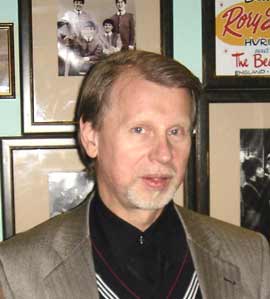
- No, God forbid. I must correct you, there are six groups under this name. And I support your opinion: "Songs" ended its existence with the departure of Vladimir Mulyavin. That's for sure.That VIA "Pesnyary" ceased to exist 10 years ago. I looked on the Internet and found out that there are four versions of the song. Are you part of any of these groups?
- What have you been doing for the last 20 years since you stayed in the United States? In other words, what do you do for a living?
- I worked in various businesses that brought good income. I also give concerts here in Russia and Belarus.
- In one of your interviews, you said that in the process of living in American life “everything had to be broken with your forehead”, although you did not come to an empty place. You had friends here, acquaintances. What has been the most difficult part of emigration?
- I really came to see my friends. But not everyone likes to share their secrets of living and surviving in America, little things that are sometimes more important than some global advice.
- It's from a series, what's the best way to do it?
- Exactly. Well, for example, why not say that when you move from one place to another, you need to leave your new address at the post office, and then the mail will automatically be sent to it? Because of this “small thing”, very important documents were lost. In general, I made a lot of mistakes that slowed down the process of adaptation, but gradually I learned to delve into the essence of the problem, gained experience. And most importantly, I always try to help others with advice, because ignorance leads to mistakes that cost money and time.
- In the teleconference of Malakhov's "Tonight", you said that you left for the sake of the children and did not leave forever. And this “not forever” is repeated by almost everyone who has a creative career in America: Maxim Dunaevsky, Alexander Zhurbin, Vadim Mulerman. And you know what comes to mind when I hear these shy confessions.? Maybe if you left forever, burning bridges behind you, knowing that “there is no back turn”, everything would just work out? Because you can't go forward looking back, with the expectation that if something's wrong, I'll come back. What am I wrong about?
– I would have left anyway, even if the Union hadn't collapsed. But it fell apart. 1991 was a year of powerlessness, everything became unmanageable. And I was responsible for the family. I am proud to have saved my family and raised three children. But you are right that my departure was not a “jump to nowhere,” and I knew that if I didn’t like it, I could always go back or go somewhere else. But if I did, it wouldn't be out of nostalgia.
- Did you feel like a man of peace?
- That's right! First of all, because I am used to nomadic life. Second, I have never been a nationalist, divided people by ethnicity or religion, and understood that every country has its own laws or rules to which you must adapt – not them to you. But at the same time, I don’t like to be trapped in any way. I need freedom of movement. And most importantly, I am happy where my family is good, and it is good for us here, so my home is here.
- What in American life have you never accepted, and what in Russian (Belarusian) do you no longer accept?
– I accept everything in this country and in that country. It is surprising how everything has changed and how quickly Russia and the CIS as a whole entered capitalism. I tried to understand where and how people earn a living, and earn very well. I don’t know, but the money is huge and it’s amazing. Everyone buys and sells something. There are incomprehensible shops everywhere, where they sell, let’s say, electronics: some eavesdropping, peeping devices, moreover, made in the United States.
- What's so weird?
- Yes, just in America, such a product can not be seen piled on shelves, for it there are specialized stores that are not conspicuous at all and which are not called from the street. You see, there are beautiful girls running through the streets, beautiful, fashionably dressed boys who do not understand what, along the grandiose marble facades of new buildings there is a flow of luxury cars, restaurants everywhere that cost at least $500 to eat.
– This is usually the feeling of any metropolis.
- Not at all. New York is also a metropolis, but the feeling is completely different, for me understandable. In Moscow there is a sense of ostentatious luxury. The fact that people are getting better is wonderful. But it is puzzling to constantly protrude yourself, your achievements, your well-being. And these pontiffs...
- Pontas?
- Exactly. No wonder they say that if the pontiffs glowed, there would be white nights in Moscow. I don’t want to say that nobody works or produces anything. But for some reason, the atmosphere of constant buying and selling is striking. Everything. Like apartments. People are enriched by the resale of housing left as an inheritance. It's just a trend. My grandmother or aunt left an apartment in Kutuzovsky. Do you know how much this apartment costs?
- To be honest, I wasn't interested.
- At least two million dollars, and some lousy Khrushchev - thousands of three hundred dollars. And here he will sell such an apartment in Kutuzovsky, buy something cheaper in Miami and get high, does not know what, but with a fee, it is unclear what caused.
- Are people more modest in America?
- People are different. But it matters more what a person is than what car he drives, what watch he has on his hand and whether he wears a Boss suit or a Dolce and Gabbana dress. Everything happens quietly, but according to the rules.
- And I think it’s good that Moscow has changed for the better in comparison to, say, the 80s: well-lit streets, well-dressed people.
- Agreed. Only in earlier years did I see more middle-aged and older people on those streets. Now, mostly young people who are fed by their feet. Run - bought, sold, ran to the institute, hung out, went to America for an exchange. By the way, then this America is high.
- Why?
- Don't know. It must be fashionable. In the subway you will see, the elderly have sad faces, anxious, and in general there are few of them, the elderly.
– Are pensioners in America having more fun?
- The people I meet, the people I talk to, the people I see in the shops, on the beach, they do. I was on my way home from Germany and an elderly American was flying with me. He was supposed to meet his lady in Spain to go on a cruise. I asked him how old he was and he showed me his 96. Can you imagine? And what struck me most was his optimism, energy, interest in life.
– Well, well, do any of the features of American life bother you?
- No way. Here, in principle, everything is done for the convenience of people. If something stresses sometimes, then the lack of money for the purchase of musical equipment. But it depends on yourself, on the ability to make the right decisions, talent, perseverance. I must say that I tried to do business with our compatriots a couple of times, but lost time and money. Unfortunately, our people, with rare exceptions, do not know how to keep this word. They are optional partners, which is why Americans are afraid to do business with us. I don’t want to indiscriminately accuse everyone, but all too often I see that the Russian business goal is one-time enrichment, not building an enterprise for years. In general, in America, those who get a good education, life is going well. I judge by my children and their friends.
- You have three children.
- Yeah, my son's 17, he's graduating high school, thinking about what college to go to. Both daughters chose the profession of a nurse. They studied well, work and at the same time find time and opportunity to travel, have fun, live interestingly.
- Tell me, do they understand how famous a person you were in the heyday of the "Songs"? Are they listening to your notes?
– Probably not, and I don't insist. Of course, they know about the fact that I sang, toured, about the popularity of the Songs, but they have their own music, their own perception. To my children, I am just their father.
- Let's talk about that glorious past and connect it to the present. In general, "Songs" - was it just a team, or a family, when the christening of the name day celebrated together?
- So it was, but mostly life was spent in concerts, trips – the wives were not enough money. But my wife did. And the leader was, of course, Vladimir Mulyavin, and thanks to him, we tried to exist as one family. He did not allow anyone to “pull the blanket” and, although he always asked the opinion of musicians, soloists, arrangers, the last word was always his. That's right. The ensemble was a creative process, during rehearsals everyone had the right to express their opinion, but the decision and responsibility for it was taken by Mulyavin – an incredibly talented and unfairly quickly forgotten musician, composer, People’s Artist of the USSR.
- What, after all, explains the incredible success of the Mulyavin "Songs"? What was the secret to their unique sound?
- In the repertoire, in the voices, in the style and incomparable arrangements, in the people who came together at the right time, in the right place.
- You know, sometimes modern arrangements are so monotonous that if you don't see who's playing, it's almost impossible to know the band. The same goes for melodic series and harmony. For example, listening to “Christmas Meetings” by Alla Pugacheva, I had the feeling that all the songs, except for two or three, seem to be written under a blueprint, and the arrangements are generally made by a computer.
- In Moscow, there are several popular arrangers who write for the stars: Baskov, Babkina, Kirkorov, Lolita. Of course, they write with the understanding that these artists work in different styles and try to arrange the material according to the manner, voice data and repertoire of a particular artist. But still, one hand. Hence there is a feeling of the sameness and lack of originality, uniqueness of sound. But, on the other hand, I admire how in 10-15 years Russian show business flourished. There were wonderful highly professional directors, sound directors, operators who learned to put high-quality, spectacular shows. Now it's an entire industry, and that's great! You see the same faces on the same channels.
– On the program with Oleg Nesterov, you made an amazing confession: for each program, from 50 to 100 songs were prepared, and then only 30 were selected, with which you appeared on the stage. Today, when preparing for performances, are you as demanding about your own repertoire?
– I'm trying. But first, I would like to say a few words about Oleg Nesterov. This is a high-class professional, magnificent, thoughtful, knowledgeable TV presenter.
- I completely agree with you and I am surprised that he seems not to be noticed, not nominated for television awards, about him nowhere, never heard.
- You see, he's a really creative person, he doesn't hang out with the right people, he just does his thing, and he doesn't need that tinsel. What bothers you about my repertoire?
- Well, for example, I watched a video of a bachelor song. It seemed to me that it is much inferior in quality to the level of songs performed by “Songs”.
- For every commodity there is a merchant. I think it's all decent. Or here's a song called "Stew Pigeon."
– You sang "Sivy Dove" and "Vologda" last year in the Kremlin Palace.
- Yes, on November 28, at a concert in memory of Vladimir Mulyavin. Vologda, by the way, sounded in English and Russian, and it was sung with me by a wonderful American musician Darrell Powell. The concert was attended by wonderful artists, including my former colleagues from the Golden composition of “Songs”. This event was shown on several channels, reviews appeared in the newspapers. And then an interview with my former colleague appeared in the Belarusian newspaper, in which he listed absolutely all the participants, including the Kuban Choir and the Buranovsk grandmothers, and only my name he missed. I wonder why. We all hugged, smiled at each other, took pictures. It's fine. Suddenly a spit in the back from a colleague. After all, we are not in a quarrel and we have nothing to share, and I flew to this concert 1400 kilometers away, and for my own money. This is me to your question about the “reproduced”, replicated “Songs”. That is why there are now six teams. And I would have dispersed them all, because with the departure of Mulyavin “Songs” went down in history, and replaced by making money on the famous brand.
- Brutal.
- Or...
– You may not like the next question, but I will ask it. Is it true that there was an unspoken rule in the ensemble: who can't drink, he doesn't belong in the "Songs" and that several musicians died of binge drinking?
- There was a rule – dry law on tour. Valera and Igorek passed away due to acute heart failure, and it happened during the morning run. And all this speculation about drinking is another stupidity of the “network trolls” and the yellow press. You see, when a person is really talented, he is like a child, and it is not easy for him to get along with ordinary people. Talented artists work with such dedication, at such a limit that it is difficult to explain it to those who are far from the stage. We didn't save them.
– Who are we, Via Songs?
- Yes, and us, and the Ministry of culture, and many others.
- Could you please explain what the Ministry of Culture or the party organizations did not provide? After all, for sure, everyone had apartments, they did not stand in queues for sausage and toilet paper, they released the whole set of dreams of Soviet people abroad. How else was it supposed to be protected?
- I might surprise you, but I didn't have an apartment in Minnesota.
- And Vologda?
I'm waiting.
- You may have been rewarded for your years in the city.
- Dacha? I had a dacha in Belarus, but it was copied by my own sister, and without my permission. And in Minsk, I bought a one-room 16-meter apartment.
- Then surprise me again. Tell me that Olga Korbut and Leonid Bortkevich did not have their own apartment.
- Was, and not alone.
– There are several versions of the collapse of the “Pesnyars”: alcohol, women – in particular, Olga Korbut, because of the influence of which Leonid Bortkevich, Mulyavin’s wife Svetlana Penkin, who turns scams with money, in particular, musicians’ fees, left. And some critics believe that one of the reasons for the collapse of the group is the invariability of the style of your ensemble, and monotony, as you know, is incompatible with the passage of time. Can I hear your personal opinion on this?
- There is something in all this, but the truth, as always, is somewhere in the middle. Korbut convinced Bortkiewicz to engage in solo activities, but after his departure we worked for another 15 years in crowded halls, palaces, stadiums. So the collapse of the "Songs" did not begin with this. I believe that the last wives who were with Mulyavin did not save him! Yes, he was like that, the kingdom of heaven! As for the monotony, God grant that any of the modern collectives was so "uniform" as "Songs".
- Was there any jealousy or competition between the soloists?
- Absolutely not! Everyone did their job. Otherwise, it would be impossible to give three or four concerts a day. 120 concerts a month.
- Russian pop stars (good phrase, however!) constantly complain about the scrutiny of the press, suing journalists. And then you watch Andrei Malakhov’s excursions to the Rublev-Moscow palaces of Volochkova, Baskov and other Jasmine and think, well, why do they live on display, why do they behave so uninhibited in a country where wealth and simply security are historically considered a vice and a crime? What do you think of the Russian Vanity Fair?
- It's all PR. Yes, they complain that journalists get out, do not give passage, literally chase, are on duty at the house and almost in the bathroom. But as soon as the press relaxes their attention, they climb out of their skin and invite them to take pictures of their marble toilets and bedrooms to remind themselves.
- They used to be proud of a good library, paintings, and now they show bags, shoes, underwear, chandeliers and candelabras.
– They must be bored. And the people in the crowd will go to the one who is more often shown.
- Maybe that’s what people want to see? As you know, demand creates supply.
- That too. But now the success of a person in general and an artist in particular is judged not by the number of books he read, correct speech or good manners, but by external gloss, the number of jewelry or the presence of “cash”, that is, money.
- Famous Russian composer and producer Viktor Drobysh once said that the artist needs something to represent, and the task is not in vocal data, but in recognition. And who, in your opinion, on the Russian stage, today is a piece of goods?
- The most accurate representation of the artist gives a live concert. Speaking of those whose speeches I have listened to recently, I should mention Lolita. She gives everything and the musicians are very strong – I recently had the pleasure to meet them. I really like Nikolai Noskov. He has a lot of melodic and harmonious things. You can see creativity. That's my subjective opinion.
- But they are breaking down on Stas Mikhailov with his three chords and Vaenga, who rarely manages to hit the notes.
- You're too hard on them.
- Well, that's my subjective opinion, too.
- But the love of the people is worth a lot – it dictates popularity and opinion.
And do not forget that on the Internet, on discs, in TV shows, recordings are studio, high-quality. And already at the concert, the opinion of listeners about a particular artist can change in one direction or another.
- There, in your "Florida" region, a large number of Russian pop stars live. Are you friends, talking to any of them?
- All of them are flying birds, and when they fly into our warm lands, we sometimes meet with Igor Nikolaev, Leonid Agutin, Natasha Koroleva and many other stars.
- Anatoly, what, first of all, does an artist need?
- Demand. It gives strength, the desire to work, to sing. Concerts, meetings fuel energy.
- Your son was born in the United States. A few years ago, in one of your interviews, you said that you wanted to come with him to Russia and Belarus so that he could understand what the Russian soul is. Was that a speech? If you can understand what the Russian soul is, please explain it.
- My son went to Russia and he liked it. I did not understand the soul – there was little time. In general, in my understanding, the Russian soul is modesty, dignity, the ability to listen, empathize, the willingness to come to the rescue without waiting for a request.
- Anatoly, what do you dream about under the sound of the surf?
- I am not dreaming, I am transported to my childhood, to my grandmother, Alexandrina. The sky is bottomless, birds singing, the smell of grass, the Belarusian forest. You also remember concerts when you spend hours on stage and think about how not to break your voice. Fortunately, this has rarely happened. Or you come from a tour for two or three days, take a car and recover in the woods. And then again concerts, moving, so life passed. So now I appreciate peace, silence, sand, surf. And dreams to implement a project dedicated to Vladimir Mulyavin.
- Good luck.
Interviewed by Zoe Master