August 26, 2010
What’s most interesting is life itself
This interview was originally conducted in Russian. This is an AI-generated English translation.
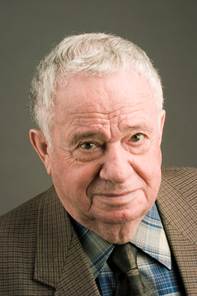 Interview with Boris Abramovich Reisberg – Professor of the Higher School of Public Administration of Moscow State University, full member of the Academy of Pedagogical and Social Sciences, author of popular textbooks, dictionaries and reference books on economics.
Boris Abramovich, is this your first time in the United States?
- No, the first time I came here was at the invitation of the American Ambassador to Russia Jack Matlock. I spent half my life as a rocket and space engineer. He worked as one of Korolev's deputies. Then, when I moved to the economy, I had to deal with the problems of disarmament – this happened in the 70s of the last century. I lived here for two years and realized that my creative activity is possible only in Russia. Maybe it wasn’t the same age, but it was probably the language. If I had professional English, I might find myself here as a scientist and as an educator.
- Let’s talk about your teaching career. How do you, a professor at one of the most prestigious universities, feel about the Unified State Exam, which recently replaced the entrance exams for universities?
- Negative. Because it imposes a completely uncreative system of verification of knowledge, when instead of understanding the subject, it is enough to memorize stamped answers, bringing them to automatism. Such "knowledge" is acquired in a short period of time and is just as quickly forgotten. Thus, training largely becomes a factor in the selection of applicants and the key to admission to the university.
- Are the entrance exams completely canceled?
- It depends on VUZ. If we talk about MSU, the rector of which is not a supporter of the USE, then we are given the right to an independent approach. That is, our applicants are examined in some specialized disciplines, but the results of the exam are also taken into account.
- Supporters of the USE justify its need as a panacea for blatant and bribery. Do you think that goal has been achieved?
- Partly. But remember that when any new system is introduced, it takes time to adjust. Yeah, that exam kind of equalized everyone. But it's just kind of like that. And most importantly, the disadvantages created by the new system of knowledge definition are much deeper than its advantages. The system weans from the need to think creatively and, in addition, completely removes the teacher from the assessment of knowledge, trusting it to the computer. And what, is it that removes the bundle? No way. You know, apart from MSU, just for fun, I teach economics at school. And I can say that in the vast majority of teachers evaluate the knowledge of children quite fairly. And errors are possible in the human system of “value assessment” and in the computer. For me, as a man of science, thought is the most valuable thing.
- It seems that the exam is not the only one in the Russian education system It is an innovation borrowed from European and American schools. The question is, should this be done if the Soviet system of education was considered one of the best? Not everything in American programs is perfect. For example, there is nothing good in the unsystematic study of such disciplines as geography, physics, chemistry, history, when a student can take one semester of this subject at will in the eighth grade, and then another semester of the year after two to complete the necessary courses. Hence the fragmentary knowledge, the superficial understanding of the discipline, assessed on the test, where, again, you just need to memorize the variants of the proposed answers.
- Yes, this is happening, but fortunately, the process is quite slow, because the structure of Russian schools is so far too biased towards exact subjects. In the teaching of humanitarian disciplines there is a decline, especially in the teaching of foreign languages, social studies, etc. One of the reasons is the lack of teaching staff. Look, economics as a subject was introduced into the high school curriculum in the early 90s, and specially trained teachers are still lacking. Well, another thing, so to speak, that slows down the road to progress is much more conservatism and bureaucracy than America. In Russia, everything is dominated by deflated programs and plans.
- Well, there's an overabundance of that in the public schools here, too.
- But you are right that Russia has a great tradition of teaching, especially in the fields of physics and mathematics. Proportions are broken, shifted towards the technical sciences.
- So why is Russia technically so far behind, say, developed European countries?
- It may sound paradoxical, but the gap in technology and technology is due to the lag in technology itself. I mean the unmodern, sometimes hopelessly backward equipment of school and especially institute laboratories, computer offices, and the technical base in general. Well, except for such universities as MVTU, MEPhI, MAI and several more. I used to work with Sergey Brin’s father and naturally didn’t expect his son to become such a famous person. But even then in the conversation, Mikhail Izrailevich stressed that his task is to transfer his son to the education system that will best reveal his opportunities. And I agree with that definition. That school, or that teacher is good, who knows how to reveal the possibilities of the student.
- It seems to me that in every country, every new government is beginning another transformation in three areas: the economy, health care and education. They usually end with nothing, or well-forgotten old. Apparently, the Russian government is not asleep. No matter how you turn on Channel 1, Putin or Medvedev actively communicate with teachers, young people, scientists, reprimand ministers, exhort, persuade, promise. Do you think there is a gap between word and deed? Or, to quote the leader, are you on the right path now, comrades?
- You yourself said that politicians are the same everywhere, do not skimp on promises. The higher the position, the more promises. The government has always promised a bright future. The only difference is which government and which people it promises. And we see whether the light is ahead or the clouds are thickening.
– Boris Abramovich, you are also a researcher at the Institute of Macroeconomic Research of the Ministry of Economic Development of Russia. What is the science of macroeconomics, if you will?
Macroeconomics studies the totality of economic phenomena and their relationship.
- Is this not practical, but theoretical economics?
- In a way. It is a science that studies the economy as a whole: economic cycles, price level, state budget, trade balance, monetary circulation, etc.
- The theoretical basis should serve development, the aspiration to a certain goal. Where in the economic sense is Russia going today, what concepts should it follow?
Concepts of long-term social development.
- Long-term sounds a little depressing.
The plan is designed for Russia until 2020, and for Moscow until 2025.
- I remember when I studied at school, at the institute, also with the whole country, I planned to grow up five years, ten years.
- (Laughs) Yes, only then did we strive for communism, the abstract idea. Russia is now a country of catching up development.
- How do you catch up with America again?
- Not necessarily America. In fact, the goal is to reach the level that has already been achieved in advanced countries in 10 years.
- Is Russia moving towards capitalism?
- Well, I remember classics, too. Yes, it is going to capitalism, but not to rotten, but with a human face.
- I’m not going to ask you whose face you see. I am joking, of course, but seriously, capitalism here is rapidly acquiring a definite, human, “statist” face.
You have certainly heard of Nemtsov-Milov’s “Putin” report. Results. 10 years?
- Yes, of course, both heard and read.
- Do you also have the impression that corruption is one of the main, if not the main, causes of Russia’s economic backwardness? According to the report, in the international ranking on the level of corruption, Russia ranks 143rd next to Indonesia, Angola and Guinea-Bissau.
- Yeah, and it's no secret. The president does not hide this either, although he does not emphasize the rating. And I, not as an academician and professor, but as an ordinary Russian, see that corruption is terrible not because of this 143rd position, but because it permeates all layers of society. The people believe that only the top, the echelon of high officials, are corrupt.
- I mean, the highest-ranking ones seem to be above suspicion.
- Of course, the president is beyond suspicion. And those around him are now saying that Putin himself is involved in the so-called Khodorkovsky case, and he himself took some of the profits from him. But it should be another investigation, not Khodorkovsky, but Putin. Perhaps this is why current leaders are so keenly defending their positions. Corruption flourishes in all sectors. Just the level of bribery is differentiated – someone takes billions, who millions, who hundreds.
- How does this happen in the scientific field?
- Just like the others. Like kickbacks. In my opinion, this is the dirtiest form. For example, the organization is interested in obtaining a state order. This case is serious, profitable, and depends on a certain group of officials. Today, the rule in Russia is simple – 50% of the amount allocated for the execution of the order, the organization undertakes to return to the customer. Then there is a chance to receive this order.
- You don't get jailed for that?
- (Laughs) How can you be jailed for something that almost everyone is involved in? It's a system. However, just recently a proposal was made to introduce criminal penalties for such transactions.
- So Khodorkovsky, it turns out, is a Musketeer, he is one for all. I mean, sitting for everyone.
- Well, technically, he's sitting for tax evasion, which, as they say, took place, but in the form allowed by the then-current laws.
- And he was the only one who did that?
- Of course, he became a scapegoat, and his example showed who was the master of the house. And the masters are political leaders who do not have visible billions, but there are administrative resources, which in Russia are more important than money.
- I am curious, do you include the above reflections in the theses of your lectures?
- Well, at MSU, I give lectures to people receiving a master's degree, that is, a second higher education. Many of them work in the presidential administration, and they can tell me a lot of new and interesting things. And in general, the authorities are afraid of what sounds from the 1st channel, and not from the teaching department, where the audience is 40-50 listeners.
- On the First channel Vladimir Pozner quite often gives the floor to politicians, financiers and economists. For example, the late Yegor Gaidar. In your opinion, who will Gaidar remain in history - an unrecognized, unappreciated innovator by contemporaries, or an unsuccessful experimenter?
- It so happened that I worked for Gaidar for three years. His personality was extremely controversial and ambiguous. You can't use black and white paint here. Of course, he was not ready to manage the country’s economy, although there is no denying his brilliant abilities – at the age of 32 he became a doctor of science. However, speaking about his career growth, one should not turn a blind eye to related resources: his father is an admiral, his grandfather is a well-known writer fond of power. It played its part, and then he successfully “turned up”. Yeltsin, he managed to like it. I personally do not belong to the category of people who highly appreciate the activities of Gaidar as acting Prime Minister. I think accepting this position was his mistake, and the whole management style was largely academic. Moreover, he proceeded from the premise of copying existing systems. With all due respect to America, I am convinced that if we reproduce the capitalist system of the economy, then those countries that have developed state administration like France or Germany. This is much closer to the Russian way of life. The United States is a very special history of a special people with its own relations. Accordingly, the principles of market capitalism have taken root there more naturally than they are or will be in Russia.
- Unfortunately, today we are witnessing a strong zigzag with a bias towards the state system of governance. The only hope is that the traditions of the free market will be stronger, and in the time remaining before the election of a new president, socialist ideas will not have time to take root.
- This globalization is working.
- And I think it is the unfinished, indestructible Marxism-Socialism, with its principle of selecting and dividing.
- You are right that the idea of socialism cannot be destroyed.
– How do we treat wealthy people in Russia today?
- Yes, as always - with indignation, hatred, unfriendlyness, envy.
- Is that mentality?
- That too. But I'll give you an example. It is sinful for me to complain – both the pension is high and the salary, but talentless people, hapoogs who earn millions for a month and billions for a year, do not cause me good emotions. Their income is incomparably higher than the earnings of scientists, teachers or doctors. Naturally, people see this as the embodiment of injustice. Hence the attitude.
- I mean, if a man is rich, he is stealing. Right?
- This is what 90% of the Russian population thinks, and it is not without reason.
- I say socialist ideas are like cancer cells. Here, too, according to a recent poll, about 30% of the population is for equalization or so-called equality. Of course, there is a large proportion of illegals.
- Yeah, I heard about that, too. But faith in the American Dream lives on. He who can and wills will get his way.
- There are many people in Russia who work and thrive. Wrong?
- Sure. But we are talking about a mass that includes both the city and the village. And the difference in mentality is this: the historically established Russian mentality – the belief that everything will be taken away anyway – sooner or later. And the perception of the masses that it is necessary to work and not drink, people do not want to realize. This is the universal psychology of consumerism – consumerism. Consumerism, which means consumerism, just sounds more beautiful.
- Boris Abramovich. You are an economist, so you know how to live well. Are you using this knowledge yourself?
- If you mean material goods, I do not suffer from the ulcer of consumerism. For example, I don’t need time to do it. Too much time is spent reading books, working on your own books, teaching. I even had to give up the car. I wanted to have a comfortable apartment, and that’s what I did. In general, I have three higher educations - engineering, mathematical and economics. But with all this education and prestigious work, how can scientists living under the law have the means to giveaways and other excesses? I get $1,000 a month.
- Joke!
- No, that's my salary at a research institute. As for MSU, there is an hourly payment of $50 per hour. What a pension, book fees. So I’m fine, especially considering that the average monthly salary in Russia is 15,000 rubles, that is, about five hundred dollars.
- Well, do you have time to rest? What do you like to do?
- I have a passion for picking mushrooms. I come from a village. My father was a forester. I rarely get out now. In the winter, I don’t rest at all – I work hard. I didn't really understand the question.
- Yes, I see the question of rest puzzled you. I did not mean rest as a trip, but rest from work.
- Oh, that's it. Saturdays and Sundays are no different than other days. I do not want to disappoint the reader, but I do not go to film theaters, I do not lead a social life. I rarely get distracted by social activities.
- What is the most interesting thing in your life?
- The most interesting thing is to live this life, to observe, to try to know and understand it.