June 1, 2010
Lyudmila Ulitskaya: I feel like a traveler.
This interview was originally conducted in Russian. This is an AI-generated English translation.
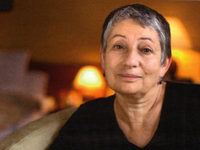 Lyudmila Ulitskaya is a writer, playwright, laureate of the Russian Booker, the Big Book Prize, foreign Medici and Pennet Prizes, an author whose new books never go unnoticed. They may cause controversy, although they do not aim at determining the ultimate truth. Undoubtedly, one thing - willfully or involuntarily, they make you think, look at the world and at yourself with different eyes, doubt the usual perception of what was perceived as a given before reading. Here’s what I’m talking about, and much more – the interview..
Lyudmila Evgenyevna, you began to publish at a fairly mature age, and the path to “thick” magazines and Russian publishing houses was not easy. What then, at the very beginning of your professional writing career, gave you confidence in your abilities, talent and professionalism?
- The journey to the magazines was not so hard as long. And I didn't have any confidence. Not yet. Always on thin ice. I have never been a writer, never seriously. Always a sense of play.
My life has developed so that I do not feel professional in anything, everywhere - no matter what I do - the feeling that I try something new and unknown. My husband, a wonderful artist, always says to himself, "I'm an aspiring artist." And I understand very well what he means.
I love professionals, admire when a person does his job at the highest level, regardless of what he does: yard sweeping or cooking. If he is a doctor, there is no limit to my admiration. As for writers, there is a very formal definition of a profession: if you feed on your work, then your work can be considered professional. But there is no definition of the quality of this work. And, unfortunately, we often encounter professionals who do not know their profession well.
– What, in your opinion, distinguishes professionalism from amateurism?
- For all my admiration for professionalism, I really appreciate amateurs who sometimes put more love and soul into the work they do. Let's not quarrel with them.
- You once complained that there are fewer and fewer people in Russia who are accustomed to reading and that this trend is not developing for the better. Two eternal questions arise: who is to blame and what to do?
- I don't know how to explain it. Movement of civilization. It seems that Umberto Eco coined the term “New Middle Ages.” There are times of rising culture and times of decline. Today, that part of humanity, which is called civilized, is undergoing a colossal “reformatting” – culture itself changes its characteristics, its qualities, its borders. The process is very interesting, we are its participants, and personally I belong to the “leaving” culture, and in age, education, and addictions. Only the features of the future culture are outlined, and we simply do not know much about it, but it is quite obvious that the main form of mastering the world will not be reading, but other ways of obtaining and transmitting information. The person himself changes, no doubt, mentally, but perhaps changes and much deeper, at the level of neurostructurics. This should be discussed with professionals.
This is no one’s fault – this is the evolution of man, and certainly no one will tell what to do. I suppose we have to make individual efforts to keep more human.
- But the increase in the number of writers per capita is encouraging.
- If so, I don’t see anything wrong with it. Writing seems to me a good thing: when a person writes, he thinks, comprehends the world around him, and if he has no ambition to conquer the world with a pen, let him write to himself.
- How do you feel about criticism? Whose opinion is more important to you - professional critics, friends, Readers, or your own?
- I'm good at criticism. Of course, I am the first judge myself. But I have a few friends who are very important to me. For many years, my husband Andrey Krasulin was the first and very qualified reader. He has a wonderful sense of word, style, he is generally an intelligent person who understands literature. But since I began to write fat books, I became less dependent on him, because he does not like to read himself, he wants me to read aloud to him, which is quite a tedious and sleeping pills. But in recent years, Elena Kostyukovich appeared. She's my biggest critic right now, and she's a part of the process. She is an extremely important interlocutor, friend, professional, and my literary agent. You can talk about it separately. Not here or now.
- Here in America, religion is an issue not to be discussed in the name of avoiding conflicts between colleagues, relatives, and friends. But I would like to forget about political correctness for a while and talk about this uncomfortable topic. Let me start with your most famous and at the same time, the most controversial book – the novel “Daniel Stein – Translator”. You probably know that among the Russian-Jewish emigration, and, for obvious reasons, especially in Israel, it caused a sharp rejection because of a somewhat “tourist” view of the most acute problem of this country – the problem of peaceful coexistence of confessions, one of which for centuries showed a lack of tolerance and a complete lack of desire to compromise..
What, in your opinion, does tolerance mean and how to justify it when one side shows it in a civilized way, and the other sees it as a weakness and an invitation to aggression??
- In your question, you have already fully defined your own position: that there are two sides, one civilized toleration, and the other regards tolerance as weakness and an invitation to aggression. And I don't need to ask you any further questions to clarify who is tolerant and who sees tolerance as an invitation to aggression. Let me just take one step to see this as ridiculous: Are Jews tolerant and Arabs treat tolerance as an invitation to aggression? From my point of view, both sides are aggressive, and aggression is not only a bad desire, but also a way of survival. Aggressiveness is also inherent in animals, it is a deeply biological characteristic of all living things. And in a way, it's not good or bad. That's right.
You have a point of view that I cannot accept. This is one of the positions, and there are many. I think the situation is more complicated and interesting.
The “tourist” position is the one that I would like to take (although I call it nowhere) – the position of impartiality, uninvolved view, possible objectivity. I confess that I really feel like a traveler, and every year and even day I realize that the journey will end soon. I would very much like to be as free as possible from ideological schemes, from patterns and clichés imposed by culture, upbringing and origin. I wouldn’t want my “identity” to depend one hundred percent on it. I don't have to like anyone. And in this case, I knew in advance that the “right” Jews would be annoyed, as would the “right” Christians.
- As for the “right” Jews, their irritation is understandable. One of the irritants is Daniel’s violation of the first commandment: “You shall have no other gods before me.” But what do Christians do not like?
- For many Christians, Daniel, like his prototype Daniel Rufaisen, is also an unacceptable figure – he denies the doctrine of the Trinity, questions the widely accepted deification of the Virgin Mary in the Christian tradition, and expresses many points of view that go against the traditional beliefs of both Western and Eastern Christians. In a way, he's a revolutionary. And the very idea of Judeo-Christianity among many representatives of the church hierarchy, and especially among the poorly educated mass of believers, causes irritation. If you follow the logic of Daniel, a Christian simply has no right to be anti-Semitic, and the popular faith – alas! – is permeated with anti-Semitism. Daniel is generally too radical for both, as a man seeking truth rather than asserting it. Therefore, it is unacceptable for anyone who believes that the truth is one and that it is in his pocket.
. What is tolerance? Do not do to another what you do not want for yourself. Hillel said, but it was said before him and after various intelligent people.
- Interpreter is not only a profession, but also the purpose of the main character. It seemed to me that in addition to the desire and ability to unite people of different faiths, his main goal was to try to translate Christianity into Hebrew. The attempt was in vain because the incompatible cannot be combined. So who was Danielle? A martyr who, having been baptized, in fact betrayed his ancestors, or a righteous dreamer whose persistent faith in universal love, and the work created and worked during his lifetime, "went away with him," precisely because of his doom?
- Christianity should not be translated into Hebrew. It came out of the Jewish womb. Brother Daniel, like Daniel Stein, wanted a return to the world of the original Christianity that had not broken ties with Judaism, as it had in the first generation of Christians. The idea of martyrdom is a Christian idea, which is not peculiar to Judaism. Moreover, the mass forced conversion of Jews to Christianity in Spain was due precisely to the fact that the Jewish tradition, considering life as the highest value, allowed this forced adoption of Christianity “for the salvation of life.” In Christian logic, it is absolutely impossible to renounce Christ under any circumstances: it is better to part with life, which is not in itself an ultimate value. Hence a great number of holy martyrs, many of whom not only suffered, but also voluntarily went to them. Hence the Christian concept of the “utility” of suffering. A nightmare is quite a concept... .
As for my literary hero, he was baptized voluntarily, it was his personal choice, and it was very acute, And do not confuse the two events of his life - his escape from Lithuania to Belarus, when he understands that he can save himself only by ceasing to be a Jew in the eyes of others, and another event, his conversion after the shooting of the Jews of the Mir ghetto.
This was the moment when he rejected the God who allowed the extermination of the chosen people, and from his denial of the "Jewish" God is the one who suffers, crucifixes, and kills. This is Christianity. Modern synagogue Judaism is as little acceptable to me as institutional Christianity, and the search for a personal God is an honest search for a spiritual path. I do not see any betrayal in the search. Daniel loves his people, loves his country, and works for the love and respect of people, regardless of their religion. What’s wrong with this, except that it’s very difficult to implement?
- You have repeatedly explained that the purpose of this unusual novel is not
Answer questions and think about them. But it seemed to me that both in the book and now, you gave a clear answer to the question of why Daniel accepted Christianity. One is the desire to survive, and the other is the disillusionment with what is Jewish. God allowed the destruction of his people. But even outside of those circumstances, in ordinary life, the fear of ridicule, humiliation, accusations of all sins, continues to engender the desire to be like everyone else, that is, a Gentile. Do you think that the change of religion eliminates the persecution, fear and sense of belonging to those with whom you are "one blood"?
- It doesn't get rid of anything. He remains Jewish. Jewish believers do not even allow their fellow Jews to consider themselves Jewish if they do not belong to Judaism, if they are agnostics or atheists. That's a big limitation. My fellow Jews may strike me off the list of Jews, but I will not stop being Jewish to the rest of the world. I see no advantage or disadvantage in Judaism. It's a fact.
- You once said that the life of several generations of Soviet people was programmed by the state. In today’s Russia, has anything changed?
– Yes, something has changed, but it is very difficult to determine. Ideological canons have been removed. Instead, “rules of conduct” have been proposed tacitly, old values have been abolished, new ones have not been proposed by the state. And for that, thank you. We are given the freedom to define ourselves. Independently. But this is work, and not everyone is ready for it.
- In your correspondence with Mikhail Borisovich Khodorkovsky, you The question was: How to preserve your dignity, your values, and The inevitable pressure of society? How would you answer that?
– It's a way of life. The sum of your personal decisions, your personal actions. Everyone has their own idea of dignity and their own boundaries. Again, a personal decision.
- For this correspondence you and Khodorkovsky were awarded the prize of the magazine "Banner" in the section of journalism. Tell me, what purpose did you pursue by submitting the text to the press? Did you seriously hope to reach out to the consciences of specific people who wield the levers of power and are able to stop this mockery of common sense?
- My goal was to give Khodorkovsky an opportunity to speak out. And he did this by answering my questions related to his understanding of dignity, statehood, the relationship of personality and power. I had no illusions that the initiators of the trial would read the correspondence and apologize to Mikhail Borisovich. Rather, I had the hope that our sleepy and lazy society would understand the scale of the lie of this process, would see the degree of absurdity of what was happening.
- Has anything changed since the posting? What are your predictions about this case, especially in light of its recent hearing in the Strasbourg Court and the initiation of a second criminal case?
– It seems to me that there are almost no people left who would believe in Russian justice, and this understanding is the key to possible (or impossible) changes in this regard.
My forecast is completely unoriginal – Khodorkovsky will sit under the current government. This is a disgrace to the authorities and society.
- InOur play “Cherry jam” is a paraphrase of Chekhov’s “Cherry Orchard”. Both plays are about the intelligentsia, its inability to adapt to the circumstances proposed by history. How do you see the modern intelligentsia? Judging by the play, it seemed to me that your attitude towards her is not the most favorable.
The intelligentsia is the creator and guardian of the cultural potential of the nation. It does not have the task of adapting to the proposed circumstances. That's her strength, that's her weakness. No matter how I feel about her, she's the best a nation has. Not football players, not showmen of all kinds, not businessmen, and certainly not politicians. The intelligentsia, even in its peculiar Russian version, are doctors and teachers, scientists, librarians and museum workers, all people with intellectual needs. This is especially true in the province. I travel a lot in the Russian province, and I can testify that, firstly, it is there, and, secondly, it is the best. A generation will pass, and perhaps she will completely degenerate, completely impoverished and cease to be herself. Professor Preobrazhensky no longer lives on Prechistenka in the Kalabukhovsky house, he was evicted long ago to the outskirts, in Bibirevo or in Maryino, deprived of an office, servants, worthy of payment, but he is still alive. And on Prepurity there lives a new bourgeoisie, which knows nothing and knows nothing but how to make money. So the mistake is that I love the intelligentsia, and if I allow myself to laugh at it, it is because I belong to it.
- How do you feel when you watch your book characters turn into screen characters? Are you happy with the movie versions of Merry Funeral and Kazus Kukotsky? Were you present on the set, participated in the selection of actors?
- At best (Kukotsky Case of Yuri Grymov) I can accept it, at worst (Merry funeral) I can not watch. Avoiding film adaptations. I've got a lot to talk about. Although I have written a lot in my life and scripts and plays, I can say that I definitely prefer the solitary work of a writer to the team work of a playwright.
– Are there any suggestions for screening your other works??
- Suggestions are always there, and I refuse them quite consistently. I have not yet knocked on the door of the director, whom I would gladly trust, say, to make the film “Daniel”. I’m not going to look for him because there’s always a lot of other work that’s more interesting to me than finding a producer.
- Most of your readers probably know and love you as a writer. (I personally remember and still have some of my favorites – “Genele the Handbag”, “Childhood forty-nine” and “Cat of great beauty”.) Do you plan to return to this genre?
- And I'm not leaving this genre. It is loved by readers and not liked by publishers. Today, many publishers think stories sell worse. But books are selling worse and worse. Marketing problems do not interest me. Although all writers depend on the market, I never ran to meet it.
- Can you really relax, pushing all the problems, unfinished business, fuss – to the background? Where do you get the best rest?
- The last time my husband and I had a vacation was seven years ago – we went to Croatia for ten days. I was in Sherm el-Sheikh once. The longing and despondency of modern recreation, its artificiality, cheap luxury, crowding - not for me. I’ve been to Bulgaria a couple of times, where my grandchildren have been on vacation to talk to them, always with work. It's a slavery I can't free myself from. Slavery is voluntary, but it does not cease to be so.
Unfortunately, the life of a person who is not limited to working hours and formal rest, in my case, does not involve a break. I have many trips, they are business. You can “snatch” a couple of days for yourself. This year stole two days for Florence.
I rested in my youth, when the children were small – I took them to the Crimea and lived there for a month and a half or two. To call it rest is ridiculous - to the market with a backpack, with a stroller and a baby by the hand, cooking on balloon gas or kerogas, washing in a trough, of course, without a nanny. But it was still wonderful, and I remember it as a beautiful piece of life. I live on the run and can't stop. Maybe I'll learn. Maybe I won't.
Zoe Master.