April 1, 2010
“A gracious guardian angel protects me“
This interview was originally conducted in Russian. This is an AI-generated English translation.
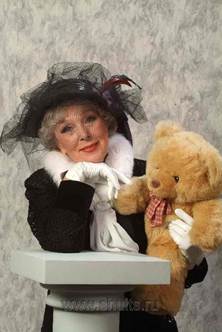 – Vera Kuzminichna, You are the People’s Artist of the USSR, laureate of state and prestigious theatrical awards, Knight of the Order of the Red Banner of Labor and the Order of Merit for the Fatherland. Which of your many awards is best remembered?
- Probably the first one, Stalin. I was 23 years old and it was a complete surprise for a student. This award left a sense of happiness on its head, although such a definition may not seem quite appropriate. Nevertheless, this is how I felt – incredibly happy, how happy a person can be, on whom success, recognition, literally fell unexpectedly and, as it seemed to me, not quite deserved. This award changed my life and probably decided my fate, because I was immediately invited to the Theatre of Satire for the main role. Most likely, this would not have happened if not for my previous “star” – the role of Nastenka in the film “The Tale of the Siberian Land”.
- What was your reaction to this early recognition?
- I felt like everyone was happy. Maybe it’s because I don’t notice negativity at all, or maybe it’s because people usually express positive emotions to their faces and negative emotions behind their backs. I didn’t think I had any talent or extraordinary skill. Nastya Gusenkova was, in principle, me, my nature, which Ivan Pyriev used talentedly. I did not create an image, I was just that – naive, cute, simple-minded girl. I just fell into good hands.
- And three years later, you received the State Prize for the role of Olga in Boris Ravensky’s The Wedding with a Dowry.
- Yes, for the show we've played 900 times. The movie came out later.
– How were such events celebrated in those days?
- You know, I don't remember banquets. Maybe they weren't there, maybe they weren't all invited. But then, in 1948, for the ceremony of awarding the Stalin Prize, I sewed a black suit, and a hole was made in the lapel in advance. But I never wore a badge. I don’t wear awards at all – I think they are suitable for officials, not actors. And then after the ceremony, I went home to our shared room, where I lived with my parents, two sisters and my brother. You see, the main feeling was the happiness of the soul, the delight of standing next to Pyrev, Volodya Druzhnikov, Marina Ladynina. And all the other attributes - banquets, speeches, I didn't think about it then. And now, too. I don't lead a social life. First of all, I don’t like big dinners, I just need a few good friends. Secondly, my husband (actor Vladimir Ushakov, who played the role of Maxim in the film Wedding with a Dowry) is a very sick person. But coming back to the issue of awards, it seems to me that my merits are overrated. I take myself quite self-critically, although, of course, recognition is always pleasant. It inspires, gives confidence in the need for what you have dedicated your life to, and the desire to continue to do it.
- In my opinion, your calling card has always been a charming, friendly smile. (In some articles, it is called simple-minded.) Apparently, thanks to her, it seems that you are always optimistic, friendly, meek. Is it a deception of vision, an image created, or is that really what you are?
- That's probably who I am. They often say that I have a good smile. I am happy to agree with that compliment. But, like everyone else, I have half-tone. I often want to add that I’m not so beautiful. I have flaws.
- Like what?
- For example, I am lazy, weak-willed, not as quick in mind as I would like.
- Do you ever get really angry, angry, hurt? Can you really get angry? How do you behave in such situations?
- This happens when my soul does not accept something or someone. Then I say, "I'm flying away," that is, walking away from the person or circumstance as far as possible.
- Deeper within...
- I’m not a fighter, but I don’t lie to myself or anyone else.
- What can bring you to this state?
- A lot. For example, the infinite tele-negative. I ask myself, is this the ultimate loss of spirituality, of soul, of ideals? Sometimes it seems to me that spiritual beauty will end in this century. Although I may be wrong, and my premonitions are nothing more than the usual difference of views inherent in people of so different generations.
- You mean changed ideals?
- Yes, exactly. During the Soviet era, under the yoke of that ideology, people believed that yes, even if now is bad, but it will certainly be good, better times will come.
- But they never stepped on us...
- I think so. But now we have hit the other extreme – the current life convinces us that only if you have a lot of money you can be happy and fulfilled, that only money brings happiness. I hate those values. And although, as I have already admitted, I am not a fighter by nature, I am actively protesting against such a “creed”.
– How can an actor protest?
The roles through which my faith or my rejection manifest.
- Do you think that by going to the theater, a person can change for the better?
- Yeah. I remember my shock at theatre as a child and adolescence. It was the theater that raised me. And so I try to choose roles that keep the soul from dying, or that restore faith in love, modesty, decency, these almost forgotten human values.
- Are you offered roles in television series?
- Yeah. And sometimes I'm struck by the very impudence of a sentence when it comes to a poor script and a lousy role. Although they pay a lot of money for it. Sometimes they will send something like this, and they will say, “I wrote this play for you,” and you wonder what kind of nightmare this is. Are they graphic artists? And how can you make someone spend time reading such horror? And these plots, "heroes."
- Does that mean you refuse to play negative characters?
- Often negative images are very interesting, and in my repertoire there were very different roles. But better, brighter I will play the one that is in tune with my soul. I probably don’t consider myself a master.
- Does a master necessarily have to be a universal craftsman?
- A master must be able to play brilliantly anything, although he will express himself better in what is close to him. By the way, craftsmanship is not a sin. It is more a skill, and therefore a dignity.
- In five years of studying in Moscow, I only once managed to get to the Theater of Satire, and then on an extra ticket. Then there was one of the most famous performances - "The Marriage of Figaro", where you played the charming Countess. The other day, I watched the play “Strange Mrs. Savage” in the production of Andrei Dennikov and was amazed by your peculiar reading of the image of an American millionaire, as well as your skill and intuition, which allowed you to avoid some melodramatic pathos of this production. I mean that your most successful roles were played in the performances of foreign authors, but for some reason even then in the eighties, and now critics write about you as a “truly Russian” actress, as if they still review the first, “Siberian” roles before writing a review. What do you think of that?
- It seems to me that my best roles in the last twenty years are completely different from the role of that village girl remembered from the movies. If I am not mistaken, for the first time a wonderful director and man Boris Alexandrovich Lvov-Anokhin wrote about “truly Russian” in me. He put the understanding of me in this definition rather not in creativity, but in life, bearing in mind that for the audience I am associated with such a typical Russian – patient, calm, faithful in love woman. In fact, when I play a role, I play character, not nationality. The same Spanish Countess Almaviva, born of the imagination of the Frenchman Beaumarchet, is primarily a woman. Most of all, she wants to like her husband, and it seemed sweet and touching, characteristic of a woman in love of any nationality. But these matchless costumes, lovingly made by Slava Zaitsev, the amazing scenery of Leventhal and, of course, the music of Mozart, helped to feel and get used to the atmosphere of the play, in that historical era. What kind of Russianness could we talk about there, with these bare shoulders, thin waists, bows, lace and figs? It also determined the tone, movement, intonation, gave charm.
And when I was playing Mrs. Savage, I was thinking about her nationality the least. The main thing is that this role is the quintessence of what an actor needs – a combination of comedic and tragic principles.
- Continuing the conversation about this unusual performance, where all but your heroine, the patients of the Quiet Monastery are played by dolls, I want to quote the words you said: "This role is given to me by fate to express myself on stage."
- I would like to explain this phrase in more detail. All my life I dreamed of the roles that entered my soul in my distant youth. And in recent decades, I have played what I dreamed of all my life: Ranevskaya in Cherry Orchard, Kruchinina in Guilty Without Guilt. I also played incredibly rich, deep roles in the plays of Leskov and Ostrovsky. All this is a great Russian classic, and the response of the audience, and critics, confirmed that my dreams were not in vain. And when I suddenly received an offer to play Mrs. Savage from an unusually talented director and actor Andrei Dennikov, I, without hesitation, put myself into his hands.
- Let me remind readers that the heroine of the play is an elderly widow-millionaire, whom the children of her late husband, who learned that she was spending her fortune on the implementation of unusual desires of strangers, were assigned to a psychiatric hospital. However, it is clear to the viewer that she found herself in this institution precisely because her words contain too much common sense, and that a person who seeks to do good, to help others, just seems insane.
Tell me how to explain that this play, which takes place in America of the 50s, has not disappeared from the repertoire of Moscow theaters for 44 years and, apparently, does not lose its relevance in modern Russia. What do you mean when you say in the commentary on the movie that it's weird? Mrs. Savage is especially dear to you because “you don’t have to pretend in this role”?
- What I meant was that it was close to me and that if I was the author of the play myself, that was how I wrote it. In general, this story seems to be taken from life. In fact, these stories are becoming more and more common in our time. Children who do not want to coexist with the diseases and old age of their parents and therefore ruthlessly get rid of them. Old people who suffer from the callousness of children may be more than from physical pain, but at the same time justify their actions. You know, I worked in the social and housing commission, where I saw and heard different stories. Recently, theater critic Olga Dzyubinskaya died. Prior to that, she lived for many years in the House of Veterans, where she was identified by her adopted daughter, whom she once regretted, but who had no pity for her. You see, when an old man was assigned to a nursing home, his apartment had to be given to the state. And so the children come and ask for this – the mother to rent, the apartment to leave. And the mother asks for the same, explaining that her children are beautiful, and in fact she does not want to interfere with them. And out of respect for such people, we go for it, even though our hearts are screaming with such cruelty. So this topic will always be relevant, because people do not change for the better. Unfortunately.
- For almost 63 years you have been on the stage of the theater of Satire.
Plucek Theatre and Shirvindt Theatre – What’s the Difference?
- The only similarity is that they both became directors of the theater in which they previously served. As directors, they have nothing in common. Plucek was a director by nature, and Shirwindt was an artist from head to toe. But he is very clever and therefore does not put much himself, and if he puts it, then only what is close to him. Shura has a different style, he left satire in the literal sense of the word. He, as a person, is characterized by soft humor, and accordingly, the performances are colored with this cute humor. And Plucek gravitated to posterity, and sometimes in his productions, cruelty, hatred slipped, which is a burden to me, because I am not a catchy, poster actress. But it should be noted that under him the theater flourished and, as you noticed, you could get only on an extra ticket or by acquaintance. Yes, Valentin Nikolaevich was a great director, and life favored him, because the actors gathered there at that time were unique. And almost none of them went to Shirvindt. No Papanov. Mengleta, Mironova, Mishulina. And these are whales that you could do anything with. And times have changed. After all, it was not possible to get to Taganka, but now it is possible. Apparently, some inner charge went away, and the actors became smaller. It is a difficult time for the theater, but it seems to me that Alexander Anatolyevich passes it noblely and with dignity.
- Has the change of power changed anything for you?
- Under Plucek, I had decades without roles. Sometimes life seemed ruined... But I really believe in fate and understand that everyone has their own, that you will not be forcibly kind. In general, understanding difficulties makes me not evil. Speaking of Shura Shirvindt, first of all I should note his kind attitude to people. It's expensive. In general, I always treated him very warmly, because he had a brilliant sense of humor, talent, beauty, charm. He remained the same as before his command. He lets everyone breathe and create.
- So, did you pass the test of authority?
- Absolutely.
- Can you influence his decisions in terms of repertoire and roles?
- I'm an ordinary member of the collective. The only thing, because of my age and position, is that I won't take on any role. If they do what they like, I will be grateful. But asking or offering yourself is not.
- And if you imagine such a conversation with Alexander Anatolyevich: You ask him for a role and he...
- And he'll say, "Come on, Vera, let's have some tea."
- He won't take it seriously.
- Most likely, it will reduce everything to nonsense just to promise nothing. But I understand that the role of the artist is difficult. And besides, I've tried this one with Puppet before. Then Tanya Vasilyeva left the theater after the conflict, rehearsing Ranevskaya in the Cherry Orchard. I went to him and said, 'You're probably looking for a replacement. I dream of that role.” But he was talking to me like an idiot. I don't even want to say it again. I didn't ask for more. Asking for anything now would be impudent. G-d has given me a wonderful destiny. I have a good guardian angel.
- Which of your colleagues in the theater can you talk about with admiration?
- Andrey Mironov. And although it is believed that there are no indispensable people, it is impossible to replace him. He was given a lot: charm, talent, lightness, wit, amazing musicality, but admired the way he grew from role to role in the direction of depth, drama. Andrew easily grasped everything, had a broad outlook, was aware of everything. It was interesting with him, and he knew how to be friends with ordinary people and celebrities. He was well-bred, tender to his parents and generally knew how to surround people with attention. And that's a very rare quality.
I can’t help but remember Georgy Pavlovich Menglet – a surprisingly contact, easy and at the same time extremely principled person, a brilliant actor.
I loved Boris Alexandrovich Lvov-Anokhin very much, both as a director and as a deeply educated, exceptionally decent person.
- And the women?
- I could tell you about a lot of people I admire. I will try to think briefly about those who decorated our stage. This is a stunning talent Tatiana Peltzer, feminine Nina Arkhipova, beautiful Zoya Zelinskaya, Valentina Tokarskaya, an actress with a tragic postwar fate, full of humor and vital energy Olga Aroseva, as well as Tanya Vasilyeva-Itsykovich. I can't tell you what kind of person she is because we weren't friends, but her talent and hard work are amazing. Plucek, by the way, did a lot to the talented girl grew a big actress. He gave her different roles, from character to heroic. I can't tell you her personality. But I don't get into privacy at all. If you ask me who's married, who's with whom, who's got kids, in most cases I can't even answer.
- Well, maybe it's for the best. As one of the hosts of the popular program “Looking at Night”, I would not like to offend anyone, but people of creative professions for some reason are especially prone to intrigue. And if you do not delve into personal problems, most likely, behind-the-scenes stories do not affect you. Do you have to take on someone else’s role, someone else’s problems?
- You know, complicity, empathy are not dead concepts. But when these stories are about something bad, something unpleasant, I personally walk away from the situation without even trying to get into it. However, if I believe that a person is worthy of help and there is an opportunity to help, I will help. For example, Andrei Dennikov had an unpleasant situation in the Obraztsov Theatre when they wanted to get rid of him. Katya Maksimova and I, in my opinion, an absolutely brilliant ballerina, went to the Ministry of Culture and told about his difficulties. I have to admit, it was an act for me, because I am usually far from it.
- Helped?
- Not immediately. After a while we met at a reception, and the Minister recounted his conversation with the head of the theater in favor of Andrei. In general, I am closer to everything non-conflict: it does not mean that I do not have compassion. I'm sad, but I'm not struggling. That's the flaw. I don't have to worry about myself. And basically, I treat everyone well.
- What is acting? When did you realize you were an actress?
- I think it’s dangerous to say that I’m a real actress. In the roles I have had in recent years, I think I have found my theme and been able to express myself. And to what extent this skill, to what extent it is simply sincerity, it is not for me to judge. The main thing is whether it was possible to convince the viewer of the reliability. I have already said that I do not consider myself a master. If you manage to live a role and it affects someone, give G-d.
- Why the uncertainty?
- I don’t feel that much has been given to me. I obviously lack temperament, and you can't imagine it. You have to be born with him. And if it is not initially, then you will not go out on one skill. I don't think there's much humor...
- What movie or theater role do you consider your greatest success? Were you unhappy with the role played?
- I had a big setback when I played Mad of Chaillot in the play Girodu of the same name. I played and understood that I did not influence either the partners or the audience and turned down the role. Honestly, the performance as a whole also did not become a great success, but on the artistic council Plucek said: "Everything is bad, but the worst of all Vera Kuzminichna." And I agreed with him.
- Is it when he "precautiously" ordered all the young partners to learn your text in case you forget on stage?
- Yeah, and that's despite the fact that I've never used a souffler. But interestingly, later, in concerts, I uttered a monologue from this performance, and I was praised. Then I thought maybe I took it too dramatic, or maybe someone wanted me to lose faith in myself. I don't know, it's kind of weird.
And successful roles - Countess Almaviva, Olga in "Wedding with a dowry", Anna Andreevna in "The Inspector General", a warrior in the play Leskov. I love my later roles – Ranevskaya, Kruchinina, Savage. I played them on the side, in other theaters. And about the theater of Satire, I would say this: I dreamed of good roles, but for a long time I did not get anything.
- What is the most important truth that life has taught you?
- Patience. There were such explosive moods - to abandon the role, rebel and leave the theater. But over the years, you realize that you have to make decisions on a cool head.
- How does the day go when there is no show? What, besides the theater, brings you joy and positive emotions?
- I love nature and animals very much. I have a cat that I adore. Before, when I had to go on tour a lot, I couldn’t afford to have animals. And now another living soul meets me at home. I have always enjoyed walking, walking in the woods, in the fields, sitting by the river. I admire the nature of our middle lane.
- And urban life...?
- I like to go shopping, look for something like this, women’s – a jacket, scarf, beads. If a very bad mood, then you need to go buy lipstick or perfume, in general - to please yourself. I've always loved reading, but not so often now, because caring for my husband takes a long time. The housekeeper and my dear young friends help me with the housework, without whom I simply cannot imagine my life. To be honest, I am not well adapted to life. I don't understand any receipts, bills, and technical progress has passed me by. I have a washing machine twenty years ago, and I still don’t know how to use it. I'm not an important hostess: I cook like this, I can't wash and iron. Someone's doing this for me. I'm warded and therefore consider myself a spoiled life. It turns out I only do what I like. Is that spoiled? I get scared when I ask myself, what would I do without all these people? They give me the opportunity to live the theater, walks, talks, books and this makes my life comfortable.
- What makes you sad?
- I am at an age where all my friends are either old or not. And of course, the gradual narrowing of communication, loneliness and even fear of some kind of thing. absolute Loneliness makes you sad. But almost always, while there is still work, these fears, sadness, anxieties recede.
- Do you have a feeling of absolute happiness?
- It's very difficult... I used to love one person very much and I was probably happy. In my career, I feel happy on stage. And in life, I just live with some positive charge, and if there was absolute happiness in it, then for a long time. But I'm not at my age, and that's good for me.
- So, despite all the difficulties, the need to constantly overcome yourself, endless, not very generously paid work, Not only are you not tired of the acting profession, but it is in it that you find positive emotions and a reason to be happy? So the scene, in some way, makes up for what real life doesn't?
- And replenishes and distracts. For example, I'm sitting in my dressing room, my face is gray, my bags are under my eyes. Then I make up, look, cilia appeared, blush, wrinkles smoothed out - and so, like, nothing, improves mood. And seriously, the scene gives you the opportunity to learn. Instead of many years on the stage, it’s just life without this profession. What's left? The simplest existence. I'm married, I don't fall in love with anyone, no one falls in love with me, no drama, day by day it looks like a sleepy realm. And the stage gives everything a woman can experience, the fullness of life, many lives, when you feel loved or abandoned, beautiful or hated, suffering or happy.
- The difference is that in stage dramas you know the ending in advance, which makes them, well, not quite real, real. And theatrical emotions are different from life, although on stage they often look even brighter.
- And yet the scene gives a sense of surprise, in some roles you open yourself up completely different. And then, between the audience and the actors there is a powerful energy exchange, when the wave of emotions unites them. Because acting is a drug.
- Because of their long absence from Russia, those who read this interview mostly remember you for their previous roles in film and theater. Tell me, what has changed in the last twenty years in the theatrical life of the country and in your sense of yourself in it?
- Everything is very interconnected. The moral climate in the country has changed, accordingly, the public has changed, which with its somewhat consumerist attitude dictated a change in theatrical tastes and preferences. If the authors have tried before attract The viewer depth of the inner world of the heroes, the richness of semitones, the development of characters, now they aspire to it. lure It's your own surprise. On the one hand, the public can understand that they want to take a break from the heaviness and nervousness of their present life. I'm sorry about that. But on the other hand, this outrageous displaces psychological theater, because it is already “tired and boring”, and love is “no longer exciting.” What captures is what is “cool” – impudence and shamelessness, which inevitably lead to spirituality that extends to both creators and the masses. Therefore, the time for art is difficult and at the same time very interesting. Life is interesting, there is so much new in it!
How do I feel? On the one hand, I see the drama, I understand the difficulties, and on the other hand, I am glad that I, like a fragment of the past, carry what I believe in.
And, figuratively speaking, I feel like I am on a small island, or maybe in a vacuum, where I sit and enjoy good roles, loyal friends, good feelings, positive emotions. My present happiness is my home and the threads that I feel and know are spilling over to people who feel and think like me.
- Vera Kuzminichna, this year you have an anniversary. May your guardian angel always be with you.