November 1, 2009
“Any chance is natural“
This interview was originally conducted in Russian. This is an AI-generated English translation.
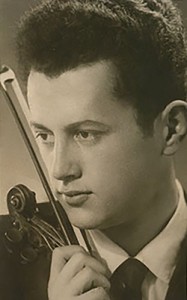 Interview with the chief conductor and artistic director of the E.F. Svetlanov State Academic Symphony Orchestra of Russia, Mark Gorenstein.
– Mark Borisovich, the fourth festival was held in Moscow in June this year.
symphony orchestras of the world. What distinguishes your orchestra today and what goals do you set for the orchestra and yourself as its leader?
- I think that the main goal of any leader is to make his orchestra high-class, and therefore competitive. What makes my orchestra different from others? Talking about it is a matter for critics. But I think it has its own unique sound, timbral features, absolute balance between groups, which together is the hallmark of a class orchestra. It seems to me that the winds of our orchestra play in the West, and the strings - in Russian. This combination gives us the trait that sets our orchestra apart.
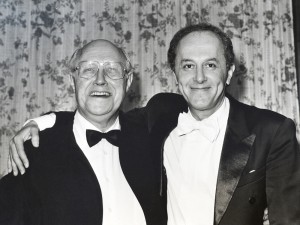
Yitzhak Perelman once remarked that if we talk about the “nationalities” of musical instruments, the violin is Jewish. What is it like to play the violin?
Russian?
- This implies a more intense, emotional and rich sound of strings.
 Rebellion and music are incompatible. – You said in one of your interviews, referring to the conflicts that literally tore the orchestra of E. Svetlanov in the 90s. These contradictions, of course, have not changed for the better the quality of performance and, accordingly, the reputation of this famous team. How did you manage to create a new orchestra? Is it possible to call it a group of like-minded people today?
- I have to start with what happened in the 90s. When things began to crumble, the orchestra was forced to hire people who did not match the name of the band that was once the pride of Soviet symphonic culture. The number of gray musicians prevailed in the orchestra. And, as you know, grayness combines very quickly - unlike talented people. When a critical mass of such musicians crossed reasonable limits, they united against their artistic director. However, the incident was to some extent the fault of Evgeny Fedorovich Svetlanov. But the methods by which the group of these "great" musicians acted have no right to exist. After this "war" began, there could be no question of any quality of performance. In addition to the fact that they were bad musicians, their main goal was to get Svetlanov out of the world, which, unfortunately, they eventually succeeded: in 2000 he left the orchestra, and in 2002 he died.
- And in 2002, you accepted the orchestra.
- Yeah. And then I put the question very harshly: the whole orchestra will be re-certified, and then it will become clear who knows what. As soon as I announced it, a huge number of people immediately applied because the qualifications of these musicians were below the board. Very soon from fifty to seventy people left the orchestra. Besides, there were twenty-five vacant seats in the orchestra at the beginning of my work. You can imagine! This orchestra always had a queue for one hundred blocks and the competition had sixty people per place. We've run more than ten contests. People were required to play well and think musically, following the conductor’s interpretation. Internal resistance was overcome because the part of the orchestra that came to the competition wanted to make the band what it was before the 90s - the pride of Russian musical culture. Resistance can occur periodically in any group. It doesn't matter. When there is a result after the concert, the internal resistance immediately disappears. Of course, there is always something to strive for, the path to perfection is an endless process. As for the collective of like-minded people, these are all lyrical digressions. A friend of mine once called an orchestra “a terrarium of like-minded people.”
- That's a pretty caustic definition.
- The main question is whether the orchestra is passionate about its work or not. Outside the stage, a hundred and twenty people can’t think alike – they’re not robots! And on stage, they have to think the same way, but it depends not so much on them as on the artist and chief conductor. The best test for “consensus” is a performance conducted by a guest conductor. He takes the first chord and immediately understands what level this orchestra is, whether the musicians think the same way.
- What qualities should a conductor possess in order to not only survive in the literal and figurative sense, but also to bring the orchestra to a high professional level?
- Firstly, he must have a lot of willpower and conviction that his creative ideas bring results. Secondly, he must be a professional, he must know, how do it, what such an orchestra as to make the most of its timbral capabilities, etc. There are thousands of ways to do that. And if, in addition, it is a group of musicians who love music more than money, and I tried to take them, then the result will be achieved. But for the first three years I hardly left the rehearsal room. Now the orchestra is already built, it does not roll by inertia - it has its own road. But no creative organism can exist without an artistic director, without a chief conductor, without his constant control.
- Even if the musicians are so professional that it seems from the audience – they can play as virtuoso and without a conductor.
- There are many examples when a team left without a leader lost their professional skills and their face. A conductor is like a director, it is a one-dimensional work. A vivid example for me is the Bolshoi Drama Theatre, which for several decades was headed by the brilliant director Georgy Tovstonogov. When he died, it turned out that the artists remained the same, and the theater ended. But it is not me who should evaluate the level, but people who attend concerts, and to a lesser extent music critics, because in Russia there is no music criticism at all. Unfortunately, for the most part, those who write about music have a very distant relation to it, often do not understand anything about it, do not listen to anything, do not know.
- Do contemporary composers offer their works to you?
- Over the years, I have played many works by contemporary composers, but even more scores remain unplayed – I physically do not have time to do everything I would like. It is simply impossible to play more than two concerts by contemporary authors, because we still have to think about whether it will be interesting to the public. Everything is different than in the West. There, the works of contemporaries are woven into season-long subscription concerts. In Russia, unfortunately, the “company” continues. For example, the festival “Moscow autumn”, when the works of Russian authors and their friends play for a month. Twenty relatives and twenty curious people go to the concerts, despite the fact that the entrance is free. I've been saying this for years, it's useless. I am talking about the need to weave into subscription concerts the works of talented contemporary authors. Then the names of contemporaries will become recognizable, will cease to scare away, and in three years it will be possible to play not an overture, but a larger composition that will attract universal attention.
- There is such a thing as “the conductor”. Who would you call your “executor”? ?
- In general, I have very good, you can say, friendly relations with soloists. For a very long time and with great pleasure I have been working with Nikolai Petrov, Viktor Tretyakov, Nikolai Lugansky, and among the young – Alexander Buzlov, Alena Baeva. A soloist is one who has musical thinking and musical logic. I don't have a favorite soloist. Thank God, we do not live in the Soviet Union, where there was a court soloist of one orchestra, who skated with this orchestra from morning to evening. From my point of view, this is fundamentally wrong. For me and the orchestra, it is important that the soloists who come to us are of the highest class. On the other hand, it is very useful for the orchestra to read the same works by musicians of different nationalities and schools. The orchestra draws a lot from this communication. I hope the touring musicians do too.
- Many well-known conductors note an incredible, never before observed, number of young performers with masterly technique. However, the competitive system often does not allow to break through and declare themselves really talented soloists, real personalities. Such musicians, who attracted the attention of the jury and the public, but did not win the first places, it is much more difficult to be noticed, and therefore to get a contract. What, in your opinion, should a true talent do to break into the musical Olympus?
- Unfortunately, for the last twenty or thirty years, life has been built in such a way that it all happens through competitions. Without winning certain competitive regalia, it is difficult to break through. So far, almost nothing can be done about it. Exceptions to the rule only confirm the rule. For example, Kissin, who has never participated in competitions. Of course, the competition is to some extent an indicator of class, but to no small extent an indicator of the level of stability of the nervous system of the performer, and on the other hand, an indicator of the achievements of those who sit on the jury. Some “mafia” personality comes to the jury, quickly “pumps” colleagues and ends up with some people receiving awards. When you start playing with such a soloist, you don’t understand how he could get a high award. Of course, it happens that a person who wins a competition becomes a wonderful musician, but many winners disappear very quickly. There are no miracles. If the winner of even the first twenty awards plays poorly with the orchestra, the orchestra will not call him a second time, because the reputation of the team is an important thing. So they can go around the halls once. And then they go somewhere. In fact, where I care less, but why they won the awards is a question.
- What do you, as a conductor, look for in a soloist other than perfect instrument ownership?
- Many young soloists play very fast, but they are no longer taught sound, especially pianists. The sound on the piano is the most important thing. Because running can be taught to anyone. The divine sound possessed by the great pianists of the past – Richter, Hillels, Horowitz, Arthur Rubinstein – cannot be taught, of course, but it is possible to improve what a musician has by nature. Now it is believed that the faster you play, the more impression you make in public. That's partly true. But on true connoisseurs this makes no impression. A pianist who plays the piano as a percussion instrument, who does not know how to extract and pull the sound on the piano, ceases to be interesting to me. I want to play with a person who has a beautiful sound, who understands what a musical form is, who has musical thinking and musical logic.
- Do you always manage to be yourself?
- I never cheated on myself, adhering to the principle: “Help talents, talentlessness will get through themselves.” I still keep saying what I think is right, and it makes my life very difficult. That is why I almost never get invited to the competition commissions, boards and so on. And the principle of life of a compromise, loyal to the power of a person is to say what is expected.. And before that, what me whomever said Well, I once told a high-ranking boss that he was a state criminal. So what? He wasn't fired because of that. It didn’t make me feel better either, but maybe something started to change. Because when the President of Russia presented me with a government award (Order for Merit to the Fatherland of the IV degree) and I had to say the answer, he kind of jokingly asked: “Do not swear?” In general, I believe that people are much more natural and pleasant to communicate with a person who says what he thinks.
- Quite a controversial assumption. In my opinion, we often see the opposite. Is there a positive effect of telling the truth?
- In the collective, yes. The fact that the orchestras received privileges is also my merit.
- Has the Russian school of music education, once famous and recognized throughout the world, changed? Do you have any desire to teach? Did Gennady Rozhdestvensky or Tigran Alikhanov (until his recent retirement) offer you a position at the Moscow Conservatory?
- The education system has changed completely. As for the education of orchestral musicians, since 1990 it has completely collapsed. In the days of the Soviet Union, there were three elite groups in which everyone wanted to get: the State Orchestra, the Mravinsky Orchestra and the BSO, and two theaters - Bolshoi and Kirov. A huge number of musicians from all over the USSR tried to get to Moscow and Leningrad in various ways, because there were teams of the highest class.
Since 1985, when perestroika began, which, in my opinion, is still not over, the number of state orchestras has increased significantly. At the same time, the number of musicians willing to work in the orchestra has decreased, and the number of orchestras has increased tenfold. You can imagine the same people working in thirty places, what a job it is. As for the training of future orchestrators, it has always been wrongly constructed. But before this was offset by the fact that the number of jobs was limited, and there was nowhere to leave, because the country was closed. The disadvantage of training is that everyone is being prepared for a solo career, so there is a huge problem with orchestral footage. And until we start educating people with an eye on a symphony orchestra, this problem won't go away. I think only a few out of a thousand musicians become high-class soloists and can feed themselves with this work. And the rest – the winners of all sorts of small competitions in the mountains of Italy or any other country – do not want to go to the orchestra, because they are “great soloists”, and they have nothing to live on, because no one is satisfied with concerts for them. This is the answer to the question of why there are huge competitions for orchestras in the United States, and our demand is many times ahead of supply.
Tigran Alikhanov I would not mention in this conversation. As for Gennady Rozhdestvensky, I think while he works at the conservatory... Nowhere in the world can the chief conductors of the two best orchestras not teach at the country’s top university. And only in our country this is possible precisely because the conservatory works Christmas.
- Who do you consider to be the main people who influenced you as a person and a musician? Tell me about them.
- The first person who influenced my musical development was Artur Zisserman, who, thank God, is now alive and well. This was my teacher at the Stolarsky School, a brilliant teacher, a brilliant violinist, a brilliant man. Everything I know is mostly taught by him. Then in Chisinau I had a wonderful teacher, now, unfortunately, the deceased, Alexei Innokentyevich Amvrosov. And of course, Evgeny Fedorovich Svetlanov, with whom a special, completely inexplicable story is connected. Svetlanov had no special feelings for any of the orchestral musicians. And why he singled me out, I don't know. Maybe because I was one of the few people who could come up and tell him what I thought. If it wasn't for him, I would never have joined the State Orchestra. When I played the contest for the first time, I didn’t even have the necessary documents with me, because I came to Moscow for a walk and quite accidentally learned about the competition in the State Orchestra. Evgeny Fedorovich called me to his desk and asked if I could go to Chisinau for documents. I said, "No." - Why? “Because the same people’s artist of the Soviet Union works there as you,” I replied, referring to Timofey Ivanovich Gurtovy, conductor of the Philharmonic Orchestra, where I worked at the time. Oddly enough, Svetlanov was not offended and in 1975, when I entered again, he said at the discussion: Here is a man named Gorenstein, who twice beat all the contestants. I think we should take him.” Svetlanov’s opinion was indisputable, and I got into the orchestra. After the first internal competition, which I played a few years later, I was transferred from the ninth console to the sixth, then from the sixth to the fourth. And then Svetlanov let me try the orchestra. He came up to me in Madrid, and I was standing in the hallway playing out, and he said, “I know you’re into conducting, we’ll come to Moscow, I’ll give you a try.” And it really happened. He was giving me rehearsals.
- How did your colleagues react?
- Of course, for some of them, this did not cause the best reaction. The only thing that saved me - I did not say stupid things, did not teach anyone to play instruments - I learned the text without any attempts at interpretation, so that the Master could only do Music. This is the function of the second conductor and assistant – not to create, but to engage in technology. Although I dreamed of becoming a conductor since childhood, Svetlanov’s work pushed me even more to this. He's the man who gave me a trip into life. That is why the first thing I did when I came to the State Orchestra was to name the band after it, and now the name of the orchestra looks like this: E.F. Svetlanov State Academic Symphony Orchestra of Russia. I take it as a great credit.
- You seem to have had offers from other well-known groups.
- Yes, but because of the desire to work only in the orchestra of Svetlanov, I, already being an artist of the orchestra of the Bolshoi Theater, refused two tempting proposals received from Kondrashin and Fedoseyev.
- In order to agree to lead the team, which for thirty-five years was led by Yevgeny Svetlanov, a conductor who was considered the “Russian Karayan”, it was necessary to have extraordinary courage and self-belief. What helped you to resist the biased attitude of a significant part of the orchestra and especially a group of journalists who are in the tradition of unshakable Soviet music Collectivism organized a conspiracy, if not persecution, lasting for more than one year?
- I think that this bullying is still not over, although it is the eighth season of how I work here. I think that part of the so-called cultural stratum, along with numerous "journalists" and part of the orchestra, were not very pleased when a man named Gorenstein suddenly became the chief conductor of the country's first orchestra. But I can say one thing: fate gave me the opportunity to realize all my plans – to be a conductor, to perform in the best halls of the world. And that's great happiness.
In terms of self-confidence, by that time I had already been the principal conductor in three orchestras, having traveled many countries as a guest conductor. For example, when I came to Budapest, I got an orchestra that was forty years old and not in very good condition. A year later, tickets were asked for ten blocks. Then there was South Korea. And then I made the Young Russia Orchestra from scratch, taking musicians who had never worked anywhere, absolutely young guys. And made a team that became one of the best orchestras in the country.
- But the status of the State Orchestra imposes several other requirements for both the conductor and the musicians..
I knew exactly what to do with Gosorkester and how to make him a unit to be reckoned with. But he was forced to spend a huge amount of blood, nerves, health to overcome the enormous resistance – not only external, but also internal. I can tell you one thing: it cost me a lot of blood. Today, something else is important for me: how popular we are in Moscow, how the audience loves us, how the halls are filled at our concerts. One thing is clear to me: the public is not stupid. When I joined the orchestra, two hundred season tickets were sold, thanks to “the outstanding conductor of our time.” Basil of Sinai. From 2000 to 2002, he destroyed everything that remained in the orchestra. And two hundred tickets sold for the concert season 2002/2003 - this is just an assessment of his work. And since 2004, a thousand hundred of our subscriptions have diverged in two weeks – in the Grand Hall of the Conservatory and in the Tchaikovsky Concert Hall. The crowded room is the result of my work and the attitude of the public. Everything else doesn't interest me at all.
- Recently, your orchestra performed in Chisinau, which you often call your second homeland. What do you think, what do you remember, what do you remember?
- When I returned to the city of my youth, I had nostalgic memories. Of course, I walked through the streets where I lived, went to the schools where I studied, remembered my friends in school, my teachers. And all this is nice, but of course with a touch of sadness. It's been a very, very many years. The city has not changed much, with the exception of the main street, which simply has more modern shops and boutiques. The Philharmonic works as it did before, although the hall seemed very small to me. When I was there, it seemed very big. Our concert was held not in the Philharmonic, but in the so-called Chisinau Palace of Congresses. There were a lot of people, we were very enthusiastic. What upset you? It seemed to me that people had become less friendly, more aggressive, even though I didn’t feel that way towards me—whom I dated was nice and kind to me.
- To what extent does the fulfillment of desires depend on perseverance in achieving the goal, and to what extent on luck? Do you even believe in luck?
- Everything in this life is accidental. The case that I went from Chisinau to Moscow at the time when there was a competition in the State Orchestra; the case that Svetlanov drew attention to me. But any "accident" is natural. I think everyone gets a chance. You just have to be ready to take advantage of them. Once I could not imagine that I would be the chief conductor of the State Orchestra, the orchestra where I dreamed of working since childhood. It's an accident, too, fate.
- It's not evening yet, but has everything come true?
- I started conducting quite late, and at thirty-nine I got my first orchestra. There are only two examples in the world where people, having started conducting so late, get in their career what I got – Charles Munch, who received his first orchestra at forty-two years old. If I had started ten or fifteen years earlier, if my first orchestra had not been received in Hungary, where Soviet people and people of my nationality were not treated very well, to put it mildly, I think there would have been more opportunities for me. Yes, I would like to conduct in Boston, Chicago and New York, but I have no regrets at all because I have a wonderful orchestra, created by my own hands, from which I get a great pleasure. But I still think that I didn’t achieve everything I wanted, and I still want to do a lot of things in music, not in my career. I haven't played so many amazing pieces yet! It has not yet achieved the results it needs to achieve.
- You're Odessa. We studied in Chisinau. Moscow and Muscovites, as you know, do not like provincials. Did the capital easily submit to you? What is the most important thing you have discovered, having passed the way from a violinist sitting at a distant stage to a remote conductor of the same orchestra? And who do you feel today – a southerner, a Muscovite, or a man of peace?
- It would be untrue to say that people, when I worked in the Bolshoi Theatre and in the State Orchestra, were very happy because a person who did not graduate from the Moscow or St. Petersburg Conservatory plays there. But figuratively speaking, the capital obeyed me, although not immediately.
As for who I feel I am, of course, a man of the world. I drive a lot. I have no sense of attachment to Odessa. I've been there twice in a row recently. Yeah, I'm fine, comfortable. But the main thing in youth, and now there is one thing – the opportunity to have a job that is completely absorbing and brings satisfaction. And I have a wonderful family. All these together are components of happiness.
- What excites you about people and what irritates you? What human weaknesses can be overlooked and what cannot be forgiven?
- I admire talent and professionalism. As for weaknesses, each person should have a bar of decency, below which he has no right to fall. However, each person, it is probably different. I personally do not accept people who do not remember good, those who consider permissiveness to be the norm of life.
- What happens when a person crosses that line?
- Then it ceases to exist for me.
- Brutal.
- Maybe. I have rarely met such people.
- Is it possible to forgive all of the above for an unusually talented person or genius?
- Vileness remains meanness, whether in the case of an ordinary person, or in the case of a genius. In addition, I agree with the words “genius and villainy are two incompatible things.” And great talent is not an excuse for a despicable act. That's my firm belief.