October 1, 2008
“At the time I visited the Earth…“
This interview was originally conducted in Russian. This is an AI-generated English translation.
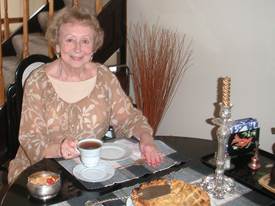 Sofya Ignatievna Bogatyreva is a philologist by education, literary critic by profession, author of books and research works, well known for her essays on Russian poets and writers. Her fate was largely a reflection of that great and tragic era, which belongs to those who fell to be born in the prewar years. The daughter of the writer Alexander Ivich, who preserved the archives of Khodasevich and Mandelstam during the years of repression, the wife of the famous poet-translator and human rights activist Konstantin Bogatyrev, who was killed on the threshold of his house during the years of Andropov's rule, she communicated closely with Nadezhda Mandelstam, Lydia Chukovskaya, Yuri Olesha, Viktor Shklovsky, Joseph Brodsky, Elena Bonner, Andrei Sakharov, Irakli Andronikov, Konstantin Paustovsky and many other talented people of his time.
" My age, my beast, who can
Look into your pupils.
And with his own blood,
Two centuries of vertebrae ...”
Oh. Mandelstam
As you know, we all come from childhood. Our moral principles, our upbringing, our character, our dreams are all from there. What are the main lessons you learned as a child?
S.B. Standards of decency. Perhaps it was not worth talking about if it had not happened that the Soviet authorities were very purposefully, carefully and skillfully destroying these norms. Since my childhood was a very aggressive attitude towards religion, which protected moral principles for many centuries, the most elementary concepts of morality were either destroyed or blurred – I do not know what is worse. If Pavlik Morozov is imposed on every child as an ideal, it means that denunciation and betrayal have been elevated to dignity by society and the state. And if children do not get vaccinated at home, they fall ill with a terrible disease – immorality. For many years, denunciation, including on loved ones, was revered as a virtue, even a feat, and in addition, a surprisingly neglectful attitude to family ties was implanted. By the way, it lasted quite a long time (I think Gorbachev was the first who made the fact of his wife’s existence public domain, which was annoying for many at the time). But it is worthy, respectful family relationships that form a worthy person. When the family explains to you that to think one thing and say another is not good, that gossip is indecent, that to praise yourself is shameful, that you should think about others first, and then about yourself - it seems so elementary that there is nothing to talk about. But in fact, in order for a child to accept and believe these simple truths, a certain environment was needed: a family where gossip is forbidden, where altruism is cultivated. But all these wonderful rules, which were the norm for me as a child, and then, in adulthood, turned out to be contrary to official, state morality.
Living with the double standard is not easy, especially in childhood.
S.B. It's hard. I was constantly told in school that I thought and did not only wrong, but also stupid. Again, the family saved. For me, the authority of parents and their circle was so high that I did not doubt their rightness. I was lucky to see my father’s respectful, respectful attitude towards my mother and me. It is very important to know that no one will enter your childhood without knocking.
Tell us more about your father’s environment. Who entered your house?
S.B. They were mostly writers. Of course, I could not understand and appreciate their professional level, but the sense of importance of personality is perceived by us, apparently, very early. First of all, this applies to Viktor Shklovsky, who was a teacher and a close friend of his father. He was much older, they met when Viktor Borisovich wrote “The Resurrection of the Word” and was the ruler of young souls, and my father was a sixteen-year-old gymnasiumist. But the age difference did not prevent their long-term friendship. At Shklovsky’s insistence, his father moved from St. Petersburg to Moscow and, on his advice, wrote his first book. His father was friends with Vladimir Trenin, a brilliant literary critic, a specialist in Mayakovsky. He was killed in '41. You can see Trenin’s name on Mayakovsky’s first multi-volume editions. A loyal friend of our family, especially in difficult years for parents, was Lydia Korneevna Chukovskaya. I cannot help but remember Ivan Khalturin, an absolutely extraordinary person, an extraordinary personality. Unfortunately, he wrote very little, but he was a kind of generator of ideas: high-class professionals highly valued his opinions and advice. But they didn’t pay for opinions and advice, but they had to live on something. Domestic problems have not been canceled.
S.B. You're right. But you could compose collections, write reviews, edit. Ivan Khalturin for many years worked as deputy editor-in-chief of the magazine for children "Murzilka", actively cooperated in other children's publications. Fleeing the clutches of terrible censorship, many writers and poets went into children's literature, translated or chose not to write about modernity. In the year 49, my father, who had spent the entire war as a war correspondent in active units, was announced. Cosmopolitan and anti-patriot. Moreover, his crime was that he dared to praise in the press the book of the American Paul de Cruy “Hunters for microbes”. All this ended in two heart attacks for the father, and for the family - total poverty. After that, he did not write about modernity: he published a book about Kulibin and studied the history of children's literature.
“And opens with russanity
A sad fan of years gone by.”
Oh. Mandelstam
But your father also became the curator of the archives of disgraced poets, in particular, Osip Mandelstam. You have something to do with it, too, don't you?
S.B. In the year 46, Nadezhda Yakovlevna Mandelstam gave to my father, through his brother, the linguist Sergei Bernstein, most of the archives of her late husband, almost the complete collection of his unpublished poems. The archive was kept in our home for the next 11 years, "all the dangerous years of the post-war period," as Nadezhda Mandelstam puts it in his book. Every time she came to Moscow from the remote cities where she had lived, she worked in our house with the archive, supplemented it with new poems and variants, which she restored from memory, and made corrections, as a result of which “the only verified and correct copy of unprinted poems” was compiled. Osip Mandelstam. You know that after the death of the poet in the year 38, his widow devoted her life to the preservation of his forbidden heritage. She knew by heart not only all his poems, but also prose, as she copied them countless times and distributed the lists to those whom she could trust and who dared to keep them.
After Stalin's death, there was hope that Mandelstam's poems might someday, even in the distant future, make their way to readers. And so in the summer of the 54th, on her next visit to Moscow unexpectedly for everyone, and even more so for me, in the middle of a conversation with my parents, Nadezhda Yakovlevna in a very solemn manner, completely uncharacteristic of her, informed me that she appointed me the keeper of the archive, that she had prepared two letters-wills, giving me the right to dispose of the works of Osip Mandelstam stored in the house. “I would like you to regard yourself as a complete possessor of them, as if you were my daughter or relative. I want you to have that right, she wrote. You can imagine how touched and proud I was to be honored!
Fortunately, Nadezhda Yakovlevna herself lived to the time when the poems of Osip Mandelstam began to be published in Russia. Not only did she direct the first publications, but she also wrote her wonderful memoirs, you read them, of course.
Where is the Mandelstam archive now?
S.B. The poet's widow gave it to Princeton University, where it is carefully stored in the library. All autographs are kept in special rooms where they are kept at low temperatures. I was lucky enough to see them when I lectured at this university a few years ago! They knew my work about Mandelstam and let me see the archive. I saw the same folder in which my father kept the poems of the poet, and the letter "M" on its cover, drawn by his hand. And on the yellowed sheets, which are transposed envelopes with autographs, there are notes made by my father.
Z.M.- In one of the interviews, you spoke in detail about the period of your family’s life when your father was declared a cosmopolitan. Then all publishers terminated contracts with him and demanded the return of all royalties. You had all the property described except for your typewriter and desk, in one of the drawers of which was Mandelstam's archive. I understand what could have happened if they had found these papers. Your parents could have been arrested and you sent to an orphanage. Explain to us, the generation born after Stalin, what was it: unconscious heroism or some recklessness? Looking back, do you think this risk is justified?
S.B. It's really important to understand. Thanks for asking. No, of course, not frivolous and reckless. People knew what they were going to do and understood the risk. Here they combined their loyalty to Russian literature and fidelity to their ideas about the norms of decency: in any situation, one should behave according to the rules of decency. his principles, his moral ideas. Otherwise it would be impossible for them to respect themselves. Unfortunately, the circumstances were such that in Stalin’s times, elementary decency sometimes turned into heroism. I think if anyone had called them heroes then they would have been genuinely surprised. For them, Russian intellectuals, it was a way to preserve not only poetry and prose, but also their secret freedom, for which there was a high price. In school, I was told many times at home what to do if my mom and dad were arrested. In this regard, there were clear instructions: I had to immediately go to my mother’s younger sister, who lived nearby, in the city center. I had to go there on foot, at night, because in the morning they will be taken to an orphanage – the address of my mother’s sister and the road to her were forced to learn by heart. They were told to walk, and if someone offered a ride, hide or run away.
People took a conscious risk, but they did not pronounce loud words and did not consider their actions a feat.
- All right. I didn't ask that question by accident. In the '80s, I had the chance to observe the dissident movement quite closely, even though I was not a member of it. While studying in Moscow, I lived in the apartment of a young woman whose parents, well-known human rights activists, lived in a nearby entrance. I saw black Volgas with wiretaps, sticking out almost daily under the balconies. I saw banned publications hidden under the covers of The History of the Party or Lenin’s writings, and handed over from hand to hand at immediate danger. That's when I read The Gulag Archipelago. And one day she took him to the institute to read between lectures.
I remember my parents worried about my brother, who was directly involved in the human rights movement and emigrated to America as a dissident. Tell me, was this or any other book worth sitting behind the fence, gray hair or heart attacks of parents?
S.B. There's probably no definitive answer. At least I don't know him. Everyone does what they think is natural and right. It was self-evident for those people to help anyone who was deprived of a job and livelihood. How natural it was to write to a man in a camp. How, later, to go to Sheremetyevo to accompany those who left for emigration, although in those years because of this you could lose your job. For many, it is natural in a dangerous situation to choose danger rather than what most would consider reasonable. I think that the Russian tradition of coming to the aid of those who need it played an important role here.
Z.M. A Did you personally participate in the dissident movement?
As much as I could, I tried not to stay away. What did you do? In support of the family tradition - to preserve and distribute banned literature, artistic and political. Distributed the “Chronicle of Current Events”, “Open Letter to Mikhail Sholokhov” by Lidia Chukovskaya, distributed “in good hands” unprinted poems by Boris Pasternak, later by Joseph Brodsky. Collected signatures under the appeal of writers in defense of Sinyavsky and Daniel. Transferring manuscripts abroad, when foreigners began to penetrate the crevice in the Iron Curtain. If another wave of searches rolled through Moscow, various kinds of “sedition” were invariably brought to our house, they were asked to save it.
"The thing." Brown
things. Whose outline is erased,
Twilight. No more.
Nothing. Still life.”
And. Brodsky
Q. You are often in Russia. How do you feel when you return to a country where your parents were persecuted by the shadow of Stalin’s terror, where your husband was sentenced to death, replaced by twenty years of camps, and then, under Andropov, killed, where many of your friends and relatives were poisoned, imprisoned and killed both physically and psychologically?
S.B. A very important question. There is so much behind it that it will be difficult to answer briefly.
First of all, I feel tired, because the amount of things I have to do in a month or two of my stay in Russia far exceeds my strength. But seriously, I feel a sense of joy that this monster, the Soviet Union, has collapsed, that Soviet power has ceased to exist. I was happy with what happened under Gorbachev. I understand that in many ways my expectations were naive. But the realization that all-encompassing lies have been thrown off the pedestal, that people have got rid of all-pervading fear, that the world has become open to us, and that significant works of Russian literature, which have been banned for most of my life, have become available to everyone, pleases and helps to look at the future of the country with optimism.
Z.M. You stuttered a little while talking about the lies thrown off the pedestal.
S.B. Yeah? Maybe. Dropped, but not destroyed.
I experienced a period of euphoria twice. The Khrushchev thaw was a holiday for us. But we were very young, and we were thrilled to think that now everything should be and will be great. It wasn't until '68 that tanks entered Prague on August 21. Then we had to let go of our illusions. The second time I experienced the same ecstasy when they destroyed the Berlin Wall, began to publish Mandelstam, Pasternak and Solzhenitsyn. But now, coming to Russia, I see that everything is not so wonderful. One can only hope that reason will win in Russia and that it will not come to the return of the bad memory of times.
Z.M. - Is he going that way?
S.B. Let's hope not.
Do you think people understand what freedom is? Have you learned to be free in a free country?
S.B. I can’t talk about people at all, because I talk to a small circle of people who are somehow connected with literature. This world, of course, affects the consciousness of society, but does not solve its problems. I would say that everything turned into a not very prosperous version of a normal country. Normal, because there was an opportunity to take care of his family, and not about the mythical “bright future”; to have children, not just one child; to travel; to live in comfortable homes, and not tormented by claustrophobia in the tortured conditions of communals – in a word, to feel like a person, not the notorious “cog”. Do you remember when you asked me a little earlier about the problems that are an integral part of life? Thinking about money, trying to earn it, is normal. Middle-aged people and especially young people make careers. Literature no longer plays the role it has played for our generation.
Q. So, are there times when “a poet in Russia is more than a poet”?
S.B. And that’s okay: literature shouldn’t be the center of attention. Literary evenings don't have to collect thousands. Perhaps it is not so good that a poet is more than a poet, especially for the poet himself, because it prevents talent from developing in independence and purity. In the Soviet system, the poet sometimes became a tribune, because the crowd, adoring him, imposed this role on him. Poetry, like philosophy, is a part of intellectual, spiritual life, and therefore one should not condemn oneself to the role of a people's herald.
“Oh, the connection of times, you do not tolerate forgery,
Wherever there is a fifth Rome,
He will perish without turning the world back.
With history, short-lived deals:
Only in the authenticity of our grace,
For each, his own city Jerusalem.
Yu. gastev
(mathematician, philosopher, human rights defender, teacher, poet)
Peter Weil said, Man himself is always the same. It is the business of the state to create such an atmosphere that the nefarious qualities of man appear as little as possible.” I haven't been to Russia in 17 years. But I have the impression that there is still a price to pay for telling the truth. After all, journalists are being shot...
S.B. The word of truth, like eternal human values, is usually carried by the intelligentsia. Today in Russia, she feels bolder and more confident. But if there is no alternative in a country to killing or persecuting those who lead and adorn the nation's colour, then that is a tragedy. The consistently pursued policy of persuading the masses that “individual” poets, writers, journalists can be mortally dangerous shows the role of the intellectual in Russia. The intelligentsia carries the word, and therefore we are talking about the danger of the word and, accordingly, the danger to the one who pronounces it. When words are feared, it means they are valued highly.
I think musicians and composers are more fortunate than writers.
S.B. They may have escaped physical violence, but morally, psychologically, fear shackled everyone. I remember Shostakovich, who was perpetually depressed, and joined the Communist Party. Once I was at a graduation party at the Moscow Conservatory, where he spoke to students. In his parting speech, this great composer, a genius, urged students to thank the Communist Party for everything it had done for them. I almost fell underground. And then I realized that for him, as a musician, word It wasn't that important. His language was music, He expressed himself in that language.
" The future worries us, and the past
He's holding us. That's why the present
eludes us.”
G. Flaubert
Do you read contemporary Russian poetry and prose? Have any of the new authors caught your attention?
S.B. Sadly, being here in America slows down new names. Of course, I read new books carefully and with great interest. Now I am even more attracted to prose and especially to the flow of memories of time, which for me is alive. What I love is the free experiment in contemporary poetry. What is upsetting is the imitation of Brodsky, although the influence of great poets is not the worst option. In general, I am pleased with the active poetic life of modern Russia. From what I have read recently, I would note the novel by Lyudmila Ulitskaya “Daniel Stein, Translator”, which raises topics close to me. It is dedicated to a Catholic monk of Jewish origin, born in Poland, who serves in Israel.
Z.M. Are you a religious man?
S.B. I was born into a family that was not religious. For me, the watershed is between faith and unbelief, and the issue of confessional affiliation is not so significant. I hold the view that our partitions do not reach the sky.
Q. Let’s talk about your work. You have published a considerable number of research papers and articles on Russian writers and poets. You have also published a book of essays on literary reserves and memorial museums in Russia. What are you working on and what brings you to our sleepy Denver?
S.B. I'll start with the second half of the question. First of all, I want to stand up for Denver, which does not seem sleepy to me. In Denver and in the vicinity, primarily in intellectual Boulder, there are many interesting people, including immigrants from Russia. I never tire of thanking Providence for the opportunity to communicate with them. At a local university, one can only be surprised and delight in the interest that students show in Russian literature. The city has a rich musical life, good libraries, a museum, where magnificent exhibitions are brought.
How did we get here? I have never been a teacher in Russia. There I was in charge of the poetry department of Pioneer magazine for many years. I loved this job because I had to do exactly what I loved: read poetry and distinguish the bad from the good. We published many talented poets that we didn't want to print anywhere. The hardest part was getting printed for the first time.
Same here.
S.B. I guess. In the pre-Gorbachev era, I was invited abroad to give lectures, but it was an empty affair. Under Gorbachev, these invitations became reality. Every year I went somewhere: a semester taught abroad, and then returned to Moscow on the Arbat and continued to do my research work. I taught at Middlebury, a Russian school in Vermont, in Princeton, Wisconsin, at the University of London.
Q. Did you teach in English?
S.B. No, in Russian, I read courses in Russian literature to graduate students.
Well, then it happened that my husband, Professor Yuri Ezepchuk, a molecular biologist, got a job in Denver, and we moved here. He spent many years researching in the joint laboratory of the University Hospital and the Research Center of the Jewish Hospital. After a while I was offered a job at the University of Denver. That's how we ended up here.
I’m still working on my father’s archives, and I’m working on a book called The Silver Age in Our Home, which will include memories of those I’ve met. I have no lectures this semester, and I hope to fill my time with this book.
I think your book has a very good title. What? The Silver Age Is Russian literature so close to your heart?
S.B. Poems and prose of poets and writers Silver Age I've known and loved since I was a kid: their books were kept in a lot of houses. My father often read aloud not only Anna Akhmatova and Alexander Blok, still known to my peers, but also forbidden poets, whose works were practically inaccessible to people of my generation. While studying at Moscow State University, I had the opportunity to see what was hidden from most of my fellow students: Russian poetry of the twentieth century in its entirety. That part of it called The Silver AgeShe was particularly attracted to me. And I knew people who were intimately involved. century Your creativity.
How sad it is that the poets are alive and the era is over.
S.B. What do you mean?
The fact that this unique phenomenon lasted only some twenty-five to thirty years. I'm not an expert in this field. But I think that The Silver Age --This is the period from the timelessness of the late 19th century, from its 90s, to the early 20s of the 20th century, to the time when the demonization of spirituality began. I don't think the era Silver Age It extends into the 30s. The inertia of that mighty wave was so great that great works continued to appear. But the spirit itself was killed by the lack, or rather lack, of the air of freedom. Many poets and writers emigrated to Prague, Paris, Harbin, but this phenomenon could not be revived there due to the lack of national soil. The poets are alive and the age is over.
S.B. I can't agree with you. When a century or an epoch is a literary or literary concept, it may or may not coincide with the calendar and exist within a very vague chronological framework. For a while. The Silver Age It coexisted with realism, even with socialist realism (underground, of course, in secret), and its influence continued to affect the literary process up to postmodernism.
"Silver Age silhouette ..."
Ah. Akhmatova
I want to ask you more about those you have met. But the limits of our tea drinking are too tight. However, I cannot help but ask about Akhmatova. In an interview with the newspaper "Labor" ( Anna reigned in our souls. You, like many others who knew Akhmatova, describe her as a majestic, royal woman. Tell me, was this careless royalty an innate quality or a consequence of an unconditional understanding of one's genius?
What exactly did she do to those around her?
S.B. There must have been many reasons. The charm of talent. Charm of a big person. In her youth, she was exceptionally handsome: my father recalled that she had never met a more beautiful woman, and in her old age she gained new beauty and greatness. She was surrounded by worship all her life, invariably seen as a queen and treated accordingly. She was painted by artists, she was sculpted by sculptors, she knew her power and the power of her poems. Glory came to Akhmatova very early, she became perhaps the most popular poet in the 20s. Do you remember her saying, “Long was the torture of happiness?” At the same time, she was very simple and, I think, deep down she was shy and so she tried to keep a distance between herself and the rest of the world.
Q. Does talent always correspond to the high moral qualities of a writer?
S.B. No, unfortunately not always.
What is the source of your inexhaustible optimism and inexhaustible energy?
S.B. Probably in love. To people, to poetry and prose, to music, to flowers and trees and everything else.
Z.M.- Thank you for the interesting conversation, for tea and cake.
I wish you great creative success. We look forward to the publication of your new book.